


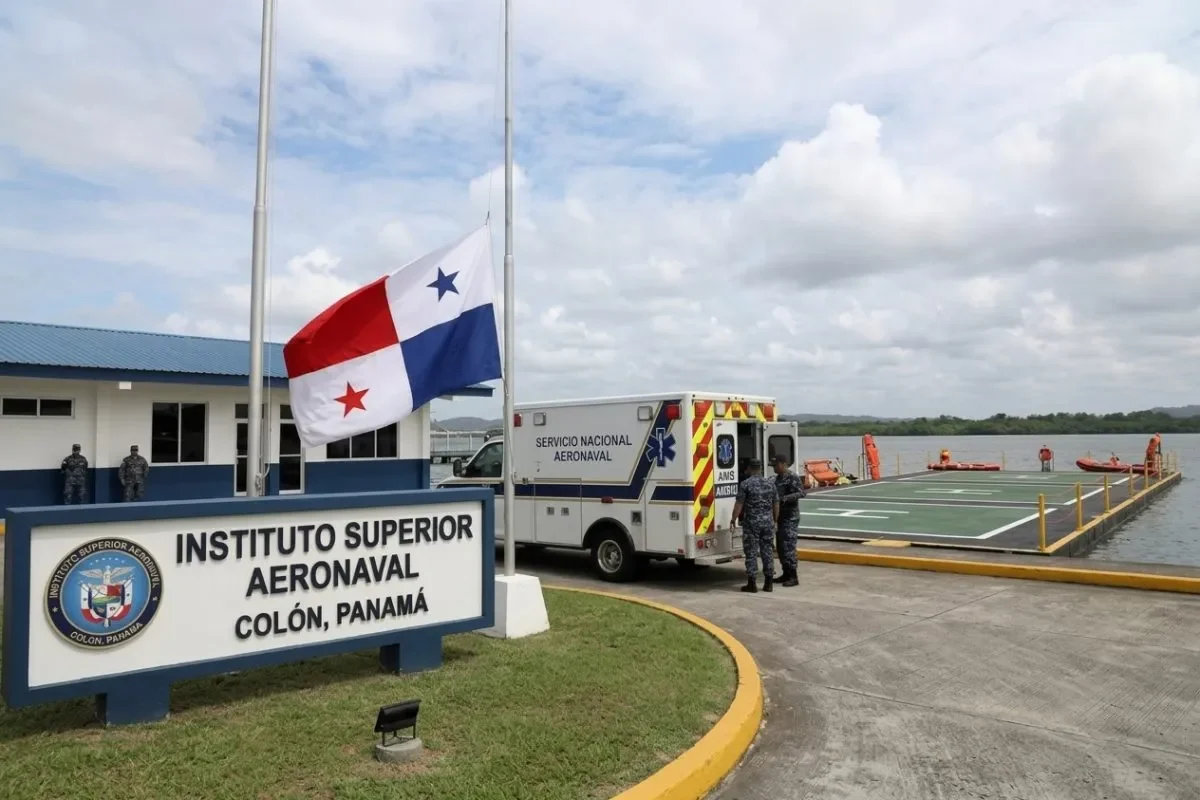
A young cadet at Panama’s Aeronaval Superior Institute died Saturday after an unexpected submersion during a controlled flotation exercise, the National Aeronaval Service (Senan) confirmed. The Colon training accident occurred on October 31 while instructors, lifeguards, paramedics and an ambulance were present at the scene.
Dannel Alejandro Gómez, an aspiring Aeronaval Guard, was participating in the evaluation as part of the institute’s academic curriculum named “Teniente de Fragata Manuel Castillo.” Personnel pulled him from the water immediately after noticing the emergency and performed cardiopulmonary resuscitation before transporting him to a medical facility in Colon province.
#Comunicado | La Aeronaval Informa a la ciudadanía. https://t.co/cRet40GxQ5
— Servicio Nacional Aeronaval de Panamá (@aeronavalpanama) October 31, 2026
Emergency Response During the Colon Training Accident
Senan officials said first responders extracted Gómez from the water and administered CPR along with other first aid measures. An institutional ambulance then rushed him to a nearby medical center, where doctors confirmed his death.
The agency emphasized that the flotation test had been conducted with the full complement of safety personnel and resources required for such activities. That included instructors monitoring the exercise, dedicated lifeguards, paramedics on standby and an ambulance positioned at the training site.
Investigation Underway Into Cadet’s Death
The case has been turned over to competent authorities, Senan stated in its official communication. The institution also pledged full cooperation with the investigative proceedings that will determine the exact circumstances surrounding the death.
The Aeronaval Superior Institute, known by its Spanish acronym ISAN, trains personnel for Panama’s naval and air service. Its academic programs include physical conditioning and water survival components designed to prepare cadets for operational duties.
Safety Protocols and Institutional Response
Senan’s statement highlighted that the flotation evaluation formed part of the institute’s standard academic requirements. The presence of medical personnel and rescue equipment was consistent with protocols established for water-based training exercises.
Authorities have not released additional details about the duration of the submersion, the specific medical cause of death, or whether any procedural anomalies were identified during the exercise. The investigation remains active as officials gather testimony from instructors and fellow cadets who witnessed the incident.
Gómez’s death marks a rare fatality within Panama’s military training institutions, where water survival evaluations are routine but typically conducted under strict supervision. The outcome will likely prompt a review of existing safety measures for flotation tests and similar physical assessments.