


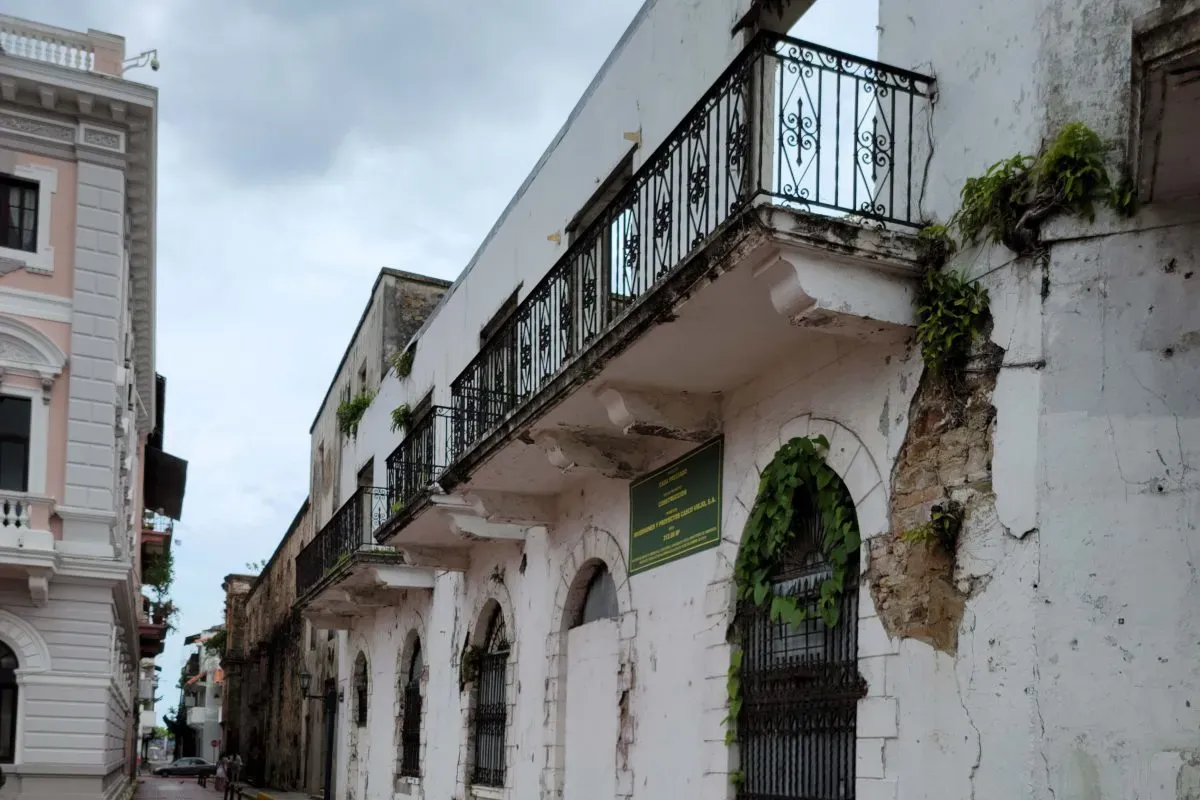
A state-appointed expert has testified that a major historic restoration project in Panama City incurred a “substantial” cost overrun. The testimony came during the second day of a high-profile corruption trial linked to the sprawling Operation Car Wash (Odebrecht case) scandal. The trial is examining irregularities in the contract for the renovation of the Casco Antiguo, Panama historic district.
Aristides Hernández, the third witness presented by the Special Anti-Corruption Prosecutor’s Office, appeared before the court on Tuesday afternoon. He confirmed the economic analysis underpinning the prosecution’s case. Hernández detailed precisely how contractual modifications, known as addendums, inflated the final price tag for the public works project.
The project, officially termed the Preservation of Historic Heritage initiative, was awarded during the administration of former President Ricardo Martinelli. Its initial budget was set at $204,001,961. After a series of addendums, the final cost ballooned to $255,498,701. This represents a direct overrun of $51,496,740, meaning taxpayers paid 25.2 percent more than originally planned.
“The overcost existed,” stated expert witness Aristides Hernández, according to official judicial summaries. [Translated from Spanish]
The proceedings are unfolding behind closed doors at the Gil Ponce Palace courthouse. Judge Águeda Rentería has restricted journalist access to the courtroom and barred live broadcasts, a stark contrast to the public nature of the earlier Odebrecht trial. Information is being relayed through the Judicial Branch’s press office and from interviews with participants during court recesses.
Prosecution Builds Its Case on Audit Findings
Hernández’s testimony directly supports the prosecution’s core argument. Prosecutors allege the State suffered significant patrimonial damage from a contract awarded under former Minister of Public Works Federico “Pepe” Suárez. The contract went to a consortium formed by the Brazilian firm Odebrecht and the Spanish company Fomento de Construcciones y Contratas (FCC).
Earlier on Tuesday, two auditors from the Comptroller General’s Office took the stand. Ángel Susto and Virgilio Chacón defended the forensic audit methodology used to identify the overpricing. They explained the calculation of the alleged patrimonial damage to the court. A third auditor involved in the original report died before the case reached trial.
Defense lawyers for the nine accused individuals focused their cross-examination on challenging the technical basis of these audits. Attorneys Rosendo Miranda, Ariel Núñez, and Abril Arosemena posed a series of closed questions. Their line of inquiry scrutinized the forensic audit techniques, the public contracting laws in effect at the time, and the legality of the addendums themselves.
They repeatedly questioned the auditors about the role of the evaluation committee that approved the contract changes. Several members of that committee are now among the defendants standing trial.
Collaboration Agreements and a Returning Figure
During a lunch recess, lead prosecutor Ruth Morcillo provided additional case details to reporters. She confirmed the existence of two collaboration agreements and one pre-trial penalty agreement already secured in the investigation. These deals, however, must withstand courtroom questioning to remain valid.
One agreement is with a former public servant, an ex-director of Contract Administration at the Ministry of Public Works. The other is with a private individual who had previously negotiated a deal within the broader Odebrecht investigation. That former official is Jorge “Churro” Ruiz, who is already convicted in the unrelated Eliana Morales Blue Apple case.
Prosecutor Morcillo declined to rank the importance of the witnesses when asked about the strength of the evidence. “All witnesses are principal,” she asserted. She noted the case began with the Comptroller’s auditors, who first established the fact and amount of the overrun.
The trial day concluded with testimony from another key figure, Carlos Ho. Ho served as director of special projects at the Ministry of Public Works and was a member of the project’s evaluation committee. He had previously reached a 72-month prison sentence agreement in 2019 for his role in the separate Odebrecht case. His return to a witness stand, now in a different but related trial, underscores the interconnected nature of these corruption probes.
The trial continues with the nine defendants, including former Minister Suárez, facing charges of crimes against public administration. The case has drawn intense public interest, partly due to the iconic status of the Casco Antiguo district. The area is a UNESCO World Heritage site and a cornerstone of Panama’s cultural tourism. Residents and business owners have long complained about the pace and management of the restoration, which aimed to revitalize the historic Casco Antiguo neighborhood.
This trial represents another chapter in Panama’s ongoing judicial reckoning with the Odebrecht scandal. The Brazilian company admitted to paying hundreds of millions in bribes across Latin America to secure lucrative public contracts. The Casco Antiguo case tests the judiciary’s ability to adjudicate complex financial crimes and recover funds for the state. Its outcome could set a precedent for how the country handles future allegations of graft in major infrastructure and heritage projects.