


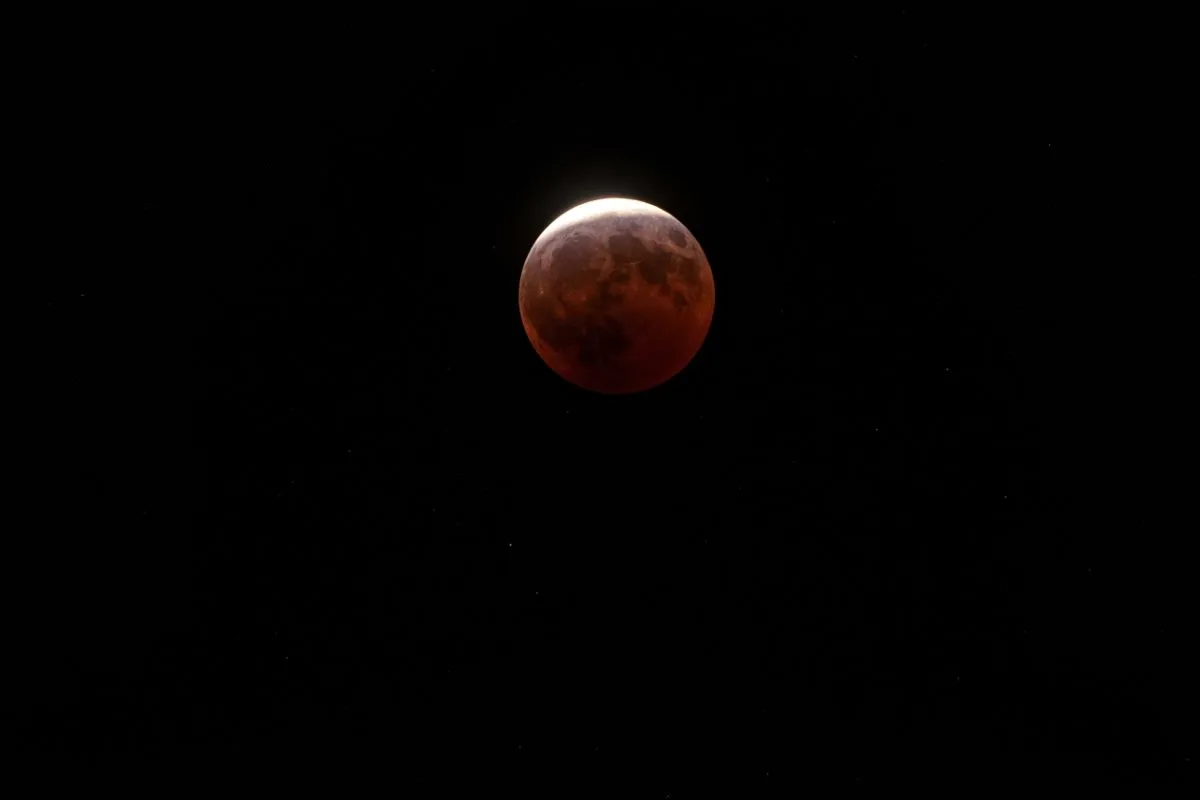
Skywatchers across Panama got an unexpected treat Thursday night when the Panama lunar eclipse broke through stubborn cloud cover, allowing residents in several provinces to capture stunning images of Earth’s shadow sweeping across the moon. What began as a weather-threatened event turned into a memorable celestial show, with the moon taking on a distinctive reddish glow during the peak of the phenomenon.
The partial eclipse started at 9:34 p.m. local time, when Earth’s shadow began its slow march across the lunar disk. By approximately 11:13 p.m., observers who stayed up witnessed the moon bathed in that characteristic coppery hue that makes lunar eclipses so captivating. The event wasn’t a total eclipse from Panama, but it came remarkably close.
Panama Lunar Eclipse Timeline and Visibility
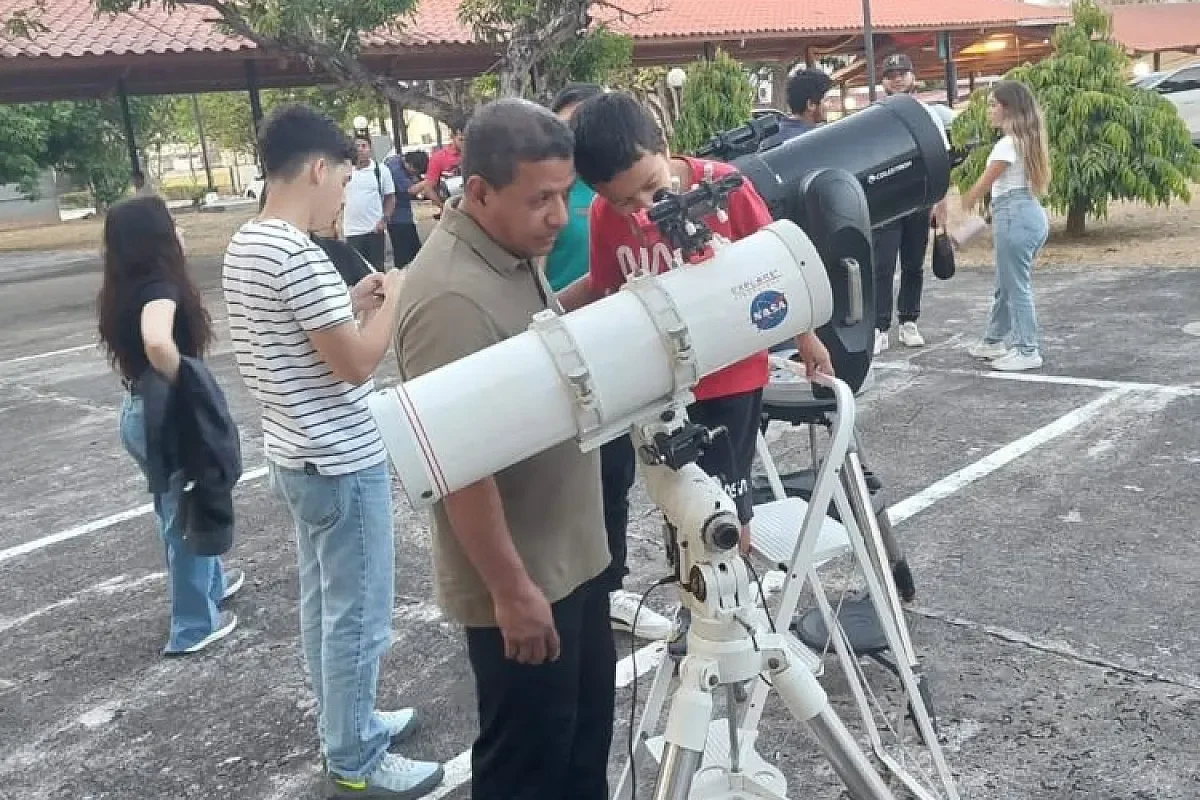
Earlier in the evening, the forecast looked grim. The Technological University of Panama’s observatory in Llano Marín had already announced it was scrapping its planned viewing session, citing heavy cloud cover and poor atmospheric conditions that would make observation impossible. Families who had planned to attend the gathering alongside the Astro Club Estela Nova were told to stay home.
But the skies had other plans. As the partial phase approached, conditions improved in several regions, including La Chorrera, Coclé, Veraguas, and areas of Panama province. Residents quickly turned to WhatsApp statuses and social media feeds to share what they were seeing, posting photographs that showed the moon peeking through scattered clouds, its brightness dimmed but still striking against the night sky. Even with intermittent cloud interference, the eclipse remained visible to the naked eye.
Rodney Delgado, director of Space Sciences at UTP, had earlier explained that while the event wouldn’t reach totality from Panamanian territory, approximately 93 percent of the lunar disk could be covered by Earth’s shadow. That left just a sliver of the moon’s surface exposed, enough to create a dramatic visual effect that drew amateur photographers and casual observers alike.
Community Enthusiasm and Astronomical Education
The planned public viewing at the Penonomé observatory was supposed to welcome families, children, and astronomy hobbyists for an evening of guided observation. That educational component underscores a broader push by Panamanian institutions to spark interest in space science among younger generations. Even though the formal gathering was canceled, the spontaneous sharing of photos online suggests the enthusiasm couldn’t be dampened.
Lunar eclipses occur when the Earth passes directly between the sun and the moon, casting its shadow across the lunar surface. Partial eclipses happen when the alignment isn’t perfectly straight, leaving a portion of the moon illuminated while the rest falls into shadow. The reddish tint, often called a blood moon, comes from sunlight filtering through Earth’s atmosphere, which scatters blue light and lets red wavelengths reach the lunar surface.
For Delgado and his team at the UTP space sciences program, events like this serve a dual purpose. They provide public engagement opportunities while also generating valuable observational data. The moon’s behavior during eclipses helps astronomers study atmospheric conditions on Earth and refine their understanding of orbital mechanics.
Why This Eclipse Mattered for Panama
Panama occupies a geographical position that makes it particularly favorable for astronomical observation during certain times of the year. Its low latitude and relatively dark rural areas, especially in provinces like Coclé and Veraguas, offer excellent viewing conditions when weather cooperates. The country has invested modestly in its space science infrastructure, with UTP leading academic efforts to train a new generation of astronomers and engineers.
“The moon found a way to dazzle, even between the clouds and the darkness of the night” [Translated from Spanish]
That sentiment, echoed by observers who posted their photos online, captures the spontaneous joy that astronomical events can bring. It also highlights a growing culture of citizen science in Panama, where ordinary people increasingly document and share celestial phenomena through digital platforms.
The partial lunar eclipse was part of a broader cycle of astronomical events visible from Central America this year. Skywatchers in the region have enjoyed meteor showers, planetary alignments, and other lunar phenomena, each one drawing attention to the scientific value of looking up. For UTP and its partners, that attention translates into public support for continued investment in space education programs.
Astronomers had predicted the eclipse months in advance, part of the regular rhythm of celestial mechanics that makes such events predictable to the minute. that weather nearly derailed the viewing experience reminds observers that even with precise calculations, earthly conditions remain the ultimate wild card.
Looking Ahead to Future Celestial Events
The successful observation despite adverse forecasts has energized Panama’s astronomy community. Delgado and his colleagues at UTP continue to develop public outreach initiatives, combining scientific rigor with accessible explanations that help people understand what they’re seeing in the night sky. For many families, the event became an impromptu science lesson, with parents explaining to curious children why the moon changed color and what the shadow represented.
Future eclipses will offer more opportunities for observation, though weather patterns will always play a decisive role in visibility. The lesson from this event may be that canceling plans doesn’t mean missing out entirely. Sometimes the sky surprises you, and when it does, having a camera ready makes all the difference.
The images captured across Panama that night now circulate widely on social media, serving as a digital archive of a moment when thousands of people paused to watch the cosmos perform. In a country that often makes headlines for its canal and its economy, the lunar eclipse offered a different kind of story, one written in shadows and light across the face of the moon. It’s a reminder that some of the most profound experiences available to us require nothing more than stepping outside and looking up.