


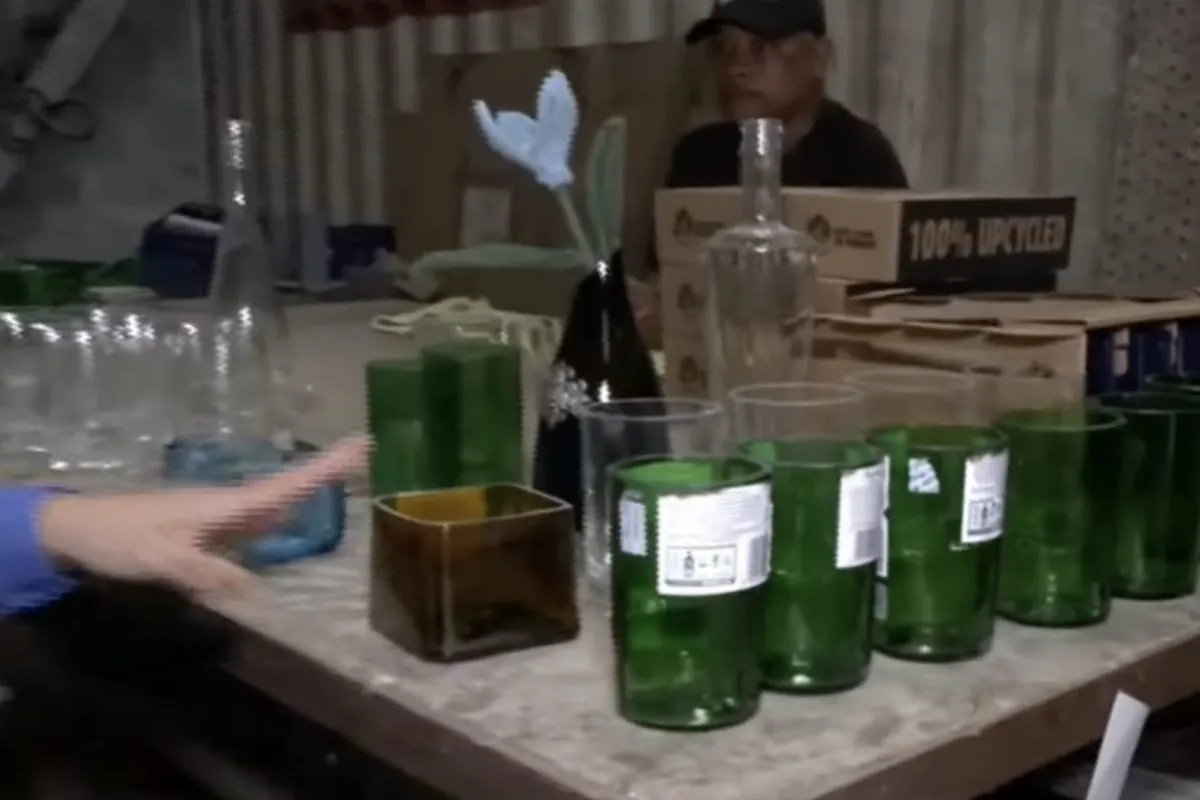
A partnership between Trashforma, Senacyt Panama and the Remar Foundation is turning trash into jobs. What many people see as worthless garbage is becoming a source of employment and innovative waste solutions. Glass bottles become drinking glasses for hotels and restaurants. Plastics transform into raw materials for the textile industry.
These recycling centers use industrial processes to give materials a second life. Even discarded plastic pipe fragments can be reused to make clothing. The project has recycled more than 2,000 tons of waste in less than seven years. That waste now serves useful purposes across multiple sectors.
Industrial Process Turns Waste Into Products
Adrián Almeida from the Remar Foundation explained the transformation process in detail. “The waste comes to us, we buy it at a set value, we process it, we crush it, we package it and we export it,” Almeida said. [Translated from Spanish] The operation creates a closed loop where nothing goes to waste. Trashforma officials highlight the wide range of items that can be produced from recycled materials.
“An infinite number of things, for example, tables, picnic sets, trash bins, furniture for parks,” a Trashforma representative stated. [Translated from Spanish]
This approach embodies the principles of a circular economy. Materials stay in use for as long as possible. The system extracts maximum value before recovering and regenerating products at the end of their service life.
Social Impact Creates Jobs for Vulnerable Populations
These initiatives deliver benefits beyond environmental protection. More than 200 people in socially vulnerable situations have found employment through these projects. Many of these workers are in rehabilitation programs. The social component is just as important as the environmental one.
Gladys Bernett, director of Government Innovation at Senacyt Panama, emphasized the multi-layered impact. “It has an economic impact, we are helping the environment and, furthermore, the most important thing is that we are in Chilibre at the Remar Foundation,” Bernett said. [Translated from Spanish] The project operates from a facility in the Chilibre district of Panama Province.
One of the most innovative processes involves machinery that transforms recycled plastic into plastic wood. This durable material works well for urban infrastructure projects. Park benches, boardwalks and municipal furniture can all be made from this synthetic lumber.
Waste Management Challenges Drive Innovation
Panama continues to face significant waste management challenges. Landfills are filling up quickly. Recycling rates remain low compared to regional averages. These grassroots initiatives demonstrate practical solutions that can scale up over time.
The partnership between government and nonprofit organizations creates a model worth replicating. Senacyt Panama provides research support and innovation funding. Remar Foundation contributes operational expertise and community connections. Trashforma brings technical knowledge about material processing and product design.
For hotels and restaurants, buying recycled glassware makes business sense. It costs less than new glass products. It also strengthens their sustainability credentials with environmentally conscious customers. The textile industry benefits from a steady supply of recycled plastic feedstock.
Project leaders say the next phase involves expanding collection networks. More neighborhoods need access to recycling services. More businesses need to understand the value of separated waste streams. The goal is to make recycling convenient and profitable for everyone involved.
This initiative shows that environmental action and economic opportunity can go hand in hand. Waste becomes a resource. Vulnerable people find dignified work. Communities become cleaner and healthier. The circular economy model works in practice, not just in theory.