


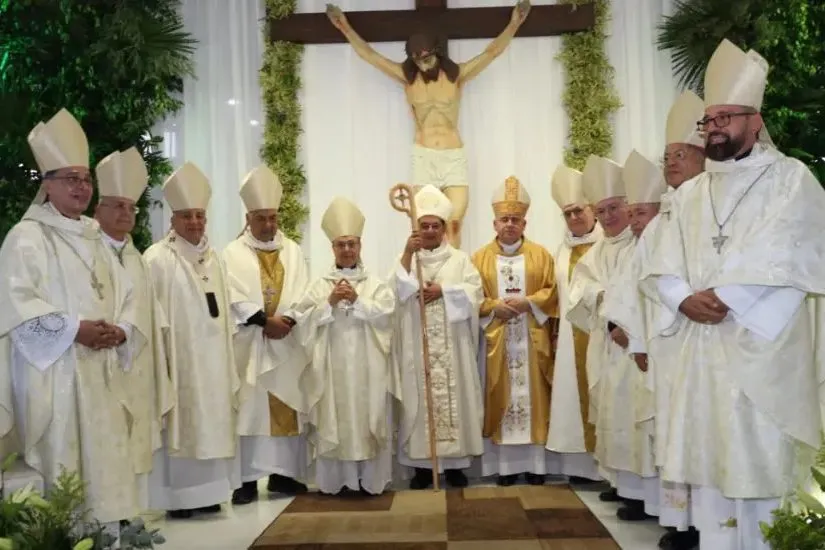
The Panamanian Episcopal Conference issued a strong statement this week expressing its full support for Pope Leo XIV. The declaration comes after former U.S. President Donald Trump publicly questioned the Pontiff’s calls for peace in the Iran conflict.
Archbishop José Domingo Ulloa Mendieta of Panama and Bishop Luis Enrique Saldaña of David signed the document. Titled “For respect for the Petrine ministry and the mission of the Catholic Church,” it defends the Pope’s spiritual authority over global political matters. The bishops released their message from Panama City, aiming to clarify the Church’s role on the world stage.
The statement argues the Pope’s mission transcends national politics. It insists his words serve a higher purpose for all humanity, not specific governmental agendas.
“The Pope, as the Successor of Peter, is not a political actor nor does he respond to ideological interests,” the conference wrote. [Translated from Spanish] “His mission is essentially spiritual: to confirm the faith, safeguard the unity of the Church, and be a prophetic voice in the midst of the world.”
Church Leaders Call for Respect and Prudent Language
This defense follows direct criticism from the former American president. Trump recently challenged Pope Leo XIV’s appeals for de-escalation with Iran. The Panamanian bishops did not mention Trump by name but addressed the situation directly. They emphasized that the Gospel “is not subject to human agendas or interests of power.”
Their text illuminates the conflict from a perspective of divine love and mercy. No nation or leadership, they wrote, stands above human dignity or the common good.
“The words of Pope Leo XIV that invite peace or question violence must be understood in their authentic sense,” the statement continued. [Translated from Spanish] “They are not a political intrusion but a service to the conscience of humanity.”
The Panamanian Episcopal Conference reiterated the Church seeks no confrontation. Its goal is to be a universal sign of unity and a promoter of dialogue. Mutual respect and careful language, the bishops concluded, are essential for true human coexistence.
This episode highlights the unique position of Pope Leo XIV, the first Pontiff born in the United States. His nationality has sometimes complicated the Vatican’s traditional neutrality. The Panamanian church’s intervention shows global Catholic solidarity. It also underscores how regional conferences can voice support for Rome during international disputes.
The statement’s impact resonates beyond religious circles. It enters a complex geopolitical debate where spiritual and political authority often intersect. The bishops’ firm stance reminds global leaders that the Church operates on a different plane. Its currency is moral persuasion, not political power.
Panama’s strong Catholic tradition gives its conference particular weight in Latin America. The country’s historical role as a bridge between continents also informs its diplomatic perspective. This background likely shaped the bishops’ decision to publish such a direct communiqué. Their message champions the Pope’s right to speak on matters of war and peace without partisan rebuke.
Reactions to the bishops’ letter are still developing across Panama and the wider region. The document serves as a reminder of ongoing global tensions and the voices calling for calm. It reaffirms the Vatican’s enduring influence in international affairs, even when its advice faces criticism from powerful quarters. The Church’s mission, as framed by Panama’s leaders, remains steadfastly focused on peace.