


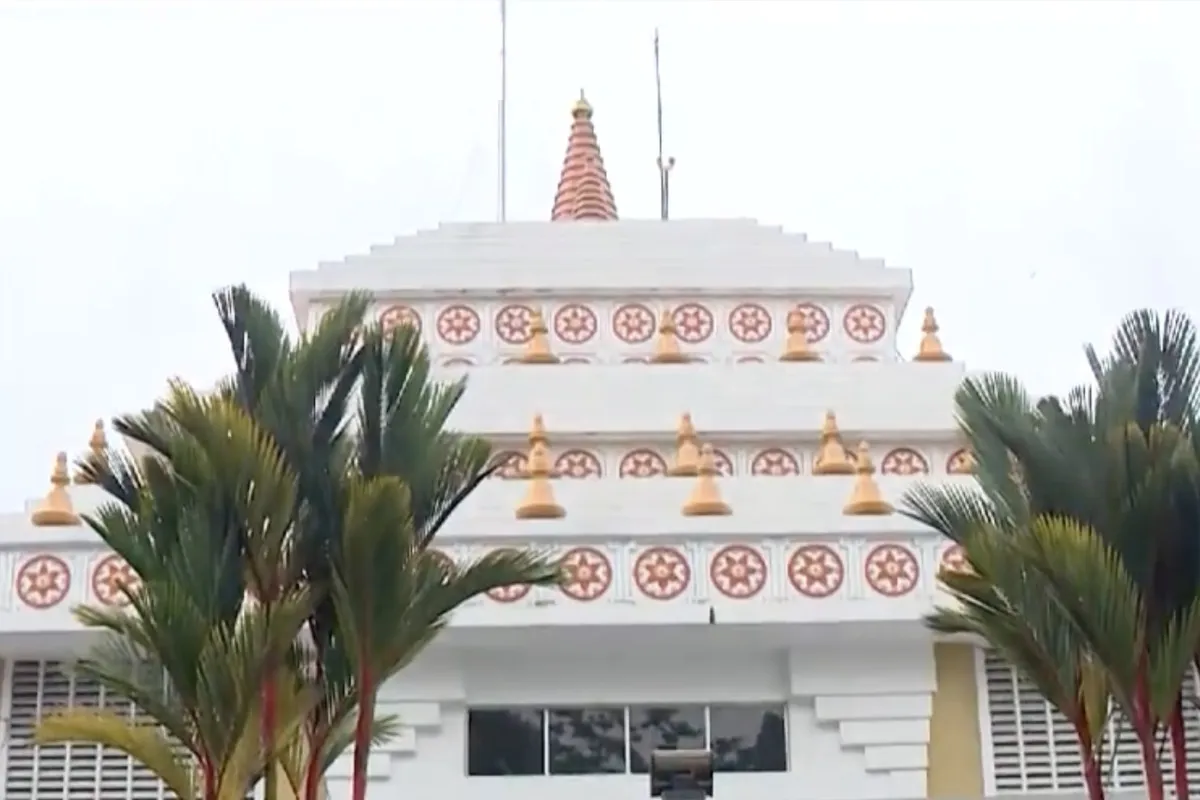
In a country where centuries-old cathedrals stand a few blocks from gleaming Baha’i domes and Jewish synagogues, a quiet revolution of understanding is taking shape. The fourth edition of open temples week will welcome Panamanians into sacred spaces often hidden behind ornate doors, from August 10 through 15, as twelve distinct faith communities join forces to replace suspicion with conversation. Organizers from the Interreligious Committee of Panama announced the initiative this Friday, framing it as a direct response to the polarization and social fragmentation that dominate headlines across the Americas.
The week’s program, which drew roughly 2,500 visitors during last year’s edition, has expanded its reach to include students, educators, and professionals beyond the curious faithful. Rather than a lecture series or theological debate, the experience is designed as an intimate walk through active prayer halls, meditation rooms, and cultural spaces where believers will explain their rituals without any pressure to convert. As committee president Gustavo Kraselnik put it, the simple act of crossing a threshold can dismantle decades of misunderstanding.
“Opening the doors of our temples is also opening the doors of our hearts to get to know one another, to dialogue, and to discover that diversity lived with respect is a richness for our society” [Translated from Spanish]
How Open Temples Week Strengthens Interfaith Bonds
Kraselnik, who represents the Kol Shearith Israel synagogue, stressed that the initiative emerges from a decade of quiet collaboration among Panama’s religious leaders. The committee itself acts as a permanent roundtable where imams, rabbis, priests, and swamis routinely discuss social challenges that transcend doctrinal lines. Their shared conviction, reinforced during planning meetings, is that open temples week must go beyond polite handshakes to foster genuine curiosity about neighbors whose beliefs often remain invisible in daily life.
The lineup of participating communities reads like a map of the country’s spiritual geography. The Metropolitan Cathedral Basilica of Santa María la Antigua, a symbol of Catholic heritage in the Old Quarter, will open its doors alongside the Balboa Union Church, the Episcopal Cathedral of San Lucas, and the Greek Orthodox Cathedral of the Annunciation of the Virgin Mary. Farther afield, visitors can step inside the Baha’i Temple of Panama, one of only a handful of such continental houses of worship worldwide, perched on a hill overlooking the city like a giant unfolding lotus. The Hindu Temple, the Hare Krishna ISKCON center, the Jama Mosque, and the Church of Jesus Christ of Latter-day Saints also join the program, each offering distinct sensory and spiritual textures.
Protopresbyter Alejandro El Brihi of the Greek Orthodox Cathedral emphasized that opening sacred spaces does not dilute anyone’s convictions. In a nation where evangelical movements have rapidly gained ground, his message resonated with an assurance that authenticity thrives on exposure rather than secrecy.
“None of us compromises our faith or minimizes our beliefs; on the contrary, we reaffirm them and show them to the world. That is part of diversity” [Translated from Spanish]
A Cultural Festival Where Art Replaces Argument
Midway through open temples week, a special evening will transform the usual dialogue format into a vibrant celebration. On Thursday, August 13, the Soka Gakkai International of Panama will host a Cultural Interreligious Festival starting at 7:00 p.m., near the intersection of Avenida La Pulida and 12 de Octubre. Ten faith communities will present traditional Panamanian dances, Afro-Antillean rhythms, indigenous performances, and choral pieces, all preceded by an interfaith prayer that organizers hope will set a tone of shared humanity.
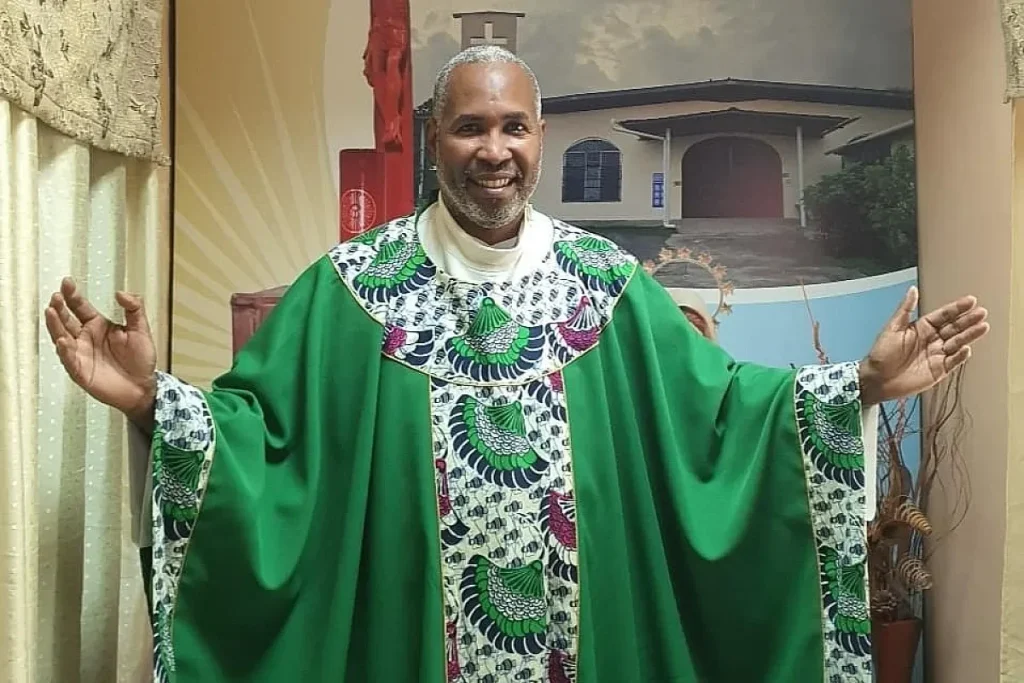
Paul Bocanegra, representing the Soka Gakkai community, described the festival as a moment when aesthetics can build bridges that words sometimes cannot. The event is free and open to everyone, reflecting a deliberate strategy to attract people who might hesitate to enter a formal worship service but will gladly tap their feet to folkloric music.
“When we appreciate art, poems, something in our heart opens” [Translated from Spanish]
Beyond the festival, the committee has built partnerships with schools and universities, recognizing that young Panamanians often encounter religious diversity through social media stereotypes rather than lived experience. Special guided visits during open temples week will allow students to ask questions directly to practitioners, from why a mosque removes shoes to how a synagogue Torah scroll is handled. These encounters, organizers hope, will inoculate the next generation against prejudice by replacing ignorance with firsthand knowledge.
Building Democracy Through Sacred Spaces
Eusebio Muñoz, a representative of the Catholic Church in Panama, framed the entire undertaking in starkly civic terms. For him, the tolerance cultivated inside temples spills directly into the streets, polling stations, and public squares where a functioning democracy demands that citizens of different convictions treat each other with dignity. His language deliberately echoed the infrastructure metaphors that dominate Panama’s political discourse about bridges and canals.
“Building democracy is not building walls; it is building the bridge of dialogue to travel toward a better future” [Translated from Spanish]
Muñoz also highlighted the social service networks that many of these communities sustain quietly. Food banks, addiction counseling, tutoring programs, and migrant assistance efforts operate out of the very buildings that will welcome visitors this August. The open doors, he argued, reveal not just theological differences but a shared commitment to the most vulnerable that rarely makes news. That practical solidarity, perhaps even more than doctrinal discussion, provides the glue that open temples week aims to make visible.
The Baha’i Temple’s participation carries particular symbolic weight. As a faith born in 19th-century Persia that preaches the unity of all religions, its nine-sided, light-filled sanctuary overlooking Panama City has long served as a physical manifesto of harmony. During last year’s event, visitors included families from Chiriquí and Colón who had never entered a non-Christian place of worship. Organizers expect to surpass that 2,500-attendee benchmark through targeted outreach to schools and expanded media coverage.
With Panama’s role as a logistical and cultural crossroads, the interreligious committee views the week as an exportable model. Delegations from Central American neighbors have inquired about replicating the format, and the committee’s documentation of methodologies could lead to a regional network of similar initiatives. At a moment when religious tensions elsewhere fuel violence and displacement, a Caribbean nation where a rabbi and an imam share a stage with a Hindu swami and a Catholic bishop offers a quietly radical counter-narrative.
“We are different, but not distant. In diversity there is richness, and in dialogue the path of peace is built” [Translated from Spanish]
Ultimately, the fourth edition of this gathering rests on a deceptively simple premise: that walking through a stranger’s sacred doorway, inhaling unfamiliar incense, and hearing a prayer in a foreign tongue can accomplish what a thousand editorials cannot. The twelve communities preparing their spaces for mid-August are betting that curiosity, once awakened, will outlast any single week on the calendar. Their doors swing open at a time when Panama, like much of the world, must decide whether difference becomes a fracture or a foundation.