


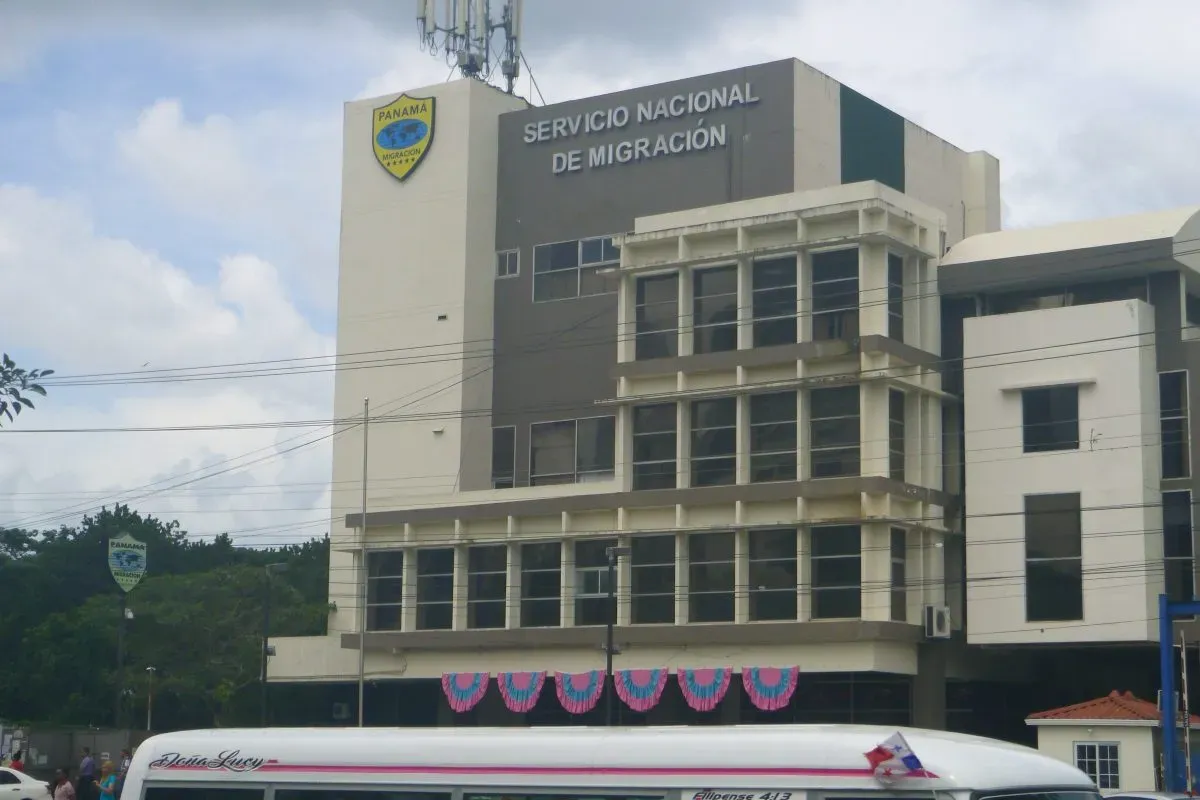
Panama immigration statisics reveal Nicaraguan nationals securing legal residency in Panama surged by an extraordinary 80 percent during the first seven months of 2026, a spike that upends long-held assumptions about who is actually moving to the Central American hub. Panama immigration statistics released by the Servicio Nacional de Migración show 2,291 Nicaraguan residency approvals between January and July, compared with roughly 1,270 during the same stretch in 2025. That dramatic increase, paired with sharp rises from Cuba and Venezuela, reveals a relocation market far more regional and diverse than the traditional image of Panama as a retirement destination for North Americans.
Overall, the country approved 22,083 residency permits through July 2026. The same January-to-July window in 2025 produced approximately 20,184 approvals. That’s a year-over-year increase of about 9.4 percent, according to the official figures. But the headline total masks significant shifts beneath the surface. Some nationalities are surging at remarkable rates while established sources of expatriates from North America and Europe have actually declined.
Latin American Neighbors Power the Residency Boom
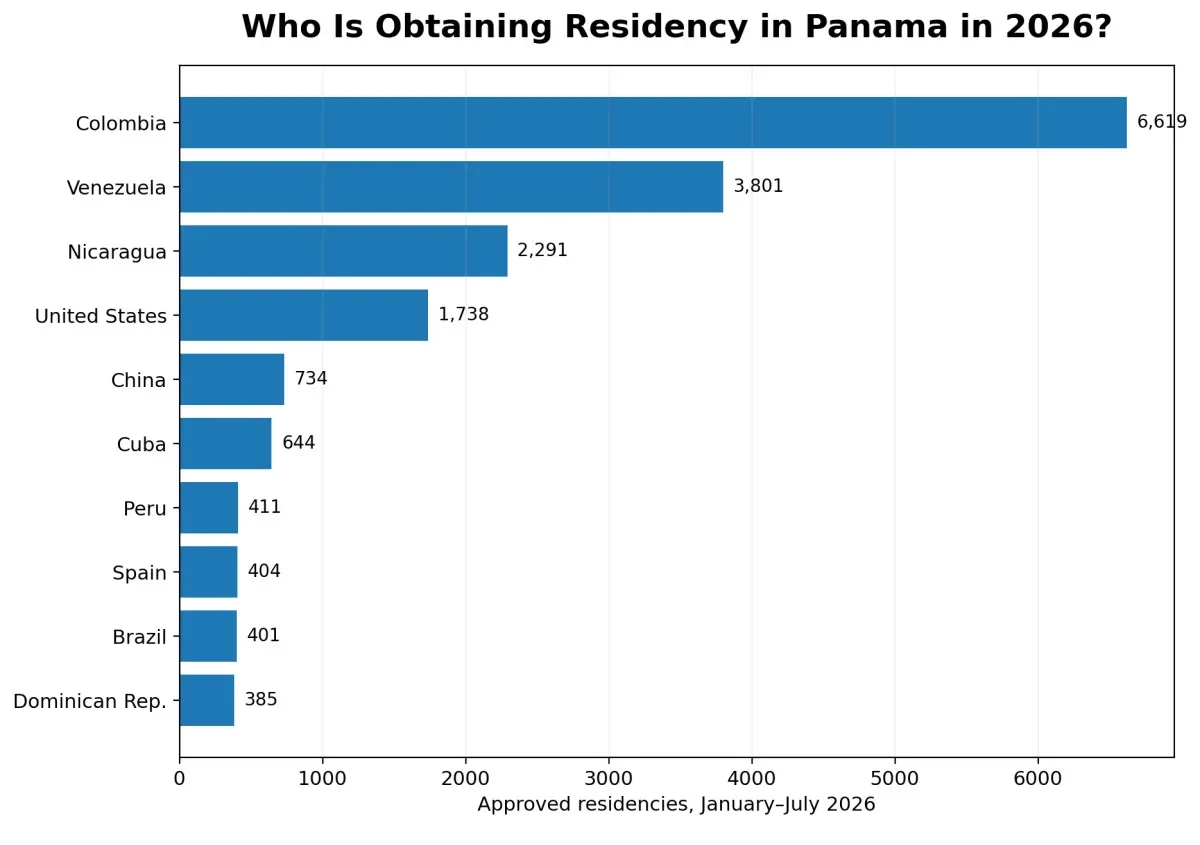
Colombia continues to lead all countries in Panama residency approvals by a wide margin. Between January and July 2026, Colombian nationals received 6,619 approved residencies, up from 5,886 during the comparable period a year earlier. That’s an increase of roughly 12.5 percent, a reflection of deep economic ties, geographic proximity, and the longstanding movement of people between the two nations. The shared border and decades of trade through the Colón Free Zone have created natural migration corridors that no other country can match.
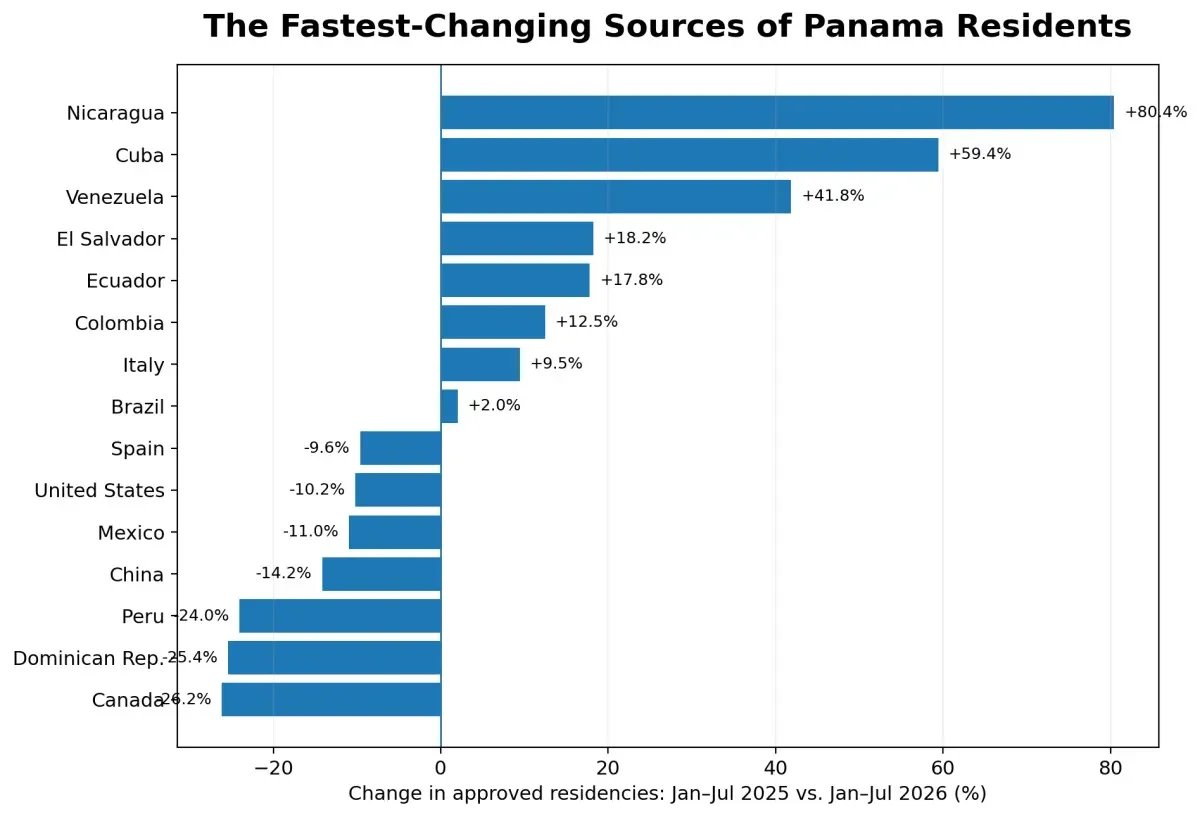
Venezuela’s growth proved even more dramatic. Venezuelan residency approvals climbed from about 2,680 to 3,801, a jump of nearly 42 percent. With Venezuela’s prolonged economic crisis now stretching well beyond a decade, Panama has become one of the preferred destinations for Venezuelans seeking stability. The country’s dollarized economy, established Venezuelan communities in Panama City, and relatively straightforward residency processes all play a role. Cuba recorded an even more striking percentage increase, rising roughly 59 percent from 404 approvals to 644. Cuban migration to Panama has accelerated as economic hardship on the island pushes more citizens to seek opportunities abroad.
The Nicaraguan surge deserves particular attention. An 80 percent increase is not a normal fluctuation. It reflects sustained migration driven by political repression and economic contraction that have pushed Nicaraguans to seek stability elsewhere since 2018. Panama, with its shared Central American identity, established legal migration pathways, and growing Nicaraguan diaspora, has become an increasingly attractive destination. Together, Colombia, Venezuela, and Nicaragua accounted for more than 12,700 approved residencies in the first seven months of 2026. In other words, well over half of all new Panama residents came from just those three countries. For a nation of just over four million people, these inflows carry real demographic weight.
Panama Immigration Statistics Reveal Shifting North American Patterns
Americans still represent the fourth-largest nationality among new Panama residents. During the first seven months of 2026, 1,738 United States citizens received approved residency. That’s a substantial number in absolute terms, especially for a country of Panama’s size. But it represents a decline of roughly 10 percent from the 1,936 approvals recorded in the same period of 2025. The drop challenges popular narratives about a mass American exodus to Panama that have circulated widely in recent years.
Canadian approvals fell even more sharply. Approximately 381 Canadians obtained Panamanian residency through July 2026, down from around 516 a year earlier. That’s a drop of about 26 percent. Combined, the United States and Canada still produced 2,119 approved residencies in the first seven months of the year. North America So remains a meaningful source of new Panamanian residents, even as its relative share of the total shrinks.
The official numbers tell a nuanced story. While interest from U.S. citizens remains real and sustained, Panama immigration statistics actually show a year-over-year decline for American approvals. The narrative of an unprecedented surge north to south doesn’t align with the data. What’s happening instead is a rebalancing, with Latin American migration growing much faster and reshaping the demographic profile of new residents.
Pensionado and Investor Programs Expand Their Appeal
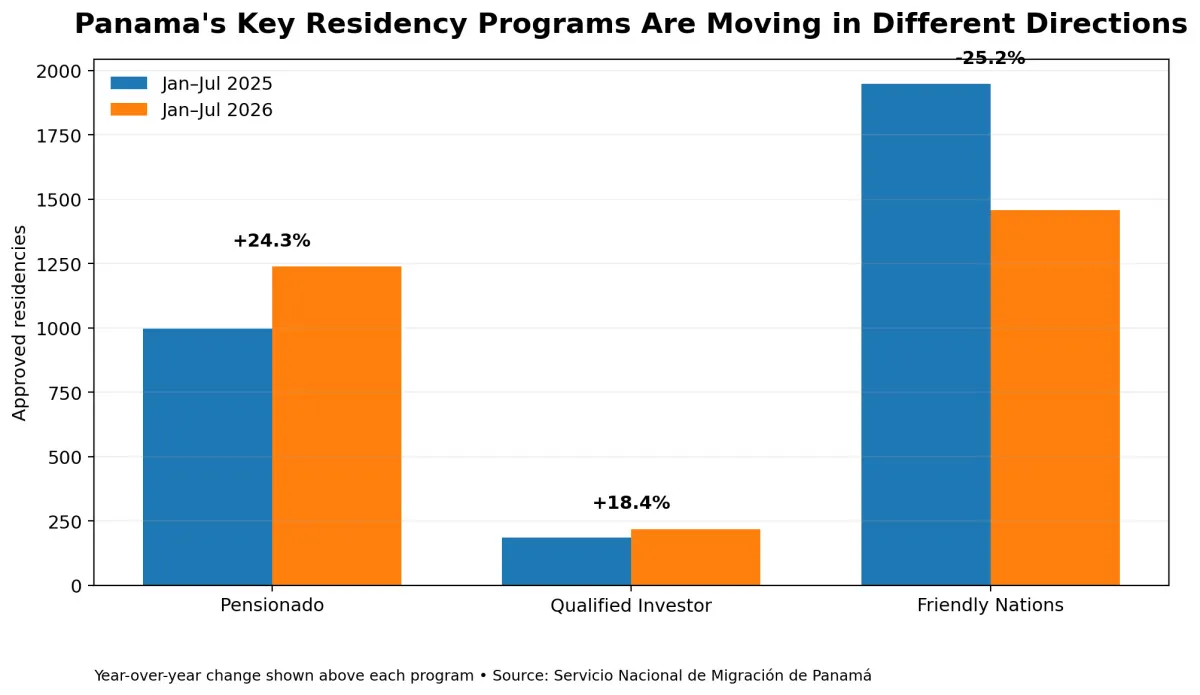
Panama’s residency programs are evolving along with the nationalities seeking them. Pensionado residency approvals increased from approximately 997 in January through July 2025 to 1,239 during the same period in 2026, a rise of about 24 percent. The Pensionado program, designed for applicants who can demonstrate a qualifying lifetime pension income, has long anchored Panama’s reputation as a retirement destination. Its continued growth suggests that appeal remains strong, just for a broader mix of nationalities than in decades past.
Investor immigration is growing as well. Approvals under the Qualified Investor residency program climbed from about 185 to 219, representing growth of roughly 18 percent. That program requires far larger financial commitments than traditional residency categories, typically involving substantial real estate purchases, securities investments, or time deposits in Panamanian banks. The uptick indicates that Panama continues to draw people with capital to deploy, not just retirees seeking a lower cost of living.
Beyond the largest nationalities, several smaller groups posted notable gains. Honduras grew by about 22 percent, El Salvador and Ecuador by roughly 18 percent each, the United Kingdom by around 15 percent, Russia by about 11 percent, and Italy by approximately 9 percent. Approvals declined for Spain, France, Argentina, Peru, and Costa Rica. The overall picture is one of remarkable diversification, with Latin American neighbors increasingly dominant and traditional European and North American sources becoming comparatively smaller pieces of the total. The data also challenges a common misconception that Panama’s expat population consists overwhelmingly of North American retirees.
Regional Realities and Panama’s Demographic Future
The shifting composition of Panama’s new residents carries significant implications. For the real estate market, demand patterns are likely to evolve as the buyer pool tilts more toward Latin American families, professionals, and entrepreneurs with different preferences than North American retirees. Rental markets in Panama City and provincial cities may see increased pressure from regional migrants, while expat-oriented communities that historically catered to Americans and Canadians face a changing clientele. Developers and real estate agents who adapt to these new demographic realities will likely fare better than those who don’t.

For policymakers, the surge in approvals from Nicaragua, Cuba, and Venezuela raises questions about integration, labor market absorption, and social services. Panama’s immigration system has long balanced openness with regulation, and the current wave will test that balance. The country’s territorial tax system, international connectivity through the Panama Canal and Tocumen airport hub, and established expatriate networks all continue to attract newcomers. But the reasons people come, and the resources they need once they arrive, differ considerably across nationalities. A Nicaraguan family fleeing political persecution has different needs than a Canadian retiree or a British investor.
Panama immigration statistics reveal a country in transition. The traditional image of Panama as a quiet retirement perch for North Americans no longer fully captures the reality on the ground. Instead, the nation is emerging as a regional anchor, drawing its largest inflows from nearby countries facing economic and political strain. Colombia’s steady leadership, Venezuela’s rapid growth, and Nicaragua’s startling 80 percent jump together tell the story of a relocation destination reshaped by forces closer to home. As 2026 progresses, these trends are likely to deepen, making Panama’s demographic future more Latin American, more dynamic, and more unpredictable than many observers expected.