


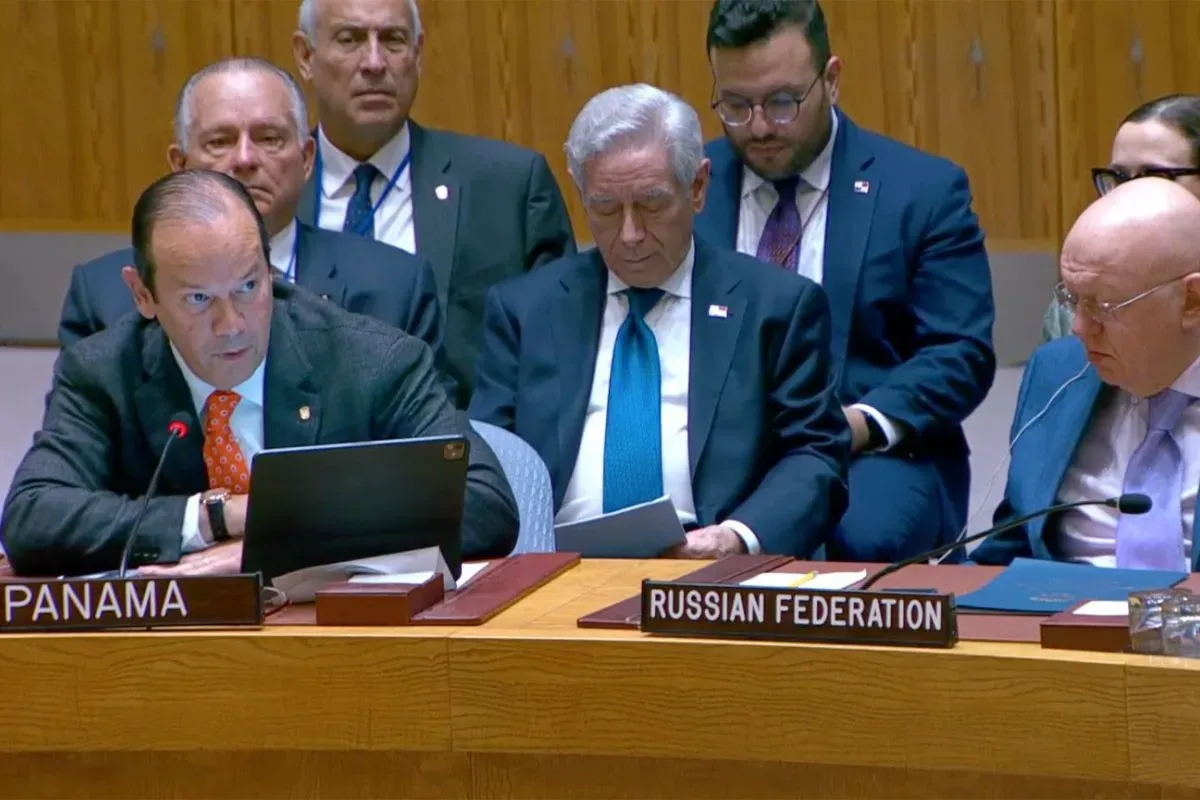
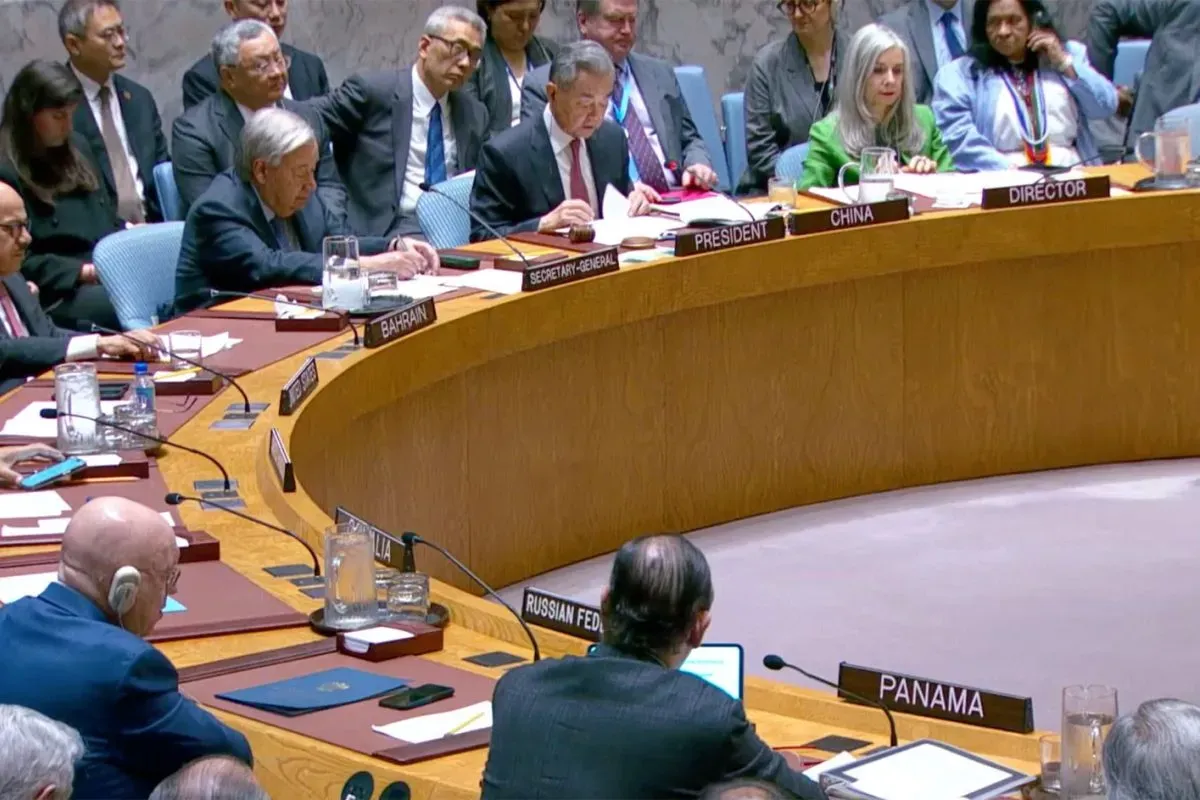
Panama’s Foreign Minister Javier Martínez-Acha Vásquez told the United Nations Security Council that his nation remains a land of encounter and a bridge for peace. He spoke Tuesday during a high-level open debate in New York. The session was convened by China’s Foreign Minister Wang Yi, whose country holds the Security Council’s rotating presidency for May.
The debate focused on defending the purposes and principles of the UN Charter. Martínez-Acha Vásquez acknowledged Wang Yi’s initiative and thanked UN Secretary-General António Guterres for his contributions. The world faces one of its most complex and tense periods since the international body was founded, the Panamanian diplomat said.
UN Charter Remains a Living Political Commitment
Martínez-Acha Vásquez stressed that the UN Charter, now 80 years old, maintains its full validity. He called it a living political commitment that must be honored. “In times of growing polarization, preserving spaces for dialogue is not a gesture of diplomatic courtesy. It is a strategic necessity for international peace,” he said [Translated from Spanish].
“Dialogue is not a sign of weakness. It is the highest expression of confidence in reason, in diplomacy and in the human capacity to find peaceful solutions to disagreements,” Martínez-Acha Vásquez said [Translated from Spanish].
Panama helped found the UN, building on its earlier role in the League of Nations and the 1945 San Francisco Conference. But the country’s vocation for encounter began much earlier. In 1826, Panama hosted the Congress of Panama 1826, convened by Simón Bolívar as a space for continental dialogue and unity.
Panama Prepares to Commemorate Historical Legacy
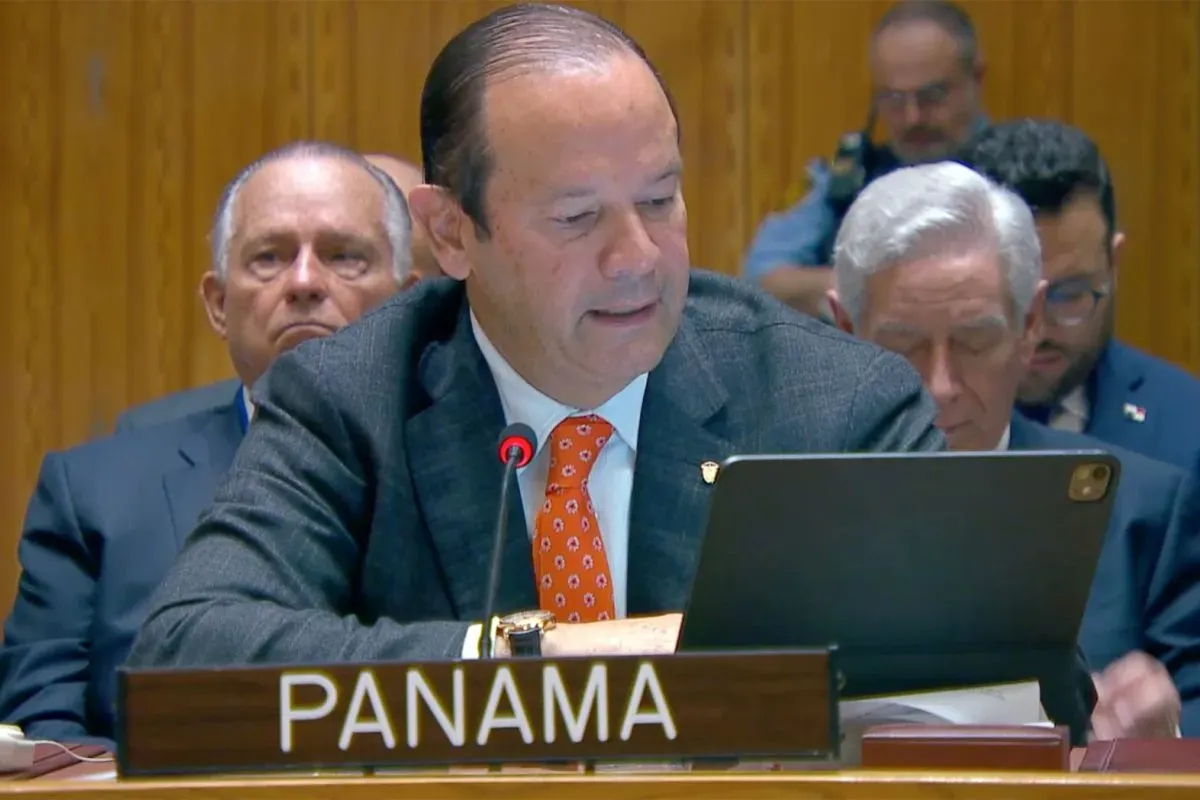
Next June, Panama will commemorate that 200-year legacy. “Panama does not conceive this vocation as a geographic circumstance, but as a historical responsibility,” the minister stated. “We are a nation born to connect oceans, continents, cultures, economies and worldviews. Our geography united us to global trade. Our history committed us to understanding between peoples” [Translated from Spanish].
Martínez-Acha Vásquez reiterated Panama’s commitment to building dialogue and political solutions amid conflicts. “When others see irreconcilable differences, we continue to see the possibility of building bridges,” he said [Translated from Spanish]. The country promotes useful multilateralism, he explained. That means measuring success not by the number of resolutions adopted, but by the capacity to prevent conflicts and protect lives.
UN member states face a major challenge in adapting to a rapidly reconfiguring world. The minister argued that this does not weaken the UN. “The challenge then consists of ensuring that our collective response capacity is up to the speed and complexity of current changes,” he emphasized [Translated from Spanish].
Diplomacy Can Produce Real Results
When genuine commitment to Charter principles exists, international diplomacy can deliver real outcomes. “Panama firmly believes that the future of the international system will depend on our capacity to keep open channels of dialogue, defend the principles of the Charter and strengthen a multilateralism that produces concrete results for our peoples,” Martínez-Acha Vásquez said [Translated from Spanish].
The minister’s address to the United Nations Security Council reinforced Panama’s traditional role in global diplomacy. The country’s history of Panama Canal diplomacy has long positioned it as a mediator between nations and interests.
“As a nation of encounter, as a bridge between continents and as an heir to the spirit of the Amphictyonic Congress of 1826, we reaffirm our conviction that differences can be discussed, disagreements can be managed and crises can be resolved through diplomacy,” the minister concluded [Translated from Spanish]. The United Nations represents the collective will of humanity to choose cooperation over confrontation, he said.