


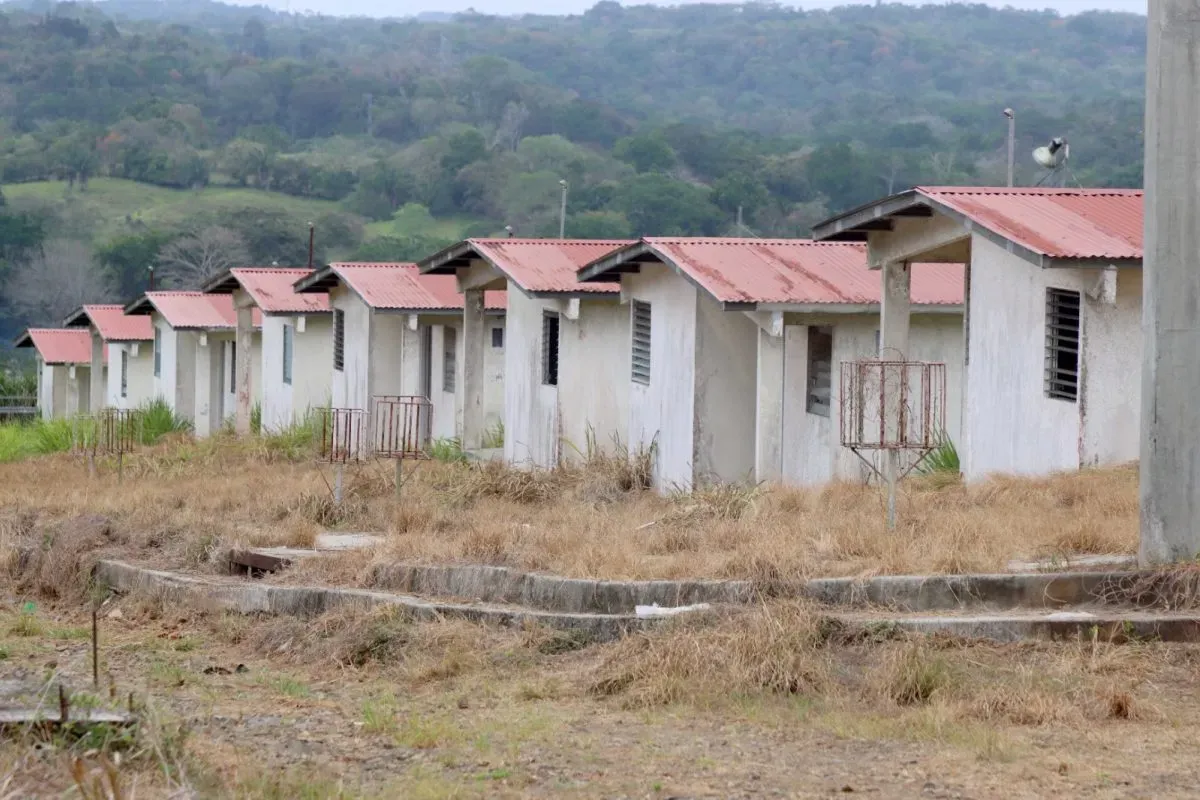
A pair of public school teachers in Panama City spent six months gathering pay stubs, tax returns, and bank statements only to be turned away by three lenders. Their combined salaries fit comfortably within the range that once guaranteed Interest rate for a modest apartment, but not anymore. For thousands of families chasing Acobir (Panamanian Association of Real Estate Brokers and Developers) Panama has become a rigged game, and fresh figures now reveal just how many are losing. Roughly 70 percent of the country’s residents cannot qualify for a home loan, according to the Panamanian Association of Real Estate Brokers and Developers, known as Acobir.

Why Affordable Housing Panama Is Dwindling for Middle-Income Families
The association’s president, Katherine Reyes Espino, said the crisis is not the product of a single shock. A tightening of bank credit rules, elevated interest rates, and stubborn unemployment have all collided with a new Preferential Interest Law that took effect on January 1. The law was designed to cap lending costs for qualifying buyers, yet it arrived at a moment when global borrowing costs, riding the U.S. Federal Reserve’s rate hikes, were already pushing monthly payments beyond the reach of ordinary workers. In dollarized Panama, those external pressures hit home with little buffer.
“From our studies, we know that 70 percent of the population cannot opt for a home, and it’s precisely because of all these conditions that have changed at the banking level,” Reyes Espino said. [Translated from Spanish]
The pain is concentrated where it hurts most. Homes priced up to $180,000, the segment traditionally seen as the launchpad for first-time buyers and young families building wealth, have seen a sharp slowdown. The same salary that could carry a $150,000 mortgage two years ago now gets rejected by algorithms that penalize any hint of instability. Acobir’s internal data confirms the freeze is not about a lack of desire. It’s about a lending environment that treats the average Panamanian paycheck as too risky, even when that paycheck has barely changed.

Luxury Condos and Foreign Investors Thrive While Locals Struggle
Just a few kilometers from the neighborhoods where applications pile up in rejection piles, a very different market is booming. Properties priced above $300,000 are attracting wealthy domestic buyers and a steady stream of foreign investors who see Panama as a safe haven and a gateway to residency-by-investment programs. Beachfront condos, high-rise units in Punta Pacífica, and gated communities in the capital’s outskirts are moving at a brisk pace, insulating the luxury segment from the affordability crunch hitting the rest of the country.
That bifurcation is reshaping cities and towns. Developers are increasingly chasing higher-margin projects while scaling back plans for middle-income housing. The result is a supply mismatch that could take years to correct. For the typical Panamanian household earning between $1,500 and $2,500 a month, the market is effectively telling them to wait, even as rents continue to climb and the dream of a deed slips further into the future.
Government and Industry Scramble for Solutions
Behind closed doors, the machinery of reform is creaking into motion. Acobir has assembled working groups that bring together real estate agents, promoters, banks, valuators, and other players to draft concrete proposals for both the Executive and Legislative branches. Reyes Espino confirmed that her team has already held meetings with officials at the Ministry of Housing and Territorial Development and the Ministry of Economy and Finance, signaling that the government is not brushing the alarm aside.
“There is receptivity on the part of the government to look for solutions,” she noted, while acknowledging that legal and financial adjustments will take time. In the weeks ahead, the association expects to present a set of measures aimed at loosening the credit bottleneck without sacrificing the stability that the revised preferential interest regime was meant to preserve. The balancing act is delicate: make loans cheaper without encouraging delinquency, and stimulate construction without inflating a bubble.

Parallel to the lobbying effort, Acobir continues to run public outreach sessions that teach prospective buyers about savings discipline, credit score management, and the few alternative financing routes that still exist. Many families simply don’t know where to start, and the association’s guidance is often the only unbiased information they receive before walking into a bank branch.
Can Construction Rebound Restore Affordability?
A recovery in building activity, both public infrastructure and private residential projects, is widely seen as the surest way to inject jobs and wages back into the economy. Reyes Espino said the sector is pinning its hopes on a pipeline of works that could begin to absorb idle labor and push more disposable income toward house purchases. But construction alone cannot fix a lending problem. Without parallel changes to bank regulations and a genuine stabilization of interest rates, the math for a teacher or a nurse will remain unforgiving.
Latin America’s housing gaps are not new, and Panama has long been celebrated for its comparative prosperity and dollarized stability. Yet the current data paints a picture of a middle class that is being quietly locked out of property ownership just when inflation and urban migration are making renting more expensive. The 70 percent figure is not a temporary glitch, analysts warn. It’s a structural red flag that could persist unless credit policies are rewritten to reflect real local incomes rather than imported caution from global financial trends.
In summary, the affordable housing Panama once took for granted as a ladder to the middle class is now missing rungs. The luxury side of the market will continue to glitter and attract capital from abroad. What happens to the other 70 percent depends on whether an alliance of realtors, bankers, and ministers can translate talk into a blueprint that puts keys in hands again. The coming months will test if that cooperation is real or merely a well-intentioned pause in a long-term slide.