


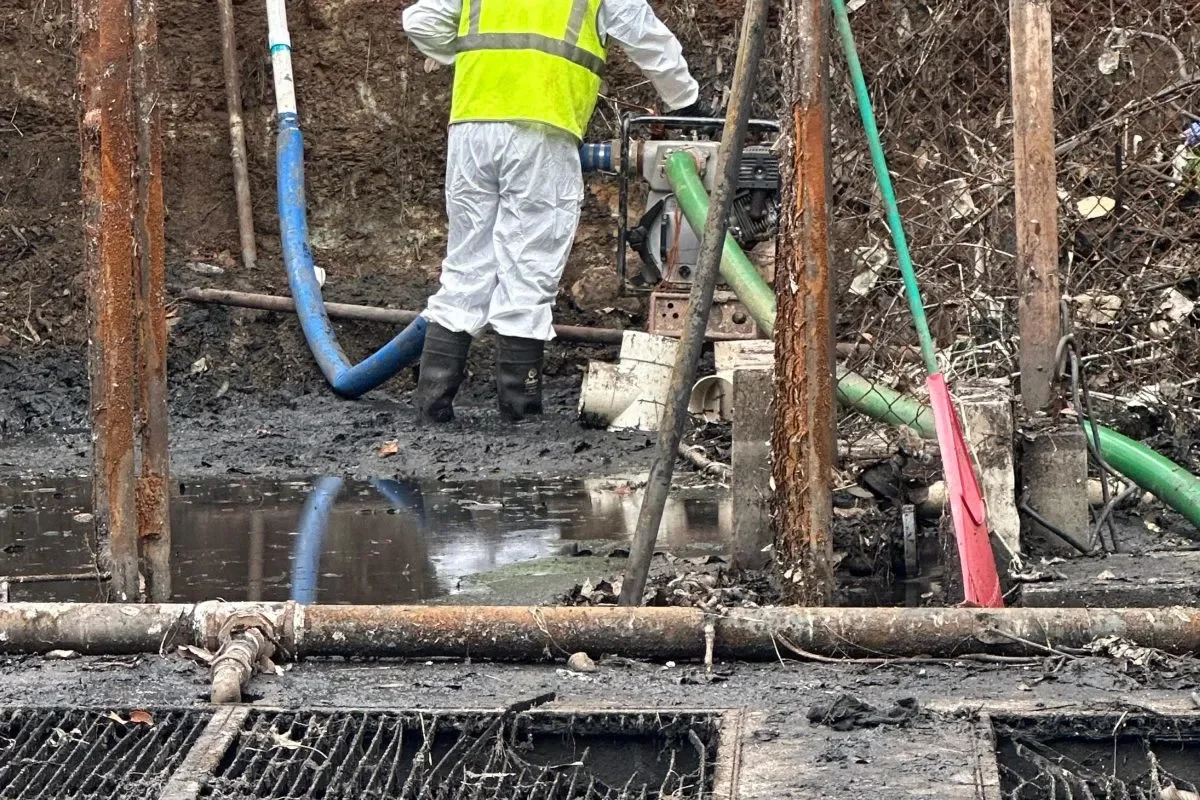
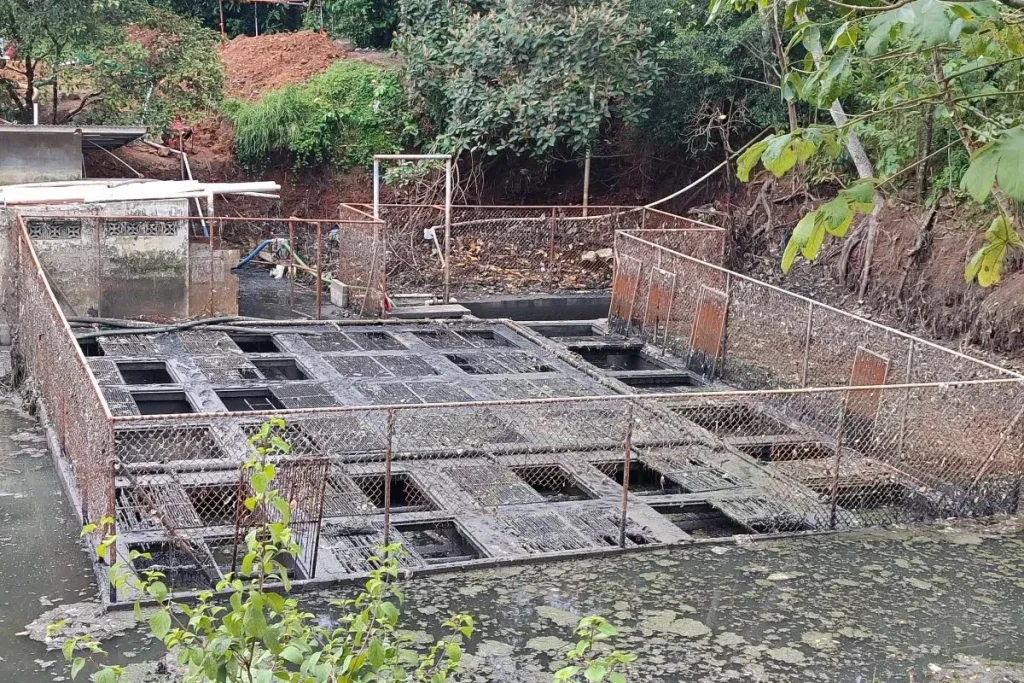
The monthly maintenance bill for a single wastewater facility in Colón province tells the story of Panama’s environmental emergency. At $23,000 per month, or roughly $276,000 annually, the Altos del Lago treatment plant consumes resources that many municipalities simply don’t have. Multiply that challenge across a nation where 1,200 collapsed treatment plants have been identified, and the scale of what Environment Minister Juan Carlos Navarro calls a “true national crisis” becomes clear.
Navarro delivered that stark assessment Tuesday, August 18, during his presentation of the Ministry of Environment’s 2027 budget before the National Assembly’s Budget Commission. The figure of 1,200 collapsed facilities represents a problem that has festered for three decades, according to the minister, who described an inherited environmental situation where no corner of the country has escaped the damage.
A Wastewater Emergency Spanning Every District
Wastewater infrastructure failures have touched every administrative division of Panama, leaving residents and ecosystems alike struggling with the consequences. Navarro painted a grim picture for lawmakers, stating that no district or electoral circuit exists without collapsed treatment facilities among its infrastructure burdens.
“We are already in the process of confronting this challenge, of organizing these 1,200 collapsed treatment plants at the national level” [Translated from Spanish]
The minister didn’t offer a total count of how many treatment plants exist across the country, which makes assessing the full proportion of failures difficult. But the environmental impact is undeniable. Navarro told the commission that all of Panama’s streams and rivers are contaminated, describing conditions the current administration inherited upon taking office.
Drinking Water Sources Face Direct Contamination Risk
Among the most alarming details to emerge from the budget hearing involves facilities positioned dangerously close to public water supplies. Navarro identified 17 treatment plants located upstream of potabilization plants operated by the National Institute of Aqueducts and Sewers, known by its Spanish acronym Idaan. That placement means untreated or partially treated sewage flows toward the very intake points where drinking water is drawn.

Marylin García Paredes, director of Environmental Performance Verification at the Ministry of Environment, later expanded on that figure. Her team has documented 24 wastewater treatment systems, including both treatment plants and septic tanks, situated upstream of water intake points with potential to affect public water sources. The geographic distribution reveals a concentration in the western and northern parts of Panama: 11 in Panama West, seven in Panama North, three in Panama Metro, two in Los Santos, and one in Colón.
The precise locations of those systems weren’t disclosed, but the implications are clear. Communities drawing water from affected sources face potential exposure to pathogens and pollutants that treatment systems are designed to remove before discharge into rivers and streams.
A Decades-Old Management Model Breaks Down
The roots of Panama’s wastewater crisis stretch back roughly 30 years, according to Navarro. Private developers typically build treatment plants as part of residential or commercial projects, operate them for two years, and then transfer them at no cost to Idaan. That handover process has become a recurring point of failure.
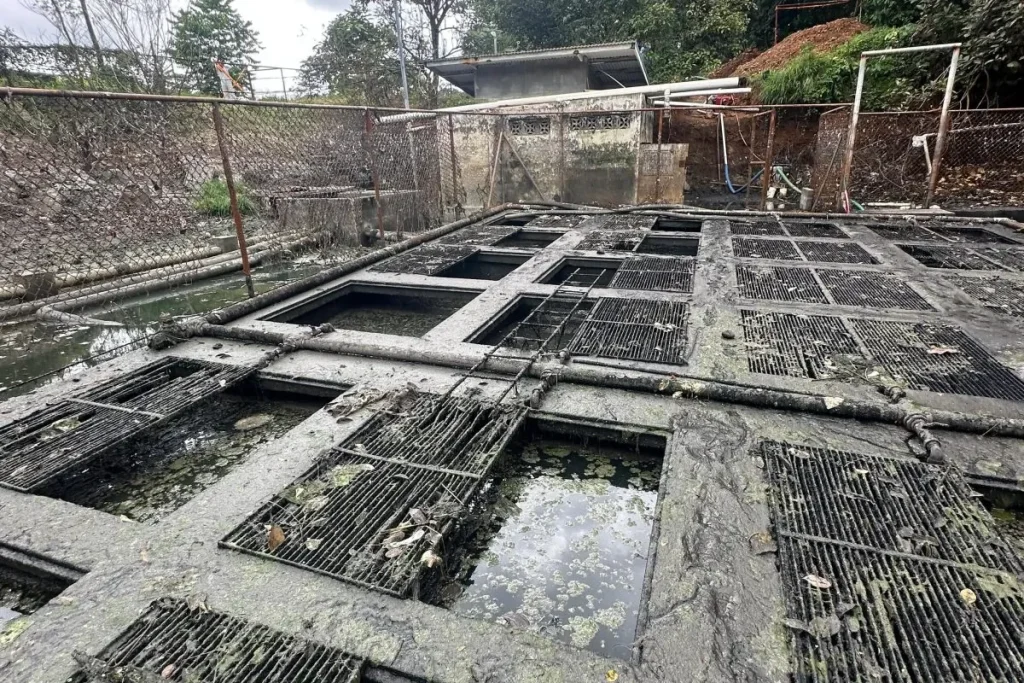
In some instances, the institute declines to accept the facilities altogether. In others, Idaan receives plants without adequate resources to manage them properly. The result is predictable: systems deteriorate, maintenance lags, and eventually the infrastructure collapses. This cycle has repeated across the country for years, leaving a patchwork of responsibilities scattered among private promoters, the Ministry of Housing and Territorial Ordering, Idaan, and other entities.
Housing Minister Jaime Jované provided concrete numbers illustrating the burden his ministry carries. Miviot holds responsibility for 41 treatment plants, and bringing all of them into optimal working condition would require an investment of $30 million. Once restored, operating and maintaining those facilities would demand between $3 million and $5 million annually. Jované pointed to the Altos del Lago plant in Colón as a case study in ongoing costs.
“Even if there is the resource, if there is no trained technical personnel to manage, maintain and over time run that plant, we have problems” [Translated from Spanish]
That warning underscores a critical dimension of the challenge. Money alone won’t solve the problem without skilled workers, reliable electricity, chemicals, pumps, and a commitment to permanent maintenance. The minister’s assessment highlights how technical capacity gaps compound financial constraints across the sector.
The Financial Reality Behind Restoring Collapsed Treatment Plants
No one has yet calculated the total price tag for recovering all 1,200 failed facilities. Navarro acknowledged that the cost remains undefined, adding that the challenge extends beyond simple repairs. Operational expenses include staffing, energy, chemical supplies, and ongoing equipment upkeep, all of which must be funded continuously rather than as a one-time fix.
The budgetary context makes the path forward even more difficult. The Ministry of Environment will operate with $89.8 million for 2027, significantly below the $134.6 million originally requested from the Ministry of Economy and Finance. That $44.8 million gap forces hard choices about where to direct limited resources. For 2027, $57.9 million will go toward operations while just $31.9 million supports investment, leaving little room for ambitious infrastructure recovery projects.
Miambiente and Idaan are preparing a joint work plan to tackle the crisis in phases. The approach prioritizes interventions based on risk. The 17 plants located upstream of Idaan potabilization facilities rank first, given their direct threat to public drinking water. A second tier includes 117 plants that Idaan had accepted for administration but which have since collapsed. A third category covers installations along rivers of demographic and economic significance, including those affecting the Pacora River basin.
The minister told lawmakers that the plan remains under development, but the goal is to launch initial interventions before the end of 2026. That timeline leaves little room for delay, especially considering the structural and staffing challenges documented across multiple ministries.
What Panama’s Wastewater Crisis Means Going Forward
Panama’s struggle with collapsed wastewater infrastructure reflects a broader governance challenge that extends beyond any single administration or agency. The gradual deterioration of treatment facilities over three decades points to systemic weaknesses in how infrastructure projects are approved, handed over, and funded over their full life cycles.
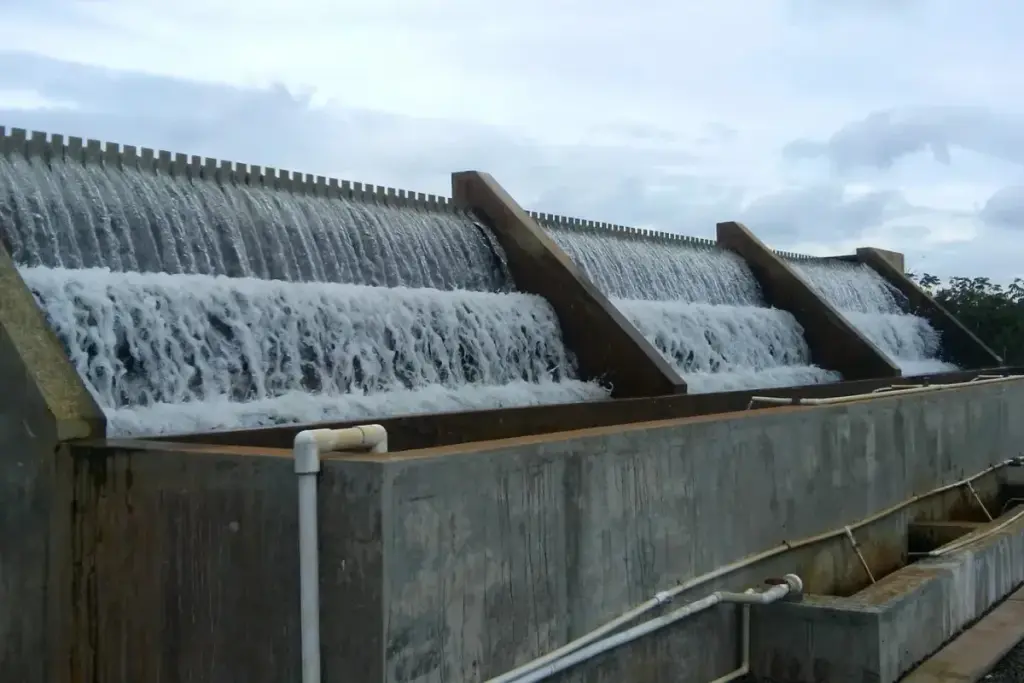
The concentration of 24 treatment systems upstream of public water intakes adds urgency to an already critical situation. Protecting drinking water quality requires immediate intervention at those sites, followed by sustained investment in the many other facilities that have fallen into disrepair. The work plan being developed by Miambiente and Idaan offers a framework for action, but the funding and technical capacity needed to execute it remain uncertain. Navarro’s characterization of the situation as a national crisis suggests the government recognizes both the severity of the problem and the need for a coordinated response. Whether that recognition translates into sustained investment and institutional reform will determine whether Panama’s rivers and communities see meaningful improvement in the years ahead.
The fragmented responsibility model that contributed to the current state must be addressed alongside the physical repairs. Without clear accountability for long-term operations, newly restored plants could follow the same path toward collapse that claimed their predecessors. The coming months will reveal whether the government can deliver the structural changes needed to break that cycle and protect the country’s water resources for future generations.