


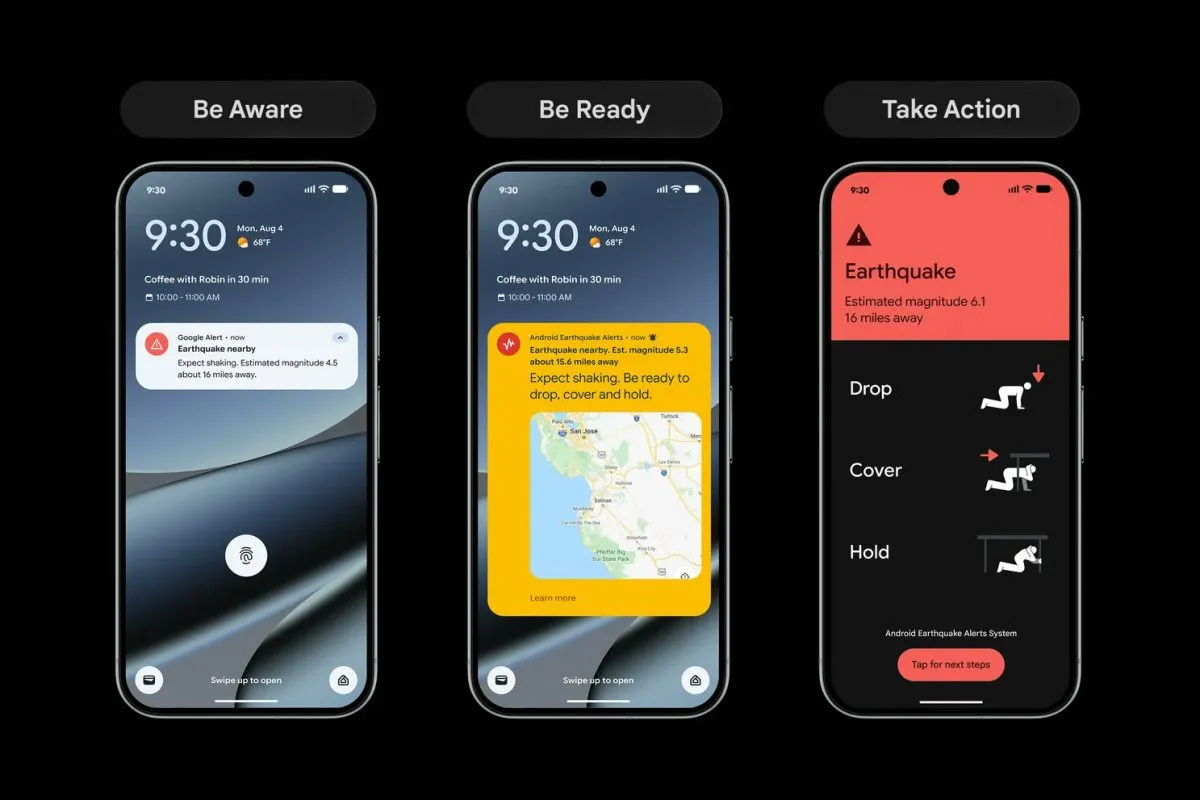
Panama earthquake alerts will soon reach millions of Android users as Google prepares to activate its seismic detection system nationwide. President José Raúl Mulino confirmed the country’s inclusion in the technology, which uses smartphone motion sensors to detect tremors and send warnings before shaking arrives.
The system is not yet fully operational in Panama, according to Eli Faskha, a specialist at Soluciones Seguras. During a technical briefing, Faskha explained that activation is still in progress but that users will not need to download any additional application once the feature goes live.
How the Android Seismic Detection System Works
Android phones contain accelerometers that constantly measure device movement. Google’s system aggregates signals from thousands of these sensors to identify patterns consistent with earthquake activity. When enough devices detect simultaneous motion, the system estimates the epicenter location and intensity, then pushes alerts to phones in areas likely to feel the shaking.
Faskha clarified that this is not an earthquake prediction tool. Rather, it detects an earthquake already in progress and sends notifications before seismic waves travel to populated areas. The warning window depends on distance from the epicenter and local geological conditions.
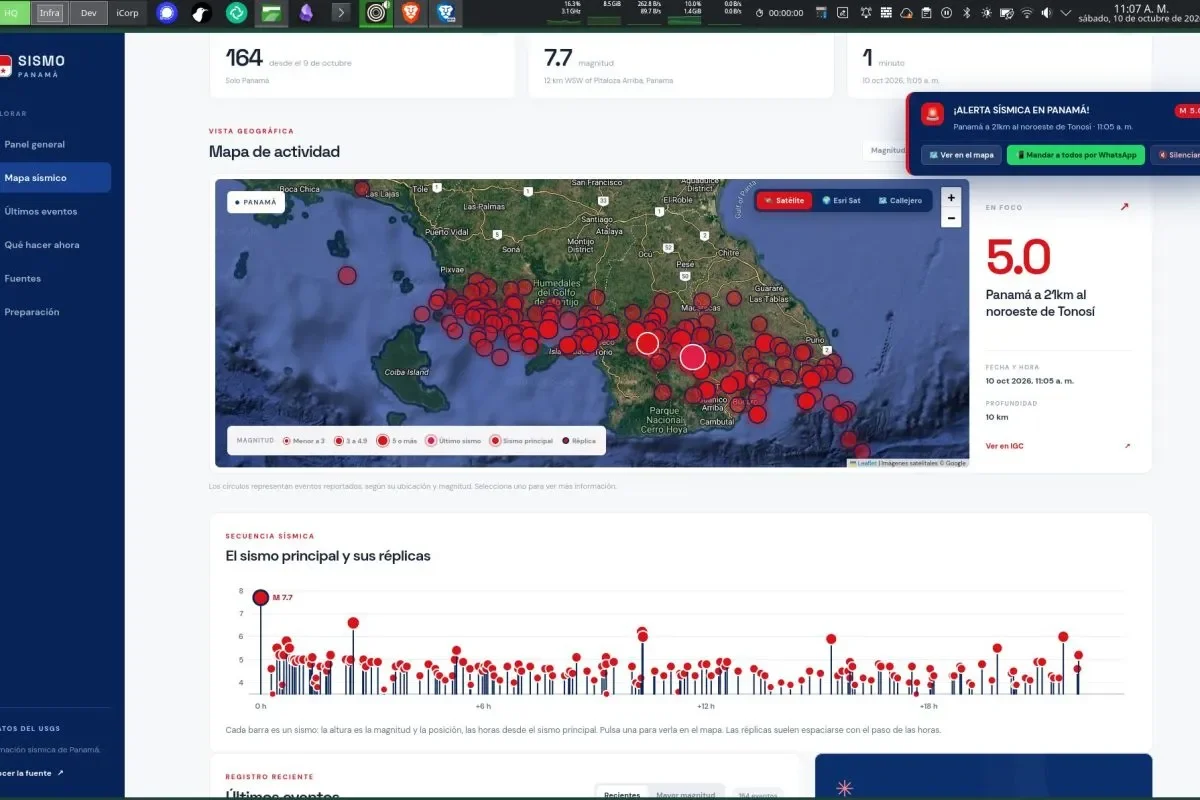
Using the October 9 earthquake as an example, Faskha noted its epicenter sat roughly 200 kilometers from Panama City. In that scenario, residents could receive several seconds of warning before feeling the tremor. That time allows people indoors to move under sturdy furniture or away from falling hazards.
Alert Levels and User Experience
Google’s system delivers three notification tiers based on estimated shaking intensity. A basic informational alert notifies users of seismic activity with a phone vibration. Moderate movement alerts appear more prominently. High-intensity events trigger full-screen notifications with protective guidance.
For severe earthquakes, the message may instruct users to move away from windows, shelter under stable furniture, and hold on until shaking stops. These instructions aim to help people respond correctly even when caught off guard.
Users can disable the alerts through phone settings, but Faskha recommends keeping them active. Detection accuracy improves when more devices contribute motion data near the epicenter. Sparse device coverage in rural areas could delay detection until waves reach more populated zones.
Panamá ha sido incluido en el Sistema de Alertas Sísmicas de @Android, informó el presidente de la República, @JoseRaulMulino. "Gracias a la cooperación con @Google, nuestro país ha sido incluido en el Sistema de Alertas Sísmicas de @Android, una tecnología gratuita que permite detectar terremotos y advertir a la población antes de que lleguen las ondas sísmicas más fuertes", indicó el mandatario. Para confirgurar las alertas no se necesita descargar un app extra, sino activar la función en la configuración del teléfono, escribiedo en el buscador: "Alertas de sismos". Una vez activada, su teléfono recibirá notificaciones en la pantalla según la intensidad del movimiento detectado en la zona, permitiendo reaccionar y buscar a tiempo un lugar seguro. Google explicó que este sistema es de detección y no de predicción, y trabaja amediante los sensores de millones de teléfonos Android de una misma zona para identificar el movimiento en tiempo real.
— Telemetro Reporta (@TReporta) October 15, 2026
Regional Context and Safety Recommendations
Panama joins other Latin American countries already using this Google technology. The system supplements, but does not replace, official guidance from emergency authorities. Faskha emphasized that knowing evacuation routes, identifying safe locations, and practicing earthquake response procedures remain essential.
The rollout comes as small businesses affected by recent seismic events continue struggling to access recovery assistance. Earthquake preparedness has gained urgency across the region, with governments and private technology companies seeking complementary approaches to public safety.
Once activated, the feature will operate by default on compatible Android devices. No separate installation or registration process is required. The system works silently in the background, monitoring sensor data until a potential earthquake signature emerges.