


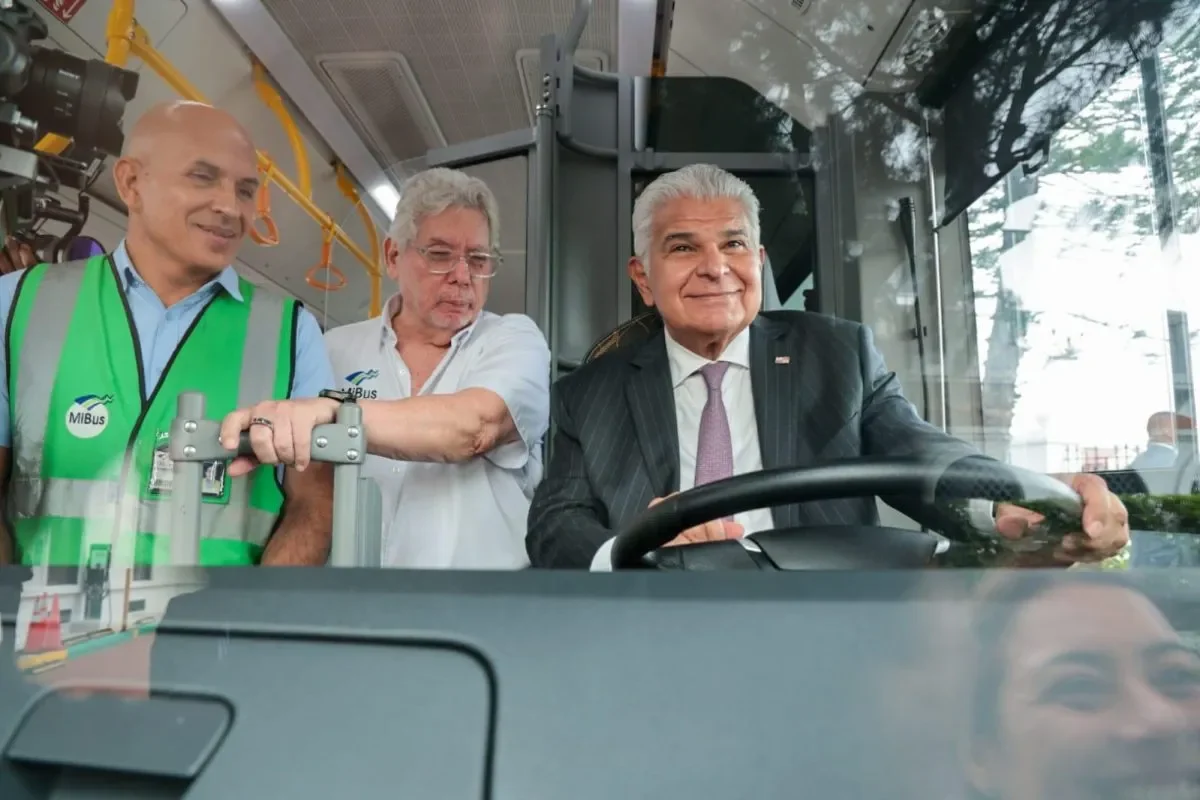
The first fully electric public buses quietly slipped through the narrow colonial streets of Panama City’s old quarter this week, giving residents and tourists a glimpse of a cleaner, quieter transit future. President José Raúl Mulino climbed aboard one of the five new Panama electric buses early Wednesday morning, launching a service designed to slash emissions in the UNESCO-listed Casco Antiguo while preserving its fragile architectural charm.
How Panama Electric Buses Will Transform Historic Transit
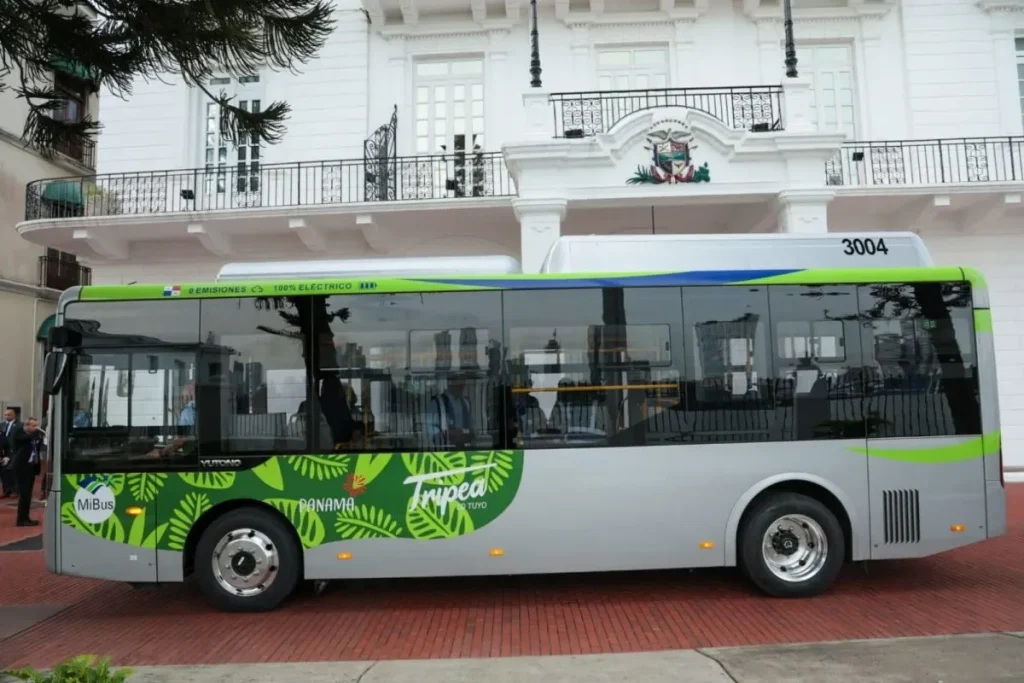
Each of the zero-emission vehicles replaces noisy diesel units, now humming along a loop that links the bustling 5 de Mayo terminal with the heart of the historic district. The route, designated M. 5 de Mayo – Casco Antiguo, carries tens of thousands of travelers every month. Planners expect the new fleet to reduce both air pollution and the low-frequency vibrations that can damage centuries-old stone facades.
The five buses represent an investment of more than one million balboas, an amount that the government sees as a down payment on sustainable urban mobility. Unlike earlier pilot projects that tested hybrid models, this is the first permanent deployment of fully electric buses within MiBus operations. During the inaugural ride, Mulino and his ministers examined the vehicle’s digital dashboards and real-time telemetry feeds from the driver’s seat, signaling the administration’s hands-on interest in the technology.
Advanced Technology Redefines the Commuter Experience
Outfitted with a suite of driver-assistance systems, the buses constantly scan for pedestrians and monitor following distances. The advanced driver assistance technology, known as ADAS, issues collision and lane-departure alerts, a feature rarely seen on Central American public transit. Seven interior and exterior cameras feed a closed-circuit security system, while onboard WiFi keeps riders connected as they pass landmarks like the Metropolitan Cathedral and Plaza de la Independencia.
Regenerative braking helps extend the range of each bus by capturing energy that would otherwise be lost, a crucial advantage on the neighborhood’s steep inclines. With room for 60 passengers, the vehicles balance capacity with maneuverability, threading through alleys where larger coaches would struggle. Outside, external speakers play gentle audio cues, and inside, a telemetry box transmits location and battery status back to MiBus control centers every few seconds.
Accessibility That Leaves No One Behind
A low-floor design and fold-out ramp mean wheelchair users and parents pushing strollers can board without assistance. Designated bays include securement systems and high-contrast tactile markings in braille, a first for Panama’s municipal bus network. Assistance buttons sit within reach, and priority seating is clearly marked with universal symbols.
The focus on universal design marks a broader shift in how Panama approaches public infrastructure. By embedding accessibility from the start, officials aim to meet both legal obligations and the practical needs of an aging population. The tourism authority, which financed the purchase, predicts the inclusive features will attract more visitors with reduced mobility who previously found the old quarter’s narrow sidewalks and steep steps daunting.
A Greener Future for Tourism and Residents Alike
Mulino framed the launch directly in terms of livability.
“I am very pleased, happy to have this exhibition of the bus today, the units that will run the Casco Antiguo circuit to help this sector not become congested with cars and not be contaminated by the use of normal gasoline vehicles. In this area, where the Presidential House is also located, tourism moves a lot and will keep increasing; and all the neighbors are doing good business, restaurants, ventures; there is everything. That is good for the Old Quarter of the city.” [Translated from Spanish]
The Panama Tourism Authority (ATP) took the lead on acquisition, weaving the project into a larger blueprint to enhance the environmental credentials of a district that draws nearly two million visitors annually. Quiet electric propulsion means walking tours and outdoor café seating won’t compete with engine roar, and the absence of tailpipe emissions protects the ornate plasterwork and coral-stone walls from soot accumulation.
Coordinated Effort Behind the Panama Electric Buses Launch
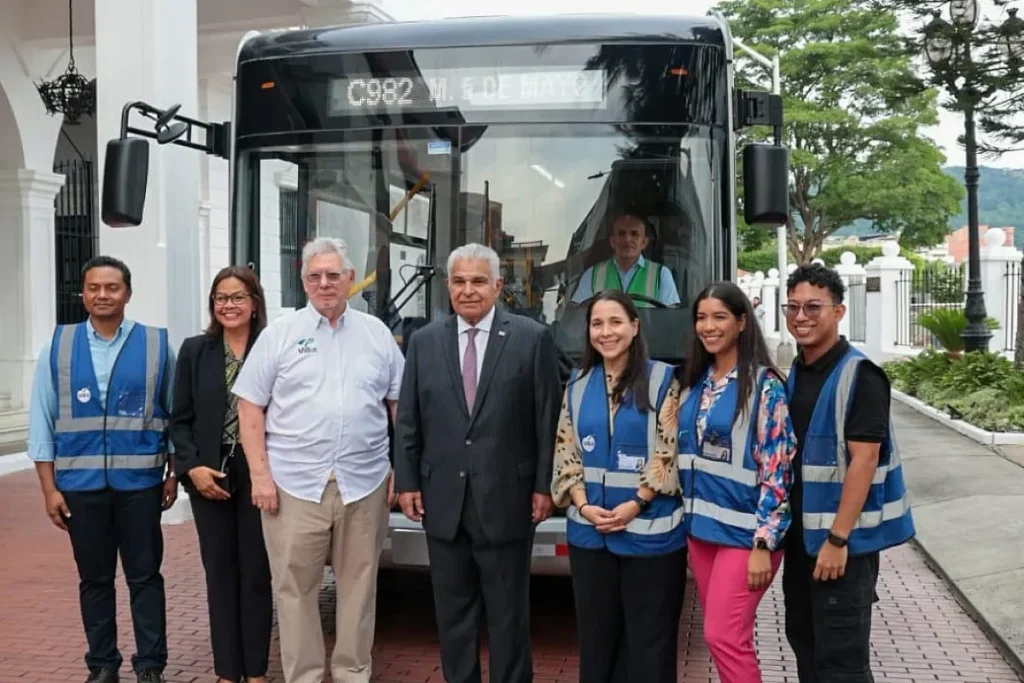
Bringing the fleet to the streets demanded an interinstitutional push. Culture Minister María Eugenia Herrera, Tourism Minister Gloria De León, and Presidency Minister Juan Carlos Orillac all joined the president at the Palacio de Las Garzas for the handover ceremony. Nicolás Brea Kavasila, director of the Transit and Land Transportation Authority, and MiBus general manager Carlos Sánchez Fábrega were also on hand, underscoring the operational coordination needed to integrate electric charging infrastructure and driver training into existing schedules.
The collaboration signals that Panama’s push toward electrification is accelerating beyond one-off announcements. With the buses now circulating daily, the government expects to gather hard data on energy consumption, maintenance costs, and passenger satisfaction, metrics that could shape future orders. The historic district testbed, where tourist footfall guarantees high visibility, may become the blueprint for scaling electric mobility across the city’s wider bus network.