


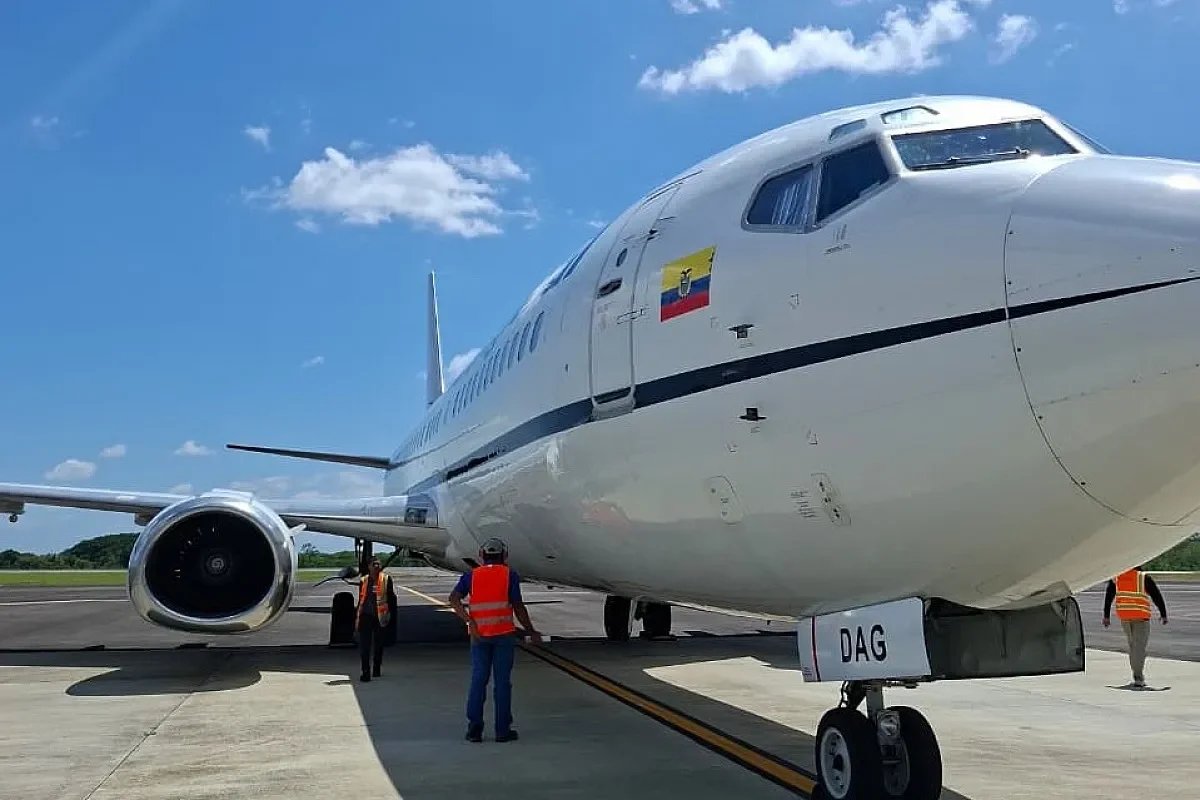
Spraying teams moved quickly through the luggage compartments just moments after the inaugural AeroRegional flight from Quito touched down at Scarlett Martínez International Airport. The immediate disinfection marked a sharp escalation of Rio Hato health controls, a response triggered by the first direct passenger link between Ecuador and this fast-growing tourism hub on Panama’s Pacific coast. Officials made clear that every suitcase and cargo hold would face rigorous quarantine inspections long before passengers collected their belongings.
Disinfection Precedes Unloading on New Route
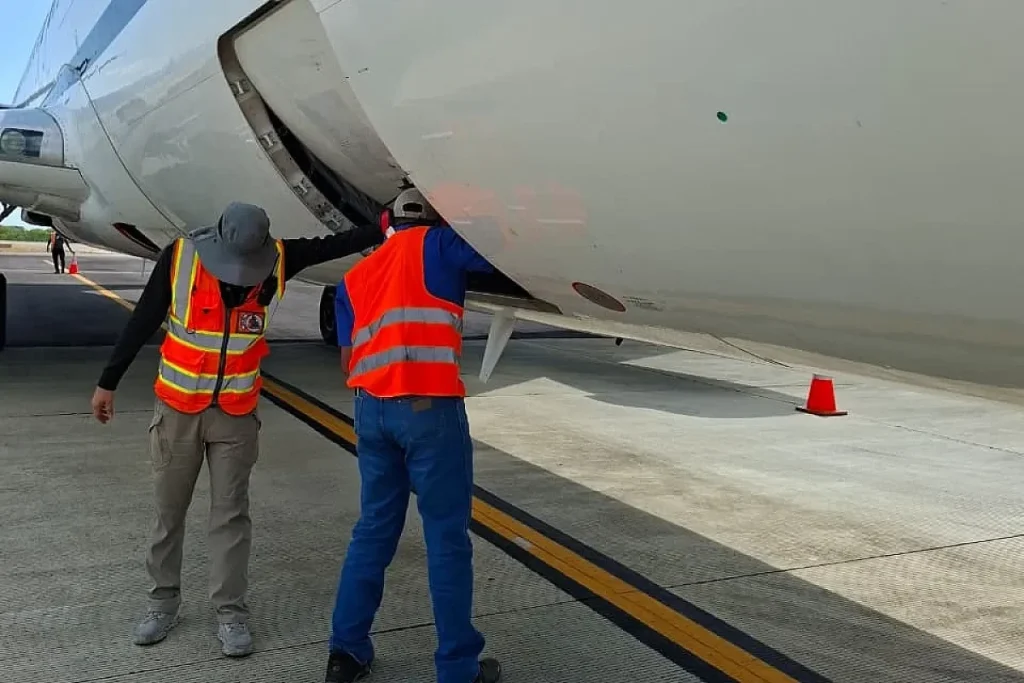
The first line of defense targets what passengers never see. Before ground crews open the cargo doors, technicians wearing protective equipment spray aerosolized treatments inside the baggage compartments. This step, mandatory for the AeroRegional flights that began carrying travelers between Quito and the Coclé province, aims to destroy any insects that might have hitched a ride. Depending on the specific aircraft deployed, the planes seat 57, 103, or as many as 167 people, making each operation a scaled exercise in rapid biosecurity.
Once the interior spraying finishes, inspectors from the Executive Directorate of Agricultural Quarantine walk every row of the cabin and scrutinize carry-on luggage. Sniffer dogs occasionally assist, trained to detect organic material that could harbor pests ranging from fruit flies to soil-borne pathogens. The same quarantine protocols have been running without pause for the regular arrivals from Montreal, Canada, but the South American connection forced a recalibration because andean agricultural ecosystems carry a different set of risks.
Rio Hato Health Controls Form Part of a National Shield
The reinforced Rio Hato health controls don’t operate in isolation. Across Panama, identical procedures play out each day at seaports, land border posts, and international airports. The Ministry of Agricultural Development (MIDA) has built what it describes as a permanent preventive strategy, treating any point of entry as a potential breach where a single overlooked shipment of fruit or a forgotten souvenir could introduce a plague capable of devastating a crop sector.
Río Hato’s airport, situated roughly 100 kilometers southwest of Panama City, serves the resort communities of Playa Blanca, Farallón, and Santa Clara. Its growing list of international connections has turned the terminal into a vital economic artery for the region, but also a heightened vulnerability. The quarantine directorate’s personnel now calibrate their inspections to the origin of each flight, updating risk assessments as new routes launch. The Quito service, operated by the Ecuadorian carrier AeroRegional, became the latest piece in a mosaic that already links Coclé directly to North America.
Balancing Tourism Growth Against Invisible Threats
Every new international gateway brings both opportunity and anxiety. The beachside corridor around Río Hato thrives on foreign visitors, and the government actively courts airlines to diversify connections. Yet entomologists and plant pathologists inside MIDA warn that a single mated female Mediterranean fruit fly, an invasive termite species, or a soil sample clinging to a shoe can undo decades of containment work. Panama’s agricultural exports, including melons, pineapples, and coffee, depend on the country’s favorable pest status with trading partners.
Regional history offers stark reminders. Outbreaks of avian influenza in Central America, the spread of Fusarium wilt in bananas, and periodic detections of African swine fever in the hemisphere all sharpen institutional memory. Quarantine officials stress that the spraying and inspections aren’t theater, they’re the first moat protecting the livelihoods of thousands of small-scale farmers and large agricultural enterprises alike. The controls at Río Hato now mirror the intensity long applied at Tocumen International Airport in the capital.
Daily Vigilance Sustains Animal and Plant Health
MIDA frames the entire quarantine apparatus as essential to food sovereignty. Dogs, baggage scanners, and manual inspections all feed into a system that has intercepted contraband seeds, undeclared meats, and insect larvae on multiple occasions. At Río Hato, the authority says, no flight escapes the routine, whether it arrives with 57 passengers or pushes the upper limits of capacity. The approach is methodical and unglamorous, repeated before dawn and late into the night depending on flight schedules.
The arrival of the Quito route also prompted refresher training for local staff, covering the specific pests prevalent in high-altitude Andean farms. Biosecurity analysts contributed updated threat lists that now guide the physical checks. This constant updating, according to the ministry, keeps the country one step ahead of smugglers, unwitting travelers, and a climate that expands the range of many destructive organisms. What happens on the tarmac at Río Hato reverberates far beyond the terminal, touching every hectare of Panamanian farmland. For the teams in the baggage holds, the work is simple: spray, inspect, and never assume an empty cabin means a clean one.