


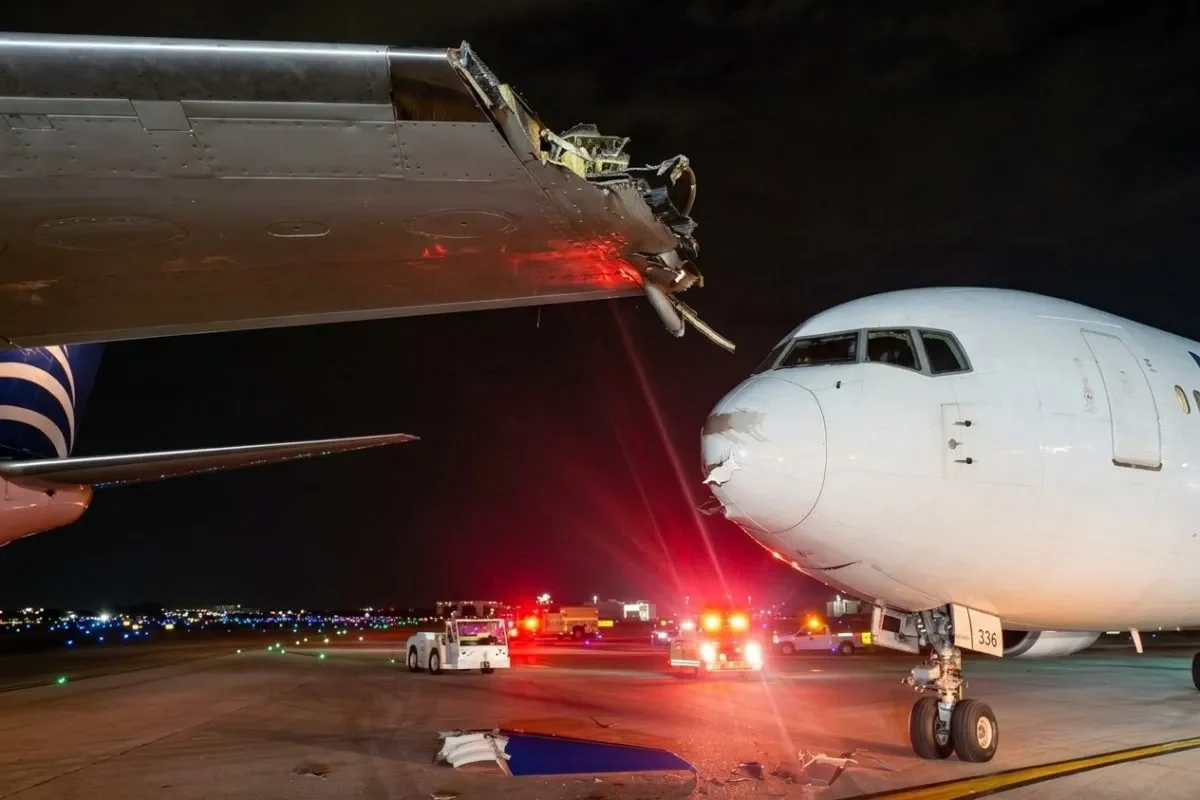
A ground collision between a Copa Airlines passenger jet and a UPS cargo plane at Miami International Airport left two people with minor injuries Saturday night, prompting a federal investigation that now includes the FBI. The Miami airport collision occurred at approximately 9:15 p.m. local time on November 14 when the wingtip of the Copa Boeing 737 struck the nose of the UPS Boeing 767 as both aircraft maneuvered on taxiways.
Greg Chin, the airport’s communications director, confirmed that two people sustained minor injuries and were treated by Miami-Dade Fire Rescue personnel at the scene. Neither required hospitalization. The incident comes just one day after the Federal Aviation Administration ordered a nationwide ground stop due to failures in air traffic control communication systems, a disruption that triggered cancellations and delays at airports across the country.
FAA and FBI Launch Parallel Investigations
The FAA has opened an investigation into the circumstances surrounding the collision, while the FBI’s involvement signals the heightened scrutiny now applied to aviation incidents in the United States. Preliminary reports indicate air traffic controllers had instructed the UPS crew to yield to the Copa aircraft before the impact occurred.
Recordings from the control tower captured the immediate aftermath. After the collision, the Copa pilot radioed, “Somebody hit us,” according to communications reviewed by Chilean outlet BioBio. When controllers asked the UPS crew whether they had struck the other aircraft, a pilot responded, “Yes, we went too far and then he hit us with the wing.” The FAA said it will examine both the ground movement procedures and the communications between pilots and controllers.
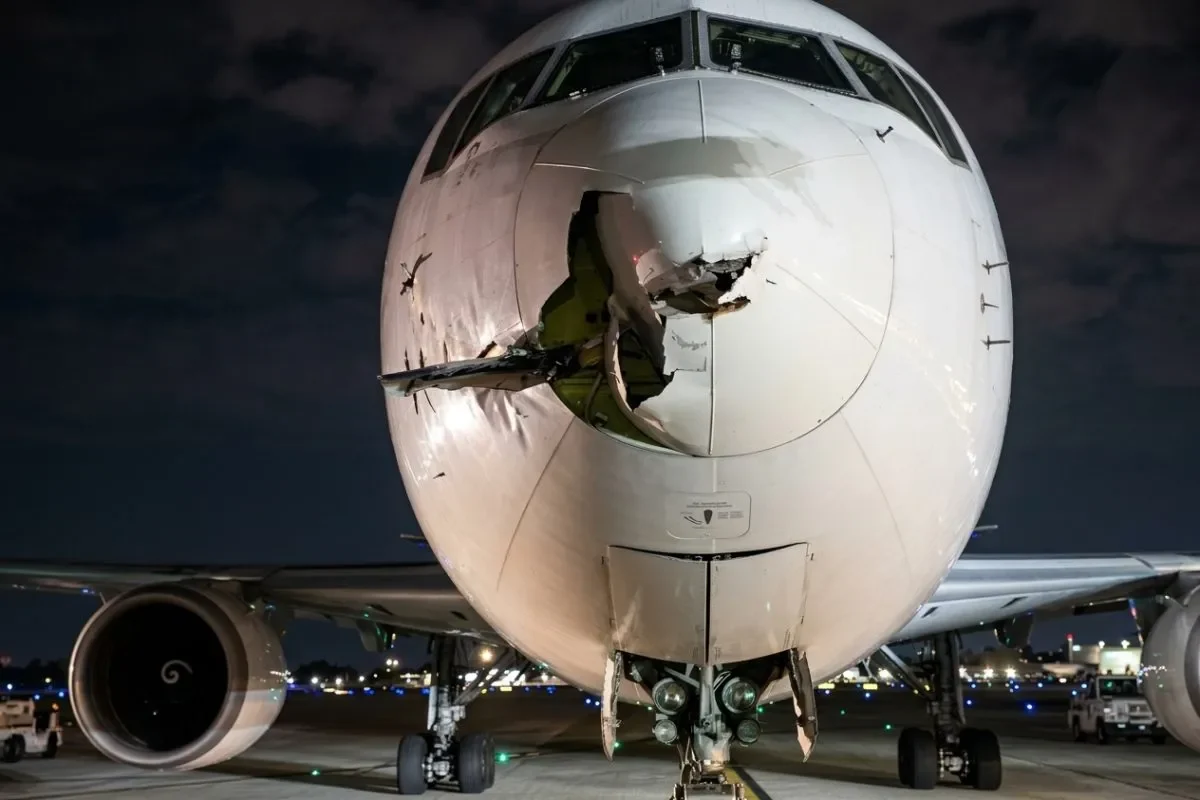
The scene is rough. One Copa jet has its winglet torn and crumpled at the top, with ragged metal edges sticking out. A few steps away, another Copa jet has its nose cone ripped open, with a jagged hole and the skin peeled back like a tin can. The nose gear is still standing and the cockpit windows are intact, but the front looks chewed up
— Aviation Reporter (@TripppleSeven7) November 15, 2026
Passenger Account and Aircraft Damage Assessment
Copa Airlines confirmed that flight CM427, which had arrived from Panama City, was carrying 166 passengers and six crew members. All passengers disembarked safely, and the damaged aircraft was subsequently towed to the terminal. The Panamanian carrier’s jet sustained damage to the edge of one wing.
The UPS cargo plane, which was scheduled to depart for Bogotá, Colombia, suffered frontal damage. The two injured passengers received on-site medical attention from Miami-Dade Fire Rescue teams, and officials emphasized that no one required transport to a hospital. The remaining passengers were processed through normal arrival procedures following the incident.
Broader Aviation Safety Context
The timing of the collision has drawn particular attention given the FAA’s nationwide ground stop on Friday, November 13. That disruption stemmed from problems with air traffic control communications infrastructure, an issue that rippled through the national airspace system and caused widespread operational challenges. Aviation safety analysts note that ground collisions, while less catastrophic than runway incursions involving departing or landing aircraft, still represent a significant safety concern at major hubs.
Miami International Airport ranks among the busiest cargo gateways in the United States and serves as a critical connecting point for flights between North America and Latin America. The airport handles a complex mix of passenger and freighter operations around the clock, a factor that increases the demands on ground controllers and pilots navigating congested taxiway networks. The FAA’s investigation will likely focus on whether the UPS crew properly followed controller instructions to give way to the Copa aircraft.
Both airlines said they are cooperating fully with investigators. Copa Airlines has not announced any changes to its Miami schedule as a result of the incident, and UPS continues to operate its cargo flights through the airport. The National Transportation Safety Board has not indicated whether it will conduct an independent review, though the agency typically defers to the FAA for ground handling incidents that do not involve substantial aircraft damage or serious injuries.