


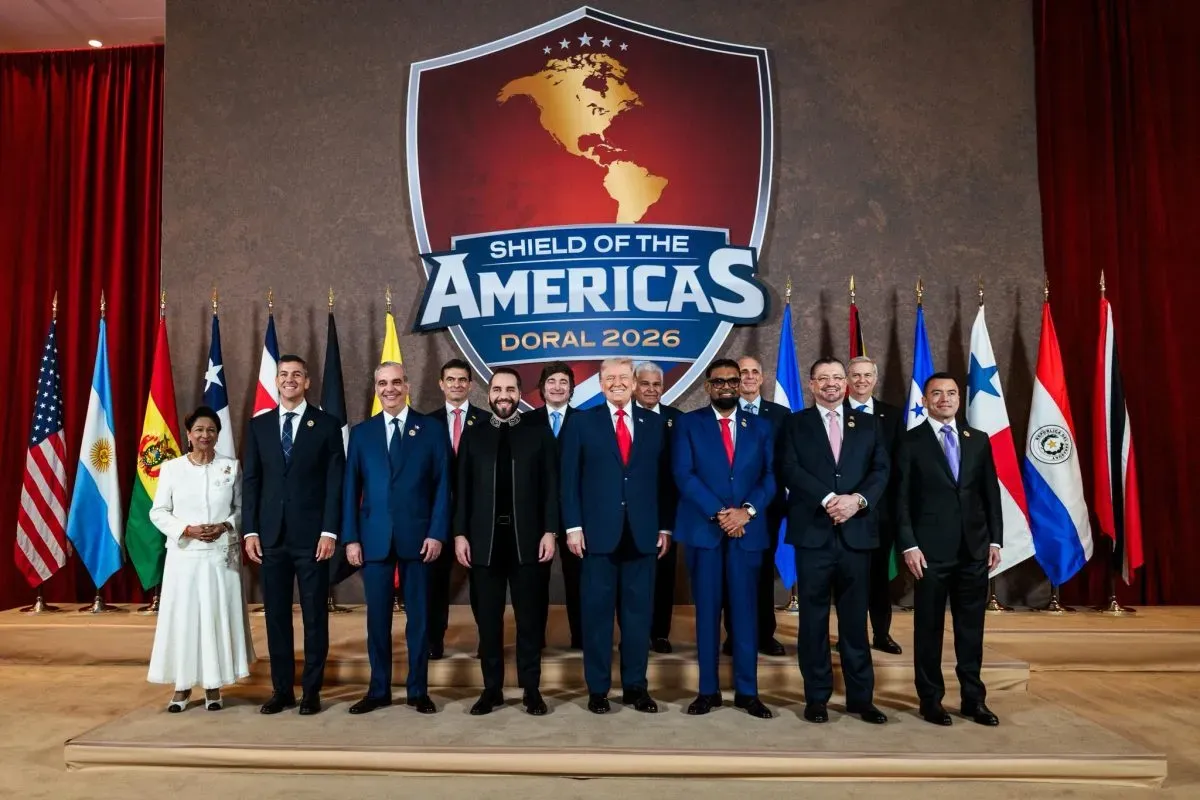
The Ministry of Foreign Affairs of Panama issued a clarifying statement on Tuesday, March 10, 2026. It asserted that Panama did not sign any formal document during the ‘Americas Shield’ meeting in Miami, Florida, which was led by U.S. President Donald Trump. This statement directly amended the government’s initial announcement from the day of the event.
Officials now describe the meeting as a forum for a tacit agreement among twelve nations to unite against international crime, particularly drug trafficking. The clarification seeks to delineate the nature of Panama’s participation in the multinational security initiative promoted by Trump.
Contradictory Communications Create Confusion
Confusion arose from conflicting official releases. On Saturday, March 7, the Foreign Ministry itself had announced President José Raúl Mulino’s participation in “the signing of the multilateral agreement ‘Americas Shield.'” That initial communiqué stated the pact established a new strategy and action programs against drug trafficking, organized crime, and illegal migration in the Americas.
Three days later, the ministry’s position shifted. The new statement emphasized that no physical document received a signature from the Panamanian delegation. “A tacit agreement was made to join forces against international crime, especially drug trafficking,” the Tuesday release noted. [Translated from Spanish]
“The president of the Republic, José Raúl Mulino, participated today in the signing of the multilateral agreement ‘Americas Shield’ promoted by U.S. President Donald Trump,” the ministry’s original Saturday statement read. [Translated from Spanish]
This revision highlights the sensitive diplomatic balance Panama maintains. The nation is deepening security cooperation while carefully managing its international treaty obligations and sovereign policy.
Panama Asserts Existing Frameworks and Neutrality
In its follow-up, the Foreign Ministry stressed that Panama already operates under robust bilateral security cooperation agreements with the United States, Colombia, and other nations. It framed the Miami meeting as a working accord that reinforces pre-existing coordinated efforts rather than creating an entirely new legal structure.
A key part of the clarification addressed national sovereignty concerns. The ministry explicitly stated the collaborative actions against criminal organizations do not conflict with the country’s foundational canal treaty. This was a pointed reassurance to domestic and international observers.
“It is clear that these actions have no contradiction with the Treaty of Neutrality of the Panama Canal, given that the actions are against criminal organizations, which often finance international terrorism,” the ministry’s Tuesday communication added. [Translated from Spanish]
The primary focus, according to Panamanian officials, remains the fight against narcotrafficking. They argue international support is crucial for enhancing the effectiveness of Panama’s own security forces against drug-related activities. The Ministry of Foreign Affairs of Panama is leading this nuanced diplomatic messaging.
Trump’s Proclamation Outlined Broad Coalition Goals
The Miami meeting was anchored by a proclamation from Donald Trump. He announced the push for an Americas Coalition to combat drug cartels. His outlined goals were broad and ambitious, consisting of four main points disseminated to attendees.
These points called for the destruction of criminal cartels and foreign terrorist organizations in the Western Hemisphere “to the greatest extent possible under applicable law.” The strategy further advocated for coordinated efforts to deprive these groups of territorial control, financing, and resources.
A third point involved the United States training and mobilizing allied nations’ armies to create an effective combat force. This force would dismantle cartels and their capacity to export violence. Finally, the proclamation emphasized the need for the U.S. and its allies to keep external threats at bay, including malign influences from outside the hemisphere. The scope of these goals explains the sensitivity of Panama’s subsequent diplomatic clarification.
Analysts suggest Panama’s corrected statement serves multiple purposes. It maintains alignment with a significant regional security dialogue while formally avoiding entanglement in a potentially binding agreement initiated by a controversial U.S. political figure. The careful wording allows the Mulino administration to demonstrate proactive security engagement to its citizens without ceding operational autonomy or violating constitutional precepts. The government continues to navigate a complex geopolitical landscape where security imperatives and diplomatic precision are equally critical.