


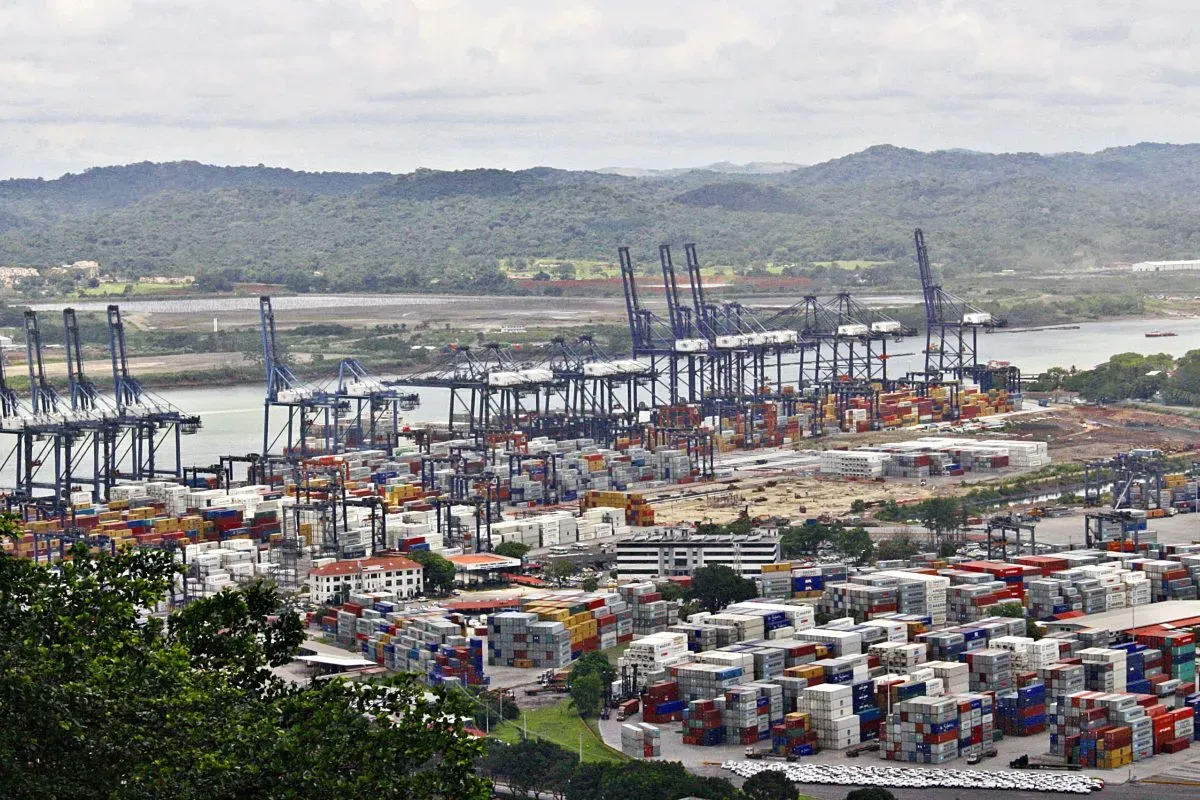
The Chinese state-owned shipping giant China COSCO Shipping has suspended all services at the Balboa port in Panama. The company announced the decision to customers on March 10, according to a report by the Panamanian newspaper La Prensa. This move follows escalating diplomatic and trade tensions between China and Panama after the Panamanian government forcibly took over port terminals from a Hong Kong-based operator last month.
📑 Table of Contents
All future confirmed bookings with COSCO at the balboa port are now canceled. The company stated that cargo which has already arrived will still be processed normally. The suspension directly impacts one of the two major container terminals along the vital Panama Canal shipping route.
Geopolitical Flashpoint at the Canal
The Balboa port and its counterpart in Cristobal became a focal point in U.S.-China competition after Panama’s Supreme Court voided the operating contract for CK Hutchison Holdings in January. The court’s decision came amid public pressure from former U.S. President Donald Trump. Panama’s government then executed a forced takeover of the facilities in February, transferring interim control to APM Terminals and Mediterranean Shipping Company (MSC).
China’s foreign ministry had previously warned Panama would pay a “heavy price” for the takeover. Beijing also instructed state-owned firms to pause discussions on new projects in the country.
“We have asked Chinese companies to comprehensively evaluate the risks of investing and operating in Panama,” a Chinese foreign ministry spokesperson said earlier this year. [Translated from Spanish]
The situation complicates a massive, multi-billion dollar global port deal. CK Hutchison had planned to sell its entire 43-port portfolio, including the Panamanian terminals, to a consortium backed by BlackRock and MSC’s Terminal Investment Limited. China COSCO Shipping was later invited to join the buying group in an effort to gain China’s approval for the transaction.
Limited Operational Impact Expected
Industry analysts note COSCO’s suspension is unlikely to cripple operations at the Balboa terminal. The port relies on Maersk’s APM Terminals for approximately 80 percent of its cargo handling, according to the La Prensa report. The immediate effect is more symbolic, signaling Beijing’s willingness to use economic leverage in the dispute.
Panamanian officials have not yet issued a formal statement regarding COSCO’s action. The country’s maritime authority continues to manage the panama canal itself, which recently reported a 2.8 percent increase in transits for January. Canal operations are separate from the privately-operated port terminals on either end.
For global shippers, the tension introduces new uncertainty at a critical chokepoint for world trade. Some cargo routes may see adjustments if Chinese state-owned enterprises begin rerouting goods as previously suggested. The standoff also casts a shadow over future infrastructure investment in strategic panama by Chinese companies.
Negotiations over the sale of CK Hutchison’s global port assets have reportedly stalled. Deal makers now hope for a political breakthrough during an anticipated meeting between U.S. and Chinese leaders. Until then, the suspended services at Balboa serve as a tangible marker of the growing geopolitical rift playing out in Central America.