


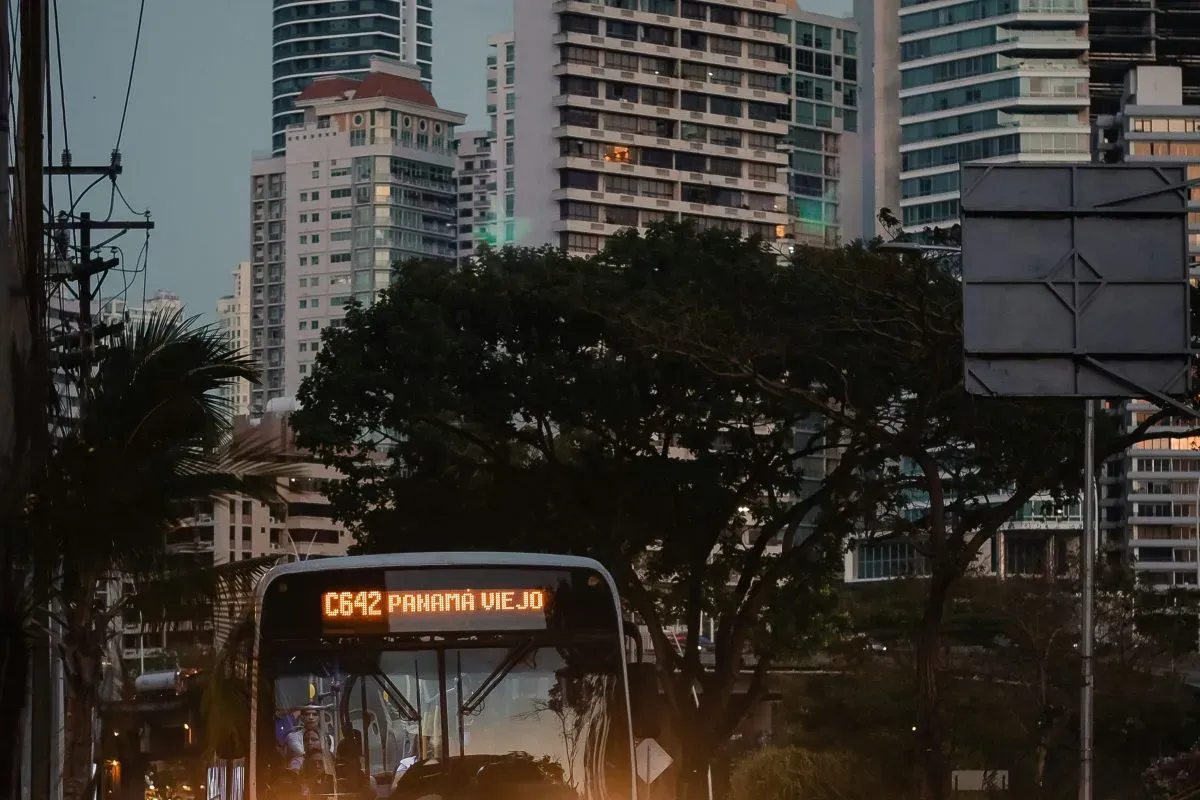
National transport unions in Panama have agreed to temporarily halt any increase in passenger bus fares. This decision follows a first round of negotiations with the administration of President Laurentino Cortizo. Both sides are now working against the clock to find a long-term solution to rising operational costs before the fare freeze becomes unsustainable.
The agreement, confirmed by union leaders on Tuesday, provides immediate relief to commuters across the country. It stems from a direct request by the Government of Panama during an initial dialogue session. Union representatives stated they will maintain current prices only while a government aid package is formally developed and presented.
Dialogue Focuses on Soaring Operational Costs
Drivers and fleet owners face severe financial pressure from spiking fuel and maintenance prices. Esteban Rodriguez, press secretary for the National Transport Chamber, emphasized the conditional nature of the fare freeze. He stated the sector’s commitment is tied directly to government action.
“After the meeting, our word is our word. We told the Government that, while a palliative measure is established, there will be no fare increase.” [Translated from Spanish]
Omar Lopez, president of the Provincial Transport Chamber, detailed the widespread impact. He explained that while all vehicle owners feel the pinch, the public transport sector bears a disproportionate burden. The sheer volume of daily operations multiplies the effect of each cost increase.
“The hike has hit us strongly,” Lopez said, “since we must assume high costs to keep the fleet operational.” [Translated from Spanish] His comments highlight the precarious position of transport companies balancing service continuity with economic viability.
Government Pledges Formal Proposal to Avert Crisis
During the talks, government officials pledged to analyze detailed financial data from the transport sector. Their goal is crafting a formal proposal to mitigate the economic impact. The most discussed measure involves a potential fuel subsidy targeted specifically at licensed public transport operators.
This targeted approach aims to provide relief where it is most needed without applying a broad national subsidy. Officials are reportedly reviewing models from other countries to structure an effective and fiscally responsible program. The finance and commerce ministries are leading this analysis.
Union leaders warn the situation remains critical. They insist any government proposal must address more than just fuel. Lopez argued for a comprehensive support package that includes help with spare parts and other essential operational expenses.
“Costs remain high. We hope that not only palliatives for fuel are considered, but also for spare parts, so that the Panamanian people do not have to assume the impact of our operating costs.” [Translated from Spanish]
This statement underscores a key fear. Without sufficient government intervention, transport groups say they will have no choice but to pass all increased costs directly to passengers. Such a move would strain household budgets nationwide during a period of general inflation.
Next Round of Negotiations Scheduled for Coming Days
A second high-stakes meeting between authorities and transport representatives is scheduled for the coming days. This next session will focus on the government’s preliminary proposals. The atmosphere is described as collaborative but urgent, with both sides acknowledging the temporary nature of the current fare freeze.
The national government faces a complex challenge. It must stabilize a vital public service without exacerbating fiscal pressures or setting an unsustainable precedent. For transport unions, the priority is securing a deal that allows them to maintain services and vehicle safety standards without incurring losses.
Commuters are now watching closely. A successful negotiation will keep fares stable and buses running. A breakdown in talks, however, could trigger sudden fare hikes and potential service disruptions. The outcome of the next meeting will likely set the course for Panama’s urban mobility for the remainder of the year.