


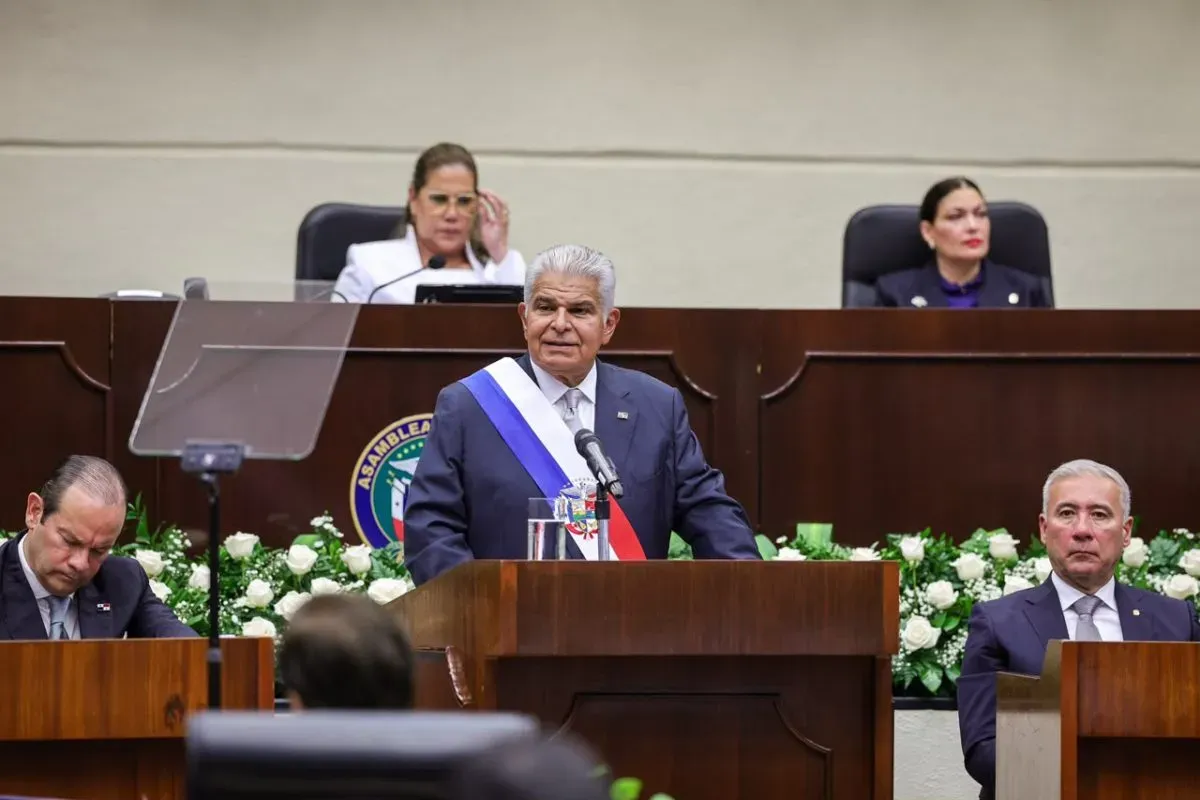
Panama City, Panama. Inside the National Assembly, President José Raúl Mulino delivered a stark assessment of what he called the country’s most pressing challenge. The issue isn’t infrastructure or foreign investment. It’s something far more personal for millions of Panamanians. “The concern I hear most frequently during my travels across the country is the lack of job opportunities, especially among our young people,” Mulino told lawmakers. [Translated from Spanish]
That frustration has now become the centerpiece of a new government initiative. Mulino announced the launch of “Panamá Pa’ Ti,” a comprehensive national strategy built on four pillars. The program targets employment, healthcare, the Panama basic food basket, and water access. The president framed this as the defining effort of his administration’s next phase.
A Private Sector Solution for Public Problems
Mulino made one thing crystal clear during his address. The jobs he envisions will not come from government payrolls. Instead, he is betting on private enterprise to drive the recovery. The administration has set a target of 80,000 new positions in the private sector. “These will not be state jobs, but sustainable opportunities born from investment, production, and the development of new projects,” Mulino said. [Translated from Spanish]
This approach marks a distinct shift in strategy. By tying job creation directly to business growth, the government is essentially staking its reputation on the health of the private sector. The Panama employment rate has become a key metric for measuring the success of the entire administration. Mulino acknowledged that the plan emerged directly from conversations with everyday citizens who feel left behind by the economy.

Construction as the Economic Engine
When it comes to generating those 80,000 jobs, the president has identified one industry as the primary catalyst. Construction will take center stage in the government’s economic revival plan. Mulino announced a housing program specifically designed for Panamanian families, with a strong focus on the interior of the country rather than just the capital.
“Every home that is built generates employment and moves the local economy,” Mulino stated. [Translated from Spanish] The president framed this as a return to fundamentals. “Construction will be, once again, the engine of a stage of greater prosperity,” he concluded. [Translated from Spanish] This focus on housing aims to address two problems simultaneously. It creates jobs in construction, manufacturing, and logistics. It also tackles the growing demand for affordable homes outside of Panama City.

Beyond Employment: Health and Water
The “Panamá Pa’ Ti” program does not stop at jobs and housing. Mulino outlined a broader vision that includes significant improvements in healthcare access and water infrastructure. These elements, combined with efforts to stabilize the cost of the basic food basket, form the complete picture of the government’s domestic agenda.
The president’s announcement comes at a critical moment. Panama has faced economic headwinds and social pressures in recent years. By bundling these four priorities into a single national program, Mulino is attempting to create a coherent narrative for his administration. He wants voters and investors alike to see a clear roadmap. The program represents a bet that targeted government support for private industry, combined with direct social programs, can lift the broader economy.
Whether the ambitious target of 80,000 private sector jobs is achievable remains an open question. The construction sector will need to ramp up quickly. The housing program will require regulatory approvals and financing. And the broader economic conditions in Panama and globally will play a major role. But for now, Mulino has laid out his vision. The next phase of his presidency will be judged by whether “Panamá Pa’ Ti” delivers on its promises of jobs, food security, clean water, and better healthcare for the people who told him they feel left behind.