


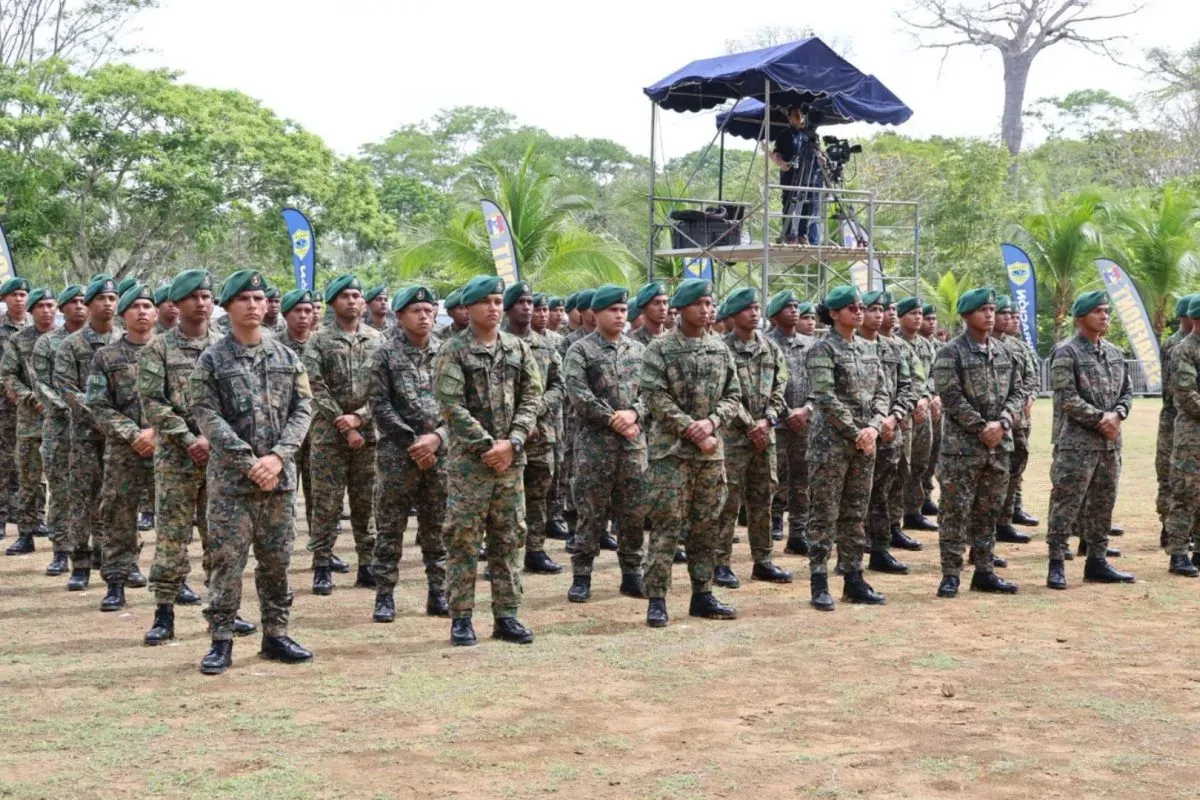
Panama’s border security forces have swept through communities near the Costa Rican frontier, arresting roughly 20 people in a targeted operation against drug distribution networks. The actions, concentrated in the western districts of Bugaba and Barú, signal an intensified push to dismantle local drug markets that have taken root in border towns. Alexis de Gracia, the Operations Chief for Senafront (National Border Service), confirmed that most of those detained are linked to street-level drug sales, known as micro-trafficking.
The operations began in Bugaba before expanding south toward Paso Canoas, a bustling border crossing, and into the banana plantation zones and the Renacimiento region. De Gracia explained that these areas have become hotspots for illegal activity, prompting a coordinated response from multiple agencies. The strategy relies heavily on intelligence sharing through the Binational Center Panama-Costa Rica, a joint mechanism that allows both countries to track and respond to cross-border crime patterns.
Interagency Coordination Targets Street-Level Dealers
De Gracia emphasized that these arrests are not random. They stem from ongoing surveillance of individuals already wanted by the justice system. The goal, he said, is to choke off the supply of illicit substances at the neighborhood level. “We are focusing on the retail sale of drugs in the communities,” De Gracia stated.
‘This inter-institutional coordination allows us to hit these networks where they operate, in the barrios and towns along the border’ [Translated from Spanish]
The operation involves prosecutors from the Drug Prosecutor’s Office, detectives from the Judicial Investigation Directorate (DIJ), the National Police, and the National Air-Naval Service. This unified front aims to make it harder for dealers to shift their operations when pressure mounts in one area.
The border region between Panama and Costa Rica has long been a corridor for smuggled goods and narcotics. Criminal groups exploit the porous nature of the frontier, moving drugs from production zones in South America northward. By hitting the distribution endpoints, Senafront hopes to disrupt the financial flow that fuels these larger networks. The recent operations also target contraband and organized crime activities that often overlap with drug trafficking.
Strategic Pressure on Border Communities
Local residents in towns like Paso Canoas have reported feeling the effects of open drug sales for years. The current crackdown, which began in recent days, represents one of the most concentrated efforts in the area this year. De Gracia noted that the operations are part of a broader strategy, not a one-time event. Authorities plan to maintain a visible presence and continue pursuing suspects who remain at large.
The use of the Binational Center is particularly significant. It allows Panamanian and Costa Rican authorities to exchange real-time information and coordinate patrols. This cooperation is vital because drug dealers often flee across the border when pressure mounts on one side. By working together, both nations can close that escape route. The center has become a model for regional security collaboration, focusing on intelligence-led policing rather than reactive patrols.
Senafront’s actions also send a message to smaller criminal actors who operate with relative impunity. The arrests of 20 individuals, many with ties to micro-trafficking, removes a layer of distribution that directly harms local communities. De Gracia warned that more operations are planned. “This is a sustained effort,” he said.
‘We will continue to pursue those who threaten the safety of our border communities’ [Translated from Spanish]
The coming weeks will likely see additional arrests as investigators follow leads gathered during the initial sweeps.