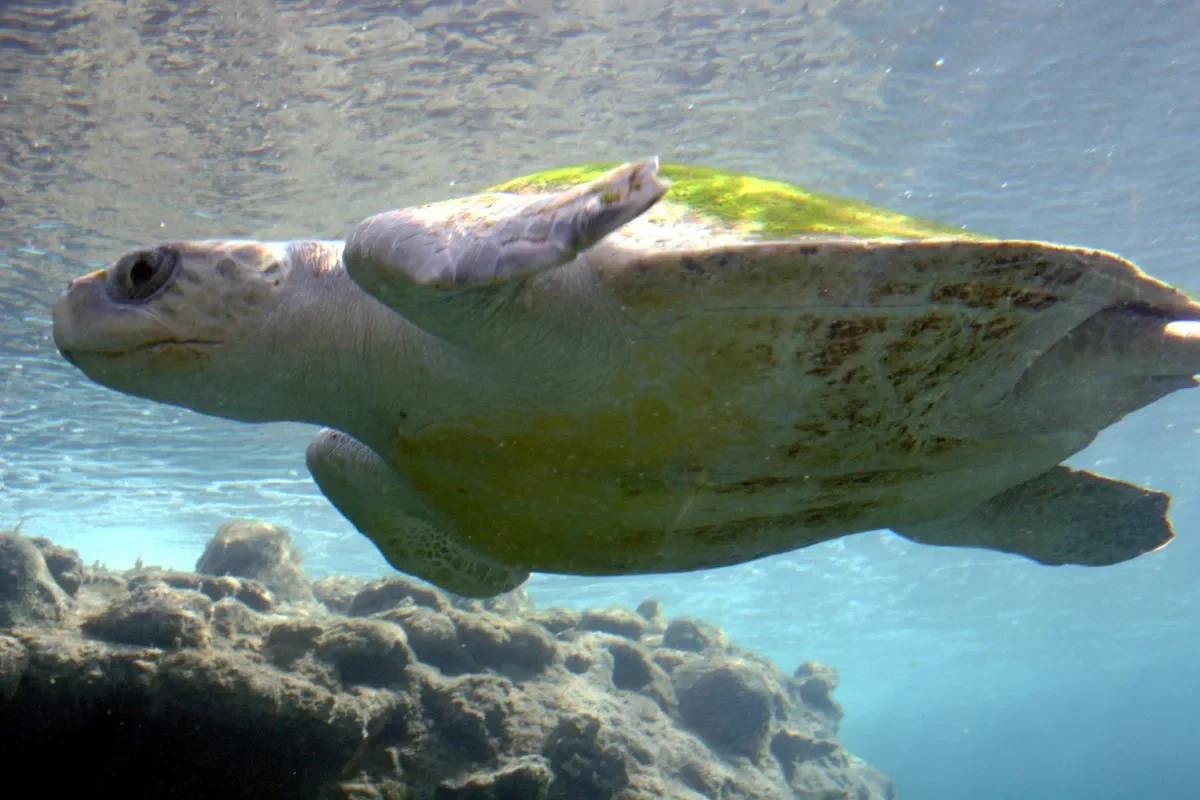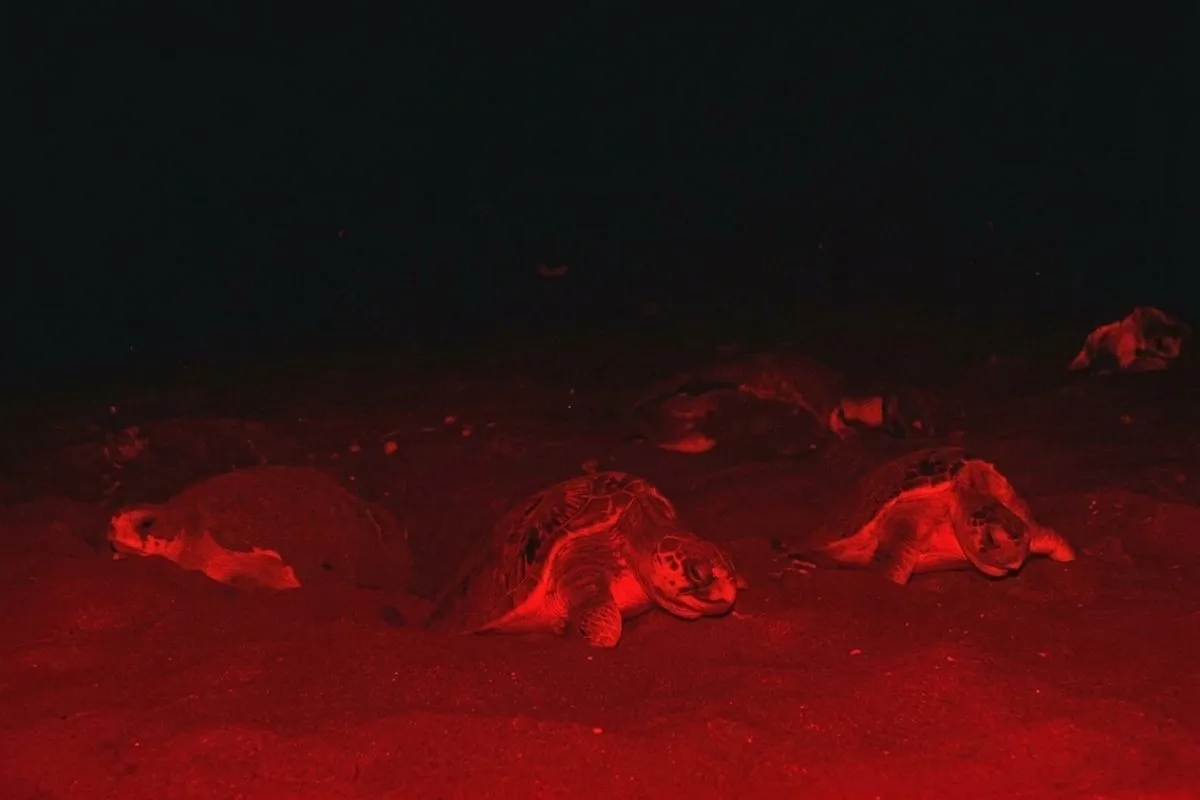
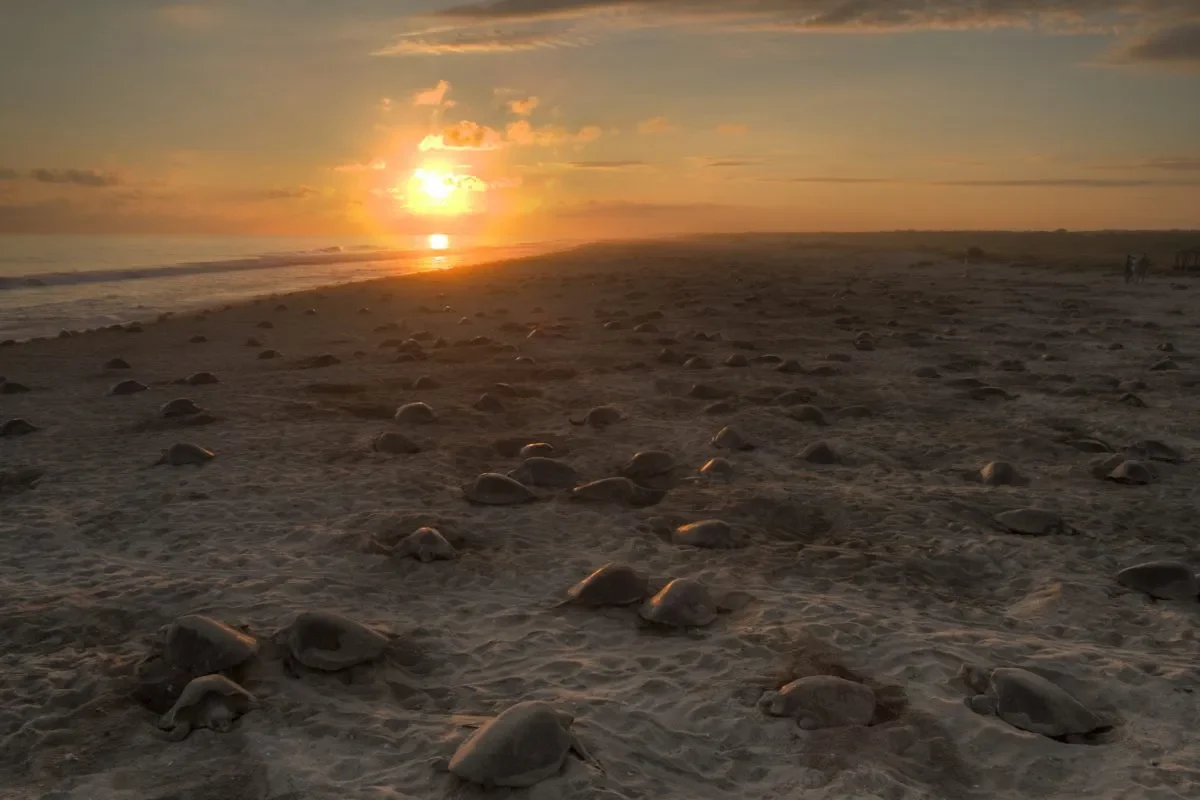
The remote sands of Playa La Marinera recently became the stage for one of nature’s most extraordinary reproductive gatherings. Conservation officials recorded 6,105 olive ridley turtles arriving at this protected beach in Panama’s Los Santos province during the year’s second mass nesting event, known as an arribada. In a matter of hours, female turtles emerged from the Pacific Ocean in synchronized waves to bury their eggs along the shoreline. The event reinforced the reserve’s growing reputation as a key critical nesting sites for the species on Panama’s Pacific coast.
A Protected Shoreline Draws Thousands of Turtles
Playa La Marinera sits within the Tonosí district of Los Santos, a part of Panama’s Azuero Peninsula that hosts some of the country’s richest coastal biodiversity. The beach belongs to a protected reserve managed by MiAMBIENTE, Panama’s environment ministry. Staff and park rangers maintain a permanent presence during the nesting season, balancing scientific research with active protection of the animals and their nests.
The 6,105 turtles documented in this latest event follow an earlier arribada recorded this year. While each nesting season varies, conservation teams have logged individual events surpassing 9,000 turtles at this same location in previous years. Cumulative counts across an entire reproductive cycle can stretch into the tens of thousands, making Playa La Marinera a standout site for olive ridley turtles in the eastern Pacific. The area’s combination of wide sandy beaches, relatively low artificial lighting, and protected status creates conditions that repeatedly draw large numbers of nesting females.
The Arribada and Its Biological Timing
An arribada is not an ordinary nesting event. It involves thousands of female turtles arriving on a relatively short stretch of coastline within a compressed window, often influenced by tide cycles, moon phases, and ocean conditions. Olive ridley turtles, scientifically known as Lepidochelys olivacea, are among only a handful of sea turtle species that exhibit this synchronized mass nesting behavior. Other notable arribada sites in the eastern Pacific appear in Costa Rica, Mexico, and Nicaragua.
Scientists believe the synchronization may increase the odds that at least some nests survive predators. With thousands of eggs deposited in a short period, beach predators cannot consume them all. This so-called predator swamping effect gives a significant share of hatchlings a better chance to emerge and reach the ocean weeks later. The phenomenon also complicates monitoring, requiring teams to work quickly and carefully across heavily populated nesting zones. Sea turtles face multiple pressures across their range, and the olive ridley is listed as vulnerable by the International Union for Conservation of Nature, making these mass nesting events especially valuable for regional conservation efforts.
Protecting Olive Ridley Turtles and Their Nests
During the current season, technical staff and park rangers from MiAMBIENTE have carried out continuous inspections at Playa La Marinera. Their work includes recording biometric data, measuring individual turtles, and evaluating the condition of nesting females. This information helps researchers track population health and detect changes over time. The monitoring also allows teams to identify repeat nesters and better understand how often individual turtles return to the same beach.
Nest protection remains equally urgent. Teams monitor the beach to reduce losses caused by wild animals and human disturbances. Biologists also watch for erosion, temperature shifts, and other environmental factors that can affect egg survival. Along many parts of the Pacific coast, olive ridley turtles face threats that include incidental capture in fishing gear, coastal development, and illegal egg collection. On Panama’s protected beaches, these direct conservation operations aim to give hatchlings a measurable advantage before they enter the ocean. The work extends beyond counting turtles, it involves safeguarding the buried clutches for the six to eight weeks required for incubation.
Panama’s Key Nesting Sites Across the Azuero Coast
Playa La Marinera does not stand alone in Panama’s nesting landscape. Nearby Isla Cañas, also within the Tonosí district, has historically registered mass nesting events ranging from 2,500 to 4,800 turtles per cycle. Together, these two sites establish the Azuero region as a vital reproduction corridor for olive ridley turtles and other marine species along the Panamanian Pacific. The busiest nesting months typically run from July through December, when ocean conditions and sand temperatures align for egg incubation.
In recent years, MiAMBIENTE has expanded patrols and community outreach during this window, encouraging residents and visitors to avoid disturbing nesting turtles or their tracks. Local conservation groups have also helped document nesting activity, building a more complete picture of the species’ seasonal movements along the coast. The combination of government monitoring and community awareness has strengthened the protection network around these critical beaches.
Ultimately, the arrival of more than 6,000 olive ridley turtles at Playa La Marinera underscores both the ecological importance of Panama’s protected coastal reserves and the steady work required to safeguard them. As this year’s nesting season continues, biologists and rangers will keep watch over the buried clutches, knowing that each protected nest represents a small but meaningful step toward the species’ long-term survival in the Pacific.