


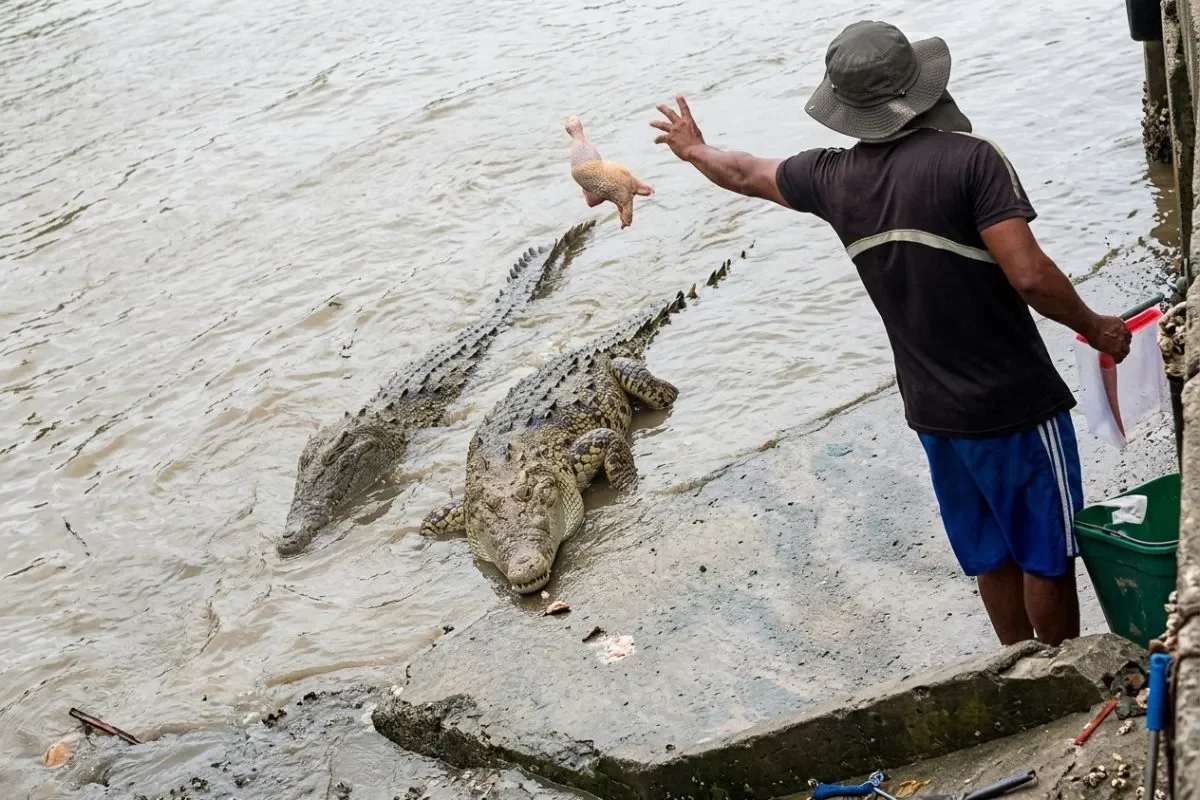
A quiet Friday at the Coquira port in Chepo Panama turned violent when a man, believed to be a local fisherman, slipped into the water and suffered a crocodile attack that left him with a serious wound to his right leg. Fellow fishermen pulled him to safety, but the incident has reignited urgent warnings from environmental authorities about a growing and dangerous practice, feeding wild crocodiles by hand. The Ministry of Environment (MiAmbiente) confirmed an investigation is now underway to understand exactly how this interaction between humans and wildlife went so wrong.
Officials suspect the animal reacted instinctively to the sudden movement of the man falling into the water. But beneath that immediate trigger lies a deeper, more troubling pattern. For months, authorities have watched with alarm as people at the port toss food to crocodiles, a habit that rewires the animals’ natural behavior and erases their fear of humans. The result is a stretch of water where crocodiles no longer wait for fish or crabs, they approach boats and docks expecting a handout.
The Dangerous Habit of Feeding Wild Crocodiles
At the heart of the Coquira incident is a simple but devastating ecological mistake. Crocodiles in this part of Panama naturally hunt fish and crabs. Their diet keeps them wary and distant from human activity. But when fishermen and port workers throw food scraps into the water, the animals learn a new association, people mean easy meals. That association doesn’t just make crocodiles bolder. It makes them linger near docks, approach boats, and react aggressively when food doesn’t appear.
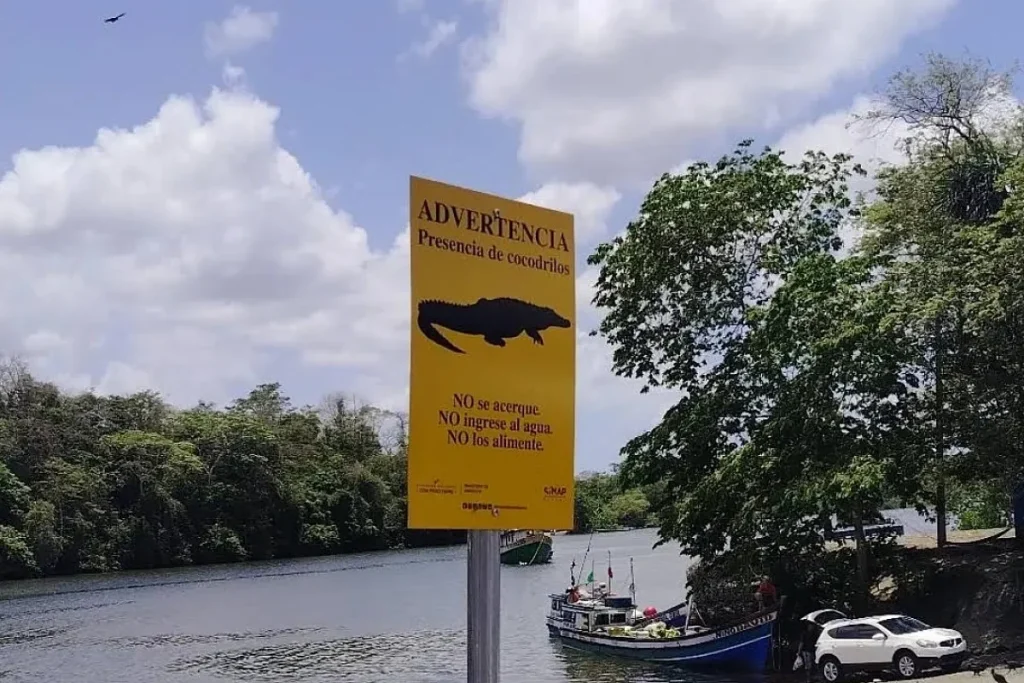
MiAmbiente has documented this behavior shift through videos circulating on social media. The clips show people feeding the reptiles directly from the port, often at close range. Despite previous awareness campaigns aimed at local fishermen, the practice continues. The agency now plans a fresh round of training and direct outreach next week, hoping to reinforce the message that feeding crocodiles isn’t an act of kindness, it’s a public safety threat.
The ecological stakes are high. Crocodiles are a protected species in Panama, and their conservation depends on maintaining natural hunting behaviors. When humans interfere with that balance, the animals become dependent and dangerous. The challenge for authorities is protecting both the species and the people who share its habitat.
Coquira Port’s Crocodile Population and Vulnerability
Coquira isn’t just any port. Environmental assessments have identified it as a vulnerable zone precisely because of its dense crocodile population. In a stretch of just one kilometer upstream and another kilometer downstream from the port, MiAmbiente counted around 20 crocodiles. That concentration makes encounters almost inevitable, especially in an active fishing port where people work daily at the water’s edge.
The port’s daily activity creates a perfect storm. Boats arrive with fish waste, people clean their catches near the water, and crocodiles have learned to associate the bustle with food. Even without intentional feeding, the environment itself attracts the animals. Add deliberate handouts to the mix, and the risk multiplies. The man injured on Friday fell into water that had been conditioned, by human behavior, to be far more dangerous than it should have been.
Authorities are now evaluating the specific circumstances of this crocodile attack. They will consider whether the animal was acting territorially, responding to the splash, or whether it had been conditioned to approach people. The distinction matters because it determines the response. A naturally behaving crocodile may simply be relocated or left alone. A conditioned animal that has lost its fear of humans may require more drastic intervention.
Panama’s Contingency Protocol for Wildlife Encounters
MiAmbiente has been developing a formal contingency protocol for situations involving crocodiles in areas frequented by people. The protocol weighs multiple factors before any action is taken. Officials assess the animal’s size, its behavior patterns, and how heavily the site is used by humans. The goal is to balance conservation with public safety, a delicate equation that rarely offers easy answers.
In the Coquira case, that protocol will be applied again. The agency hasn’t yet announced what specific measures might follow, but the framework allows for a range of responses. In some cases, education and signage suffice. In others, the animal may need to be captured and relocated. The most extreme option, euthanasia, is reserved for animals that pose an immediate and ongoing threat. Every decision is made case by case, with input from biologists and local officials.
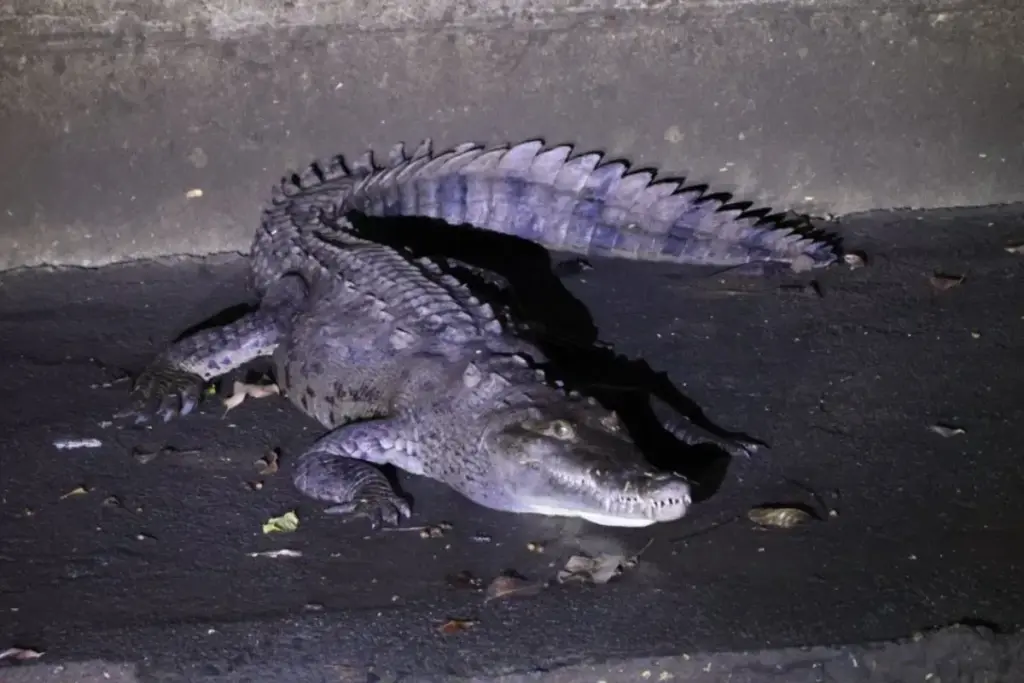
The protocol’s existence reflects a broader reality in Panama. As human settlements expand into mangrove areas and river systems, encounters with crocodiles become more frequent. Coquira is one of several sites where the Ministry has identified conflict zones. The challenge isn’t just responding to incidents like Friday’s attack, but preventing the conditions that make them likely in the first place.
Community Response and the Road Ahead
The fishermen at Coquira know the crocodiles well. They see them daily, gliding through the murky water or sunning on the banks. For many, the animals are part of the landscape, respected but not feared. That familiarity may explain why feeding them seemed harmless at first. But Friday’s crocodile attack has changed the calculus. A man is injured, and the community now faces the uncomfortable truth that its own actions helped create the danger.
MiAmbiente’s outreach next week will focus on that uncomfortable truth. Officials plan to meet directly with fishermen, not to lecture but to explain the biology behind the risk. When a crocodile learns to associate humans with food, it doesn’t distinguish between a hand offering fish and a hand pulling in a net. The animal simply sees an opportunity. That message, delivered repeatedly and with evidence, is the agency’s best hope for changing behavior.
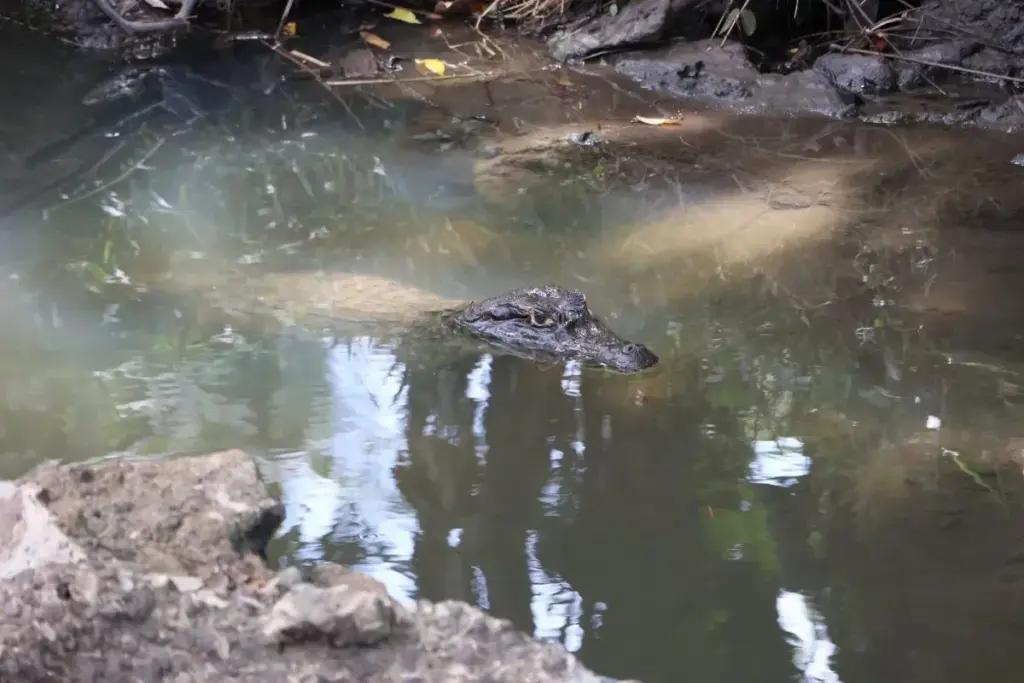
The broader lesson extends beyond Coquira. Across Panama’s coastal communities, the line between human and wildlife territory is blurring. Crocodiles, like many species, are adapting to human presence. The question is whether humans can adapt too, by respecting the wild nature of these animals and refusing to turn them into beggars. The man recovering from his leg wound is the latest reminder of what happens when that respect breaks down.
In the coming weeks, MiAmbiente will complete its investigation and announce any additional measures for the Coquira port. Those measures will likely include increased monitoring, more signage, and possibly restrictions on where people can clean fish or dispose of waste. But the real solution lies in the hands of the people who use the port every day. They must decide whether the crocodiles remain wild animals, or become something far more dangerous, creatures that see humans not as threats, but as food sources.