


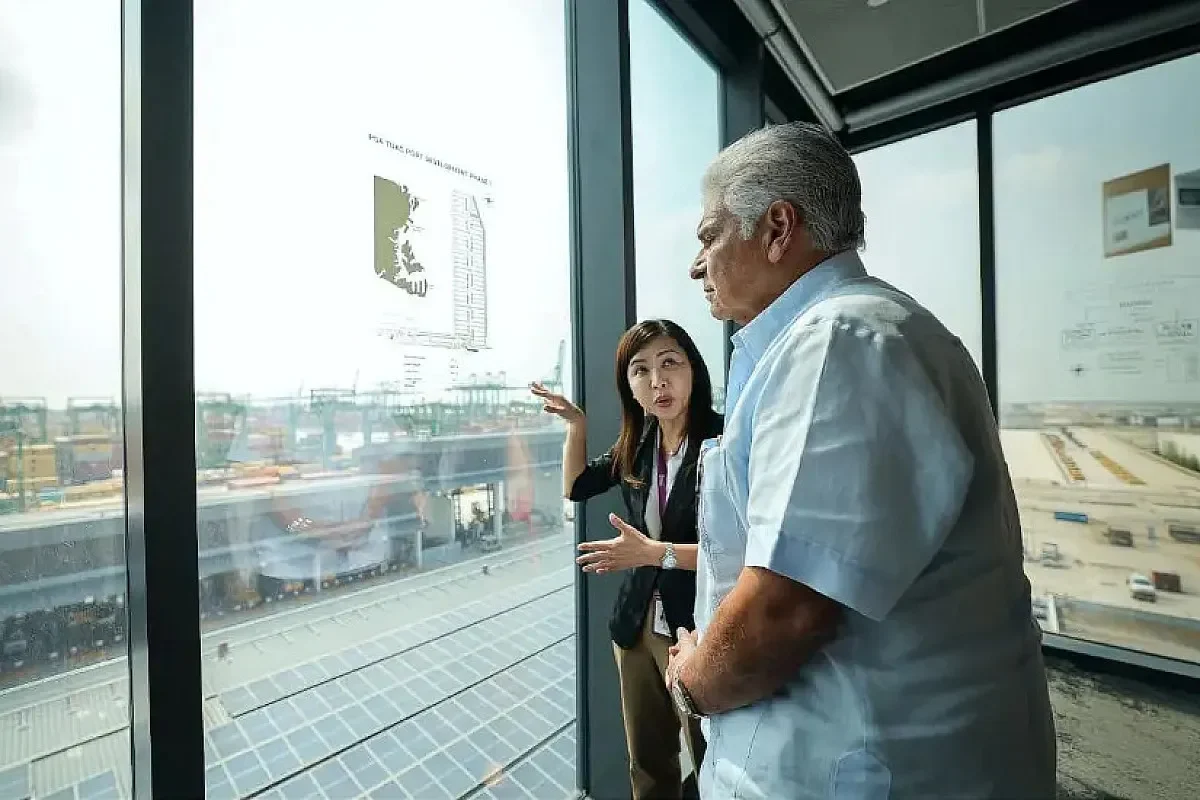
Panamanian President José Raúl Mulino visited the automated port of Tuas in Singapore today, Sunday, describing the facility as a model that could reshape his country’s logistics strategy. The terminal, which aims to become the world’s largest fully automated container port, represents the kind of consolidated megaport infrastructure Panama could leverage to strengthen its position in the Americas.
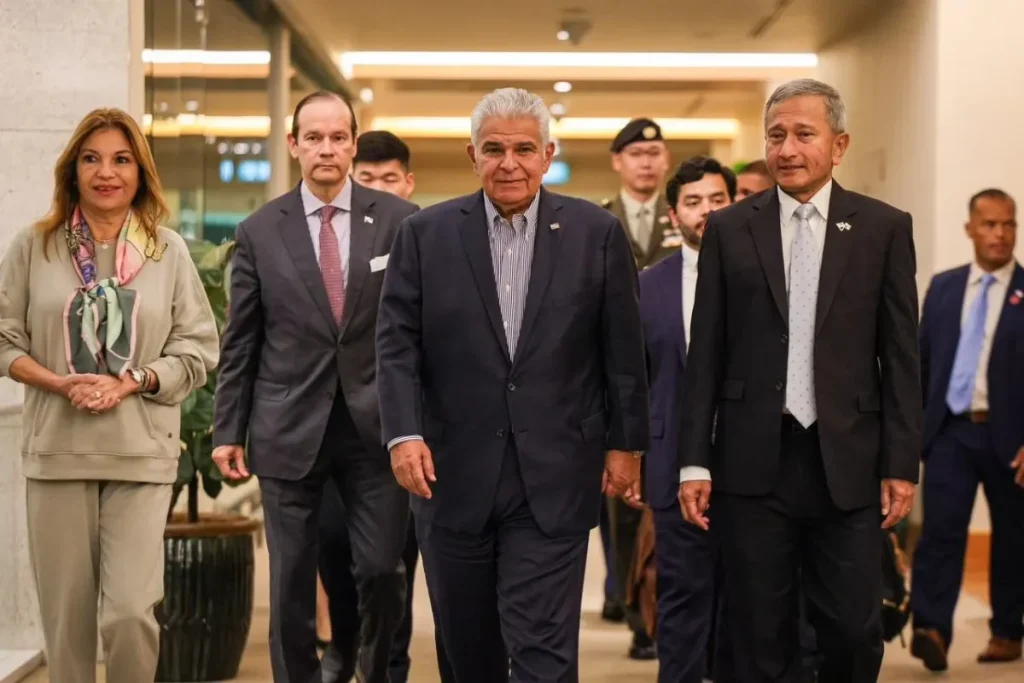
Mulino toured the Operations Control Center alongside Foreign Minister Javier Martínez-Acha, Canal Minister José Ramón Icaza, and Panama’s Ambassador to Singapore, Sebastián Breton. The delegation received technical briefings on the port’s autonomous truck systems and 24-hour automated yard operations.
Inside the Automated Port of Tuas Operations
The first phase of the automated port of Tuas opened in 2022, with the full project scheduled for completion by 2040. When finished, the facility will span 1,337 hectares with 66 berths across 26 kilometers of coastline. Its projected annual capacity reaches 65 million TEUs, the standard measure for 20-foot container equivalents.
PSA representatives told the Panamanian delegation that the terminal’s automated systems deliver roughly 30 percent faster performance than conventional port operations. The facility runs entirely on electric power, supplemented by solar panels installed on warehouse roofs and crane structures.
During discussions, PSA officials highlighted the shared neutrality positions of Panama and Singapore, along with their aligned visions for maritime infrastructure development.
Panama’s Logistics Ambitions and Regional Strategy
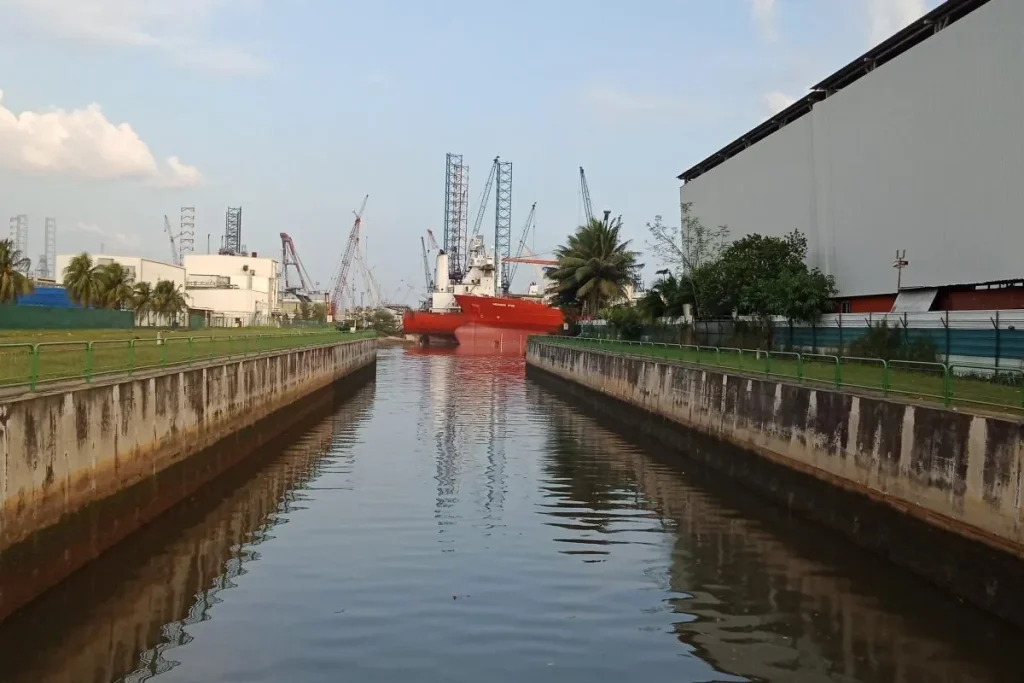
A statement from Panama’s presidency framed the visit as part of a broader evaluation of how a single megaport could consolidate the country’s operations. The concept would combine Panama’s existing advantages: the Canal, multimodal infrastructure, the Colón Free Zone, and Panamá Pacífico.
Panama already functions as the logistics hub of the Americas, but officials see Tuas as evidence that further consolidation could yield comparable advantages to those Singapore holds in Asia. The Asian city-state’s approach concentrates cargo handling in one automated facility rather than dispersing it across multiple terminals.
Diplomatic Meetings and Investment Goals
Mulino’s schedule for Monday includes meetings with Singapore President Tharman Shanmugaratnam and Prime Minister Lawrence Wong. The talks form part of a multi-country Asia tour aimed at opening new markets and attracting investment.
The government’s priorities for the trip include strengthening partnerships in the maritime, aviation, and agricultural sectors. Officials said the tour seeks to secure investments that would generate employment in Panama while expanding trade relationships across Asia.
The Singapore visit underscores Panama’s interest in adopting proven automation models as global shipping demands evolve. Port operators worldwide face pressure to increase efficiency and reduce emissions, making Tuas a reference point for future infrastructure planning in the Americas.