



Panama’s headline unemployment rate fell from 10.4% to 8.5% in August 2026, yet the underlying labor data reveals a sharp deterioration in job quality that is suppressing consumer spending. The number of workers in full employment dropped from 1.9 million in September 2025 to just 945,600 by August 2026, according to the National Institute of Statistics and Census (INEC).
Manuel Ferreira, director of Economic Affairs at the Chamber of Commerce, Industries and Agriculture of Panama (CCIAP), presented the figures during a moderated discussion, arguing that the official Panama unemployment decline masks a structural shift toward precarious work. The economically active population stands at 2.24 million, with 2,045,000 employed and 189,188 unemployed, while another 1.26 million people over 15 remain outside the labor force entirely.

Panama Unemployment Figures Hide Surge in Underemployment
The most striking reversal appears in invisible underemployment, defined as workers logging 40 hours or more while earning below minimum wage. That category quadrupled from roughly 200,000 people to 413,000 over the same period. Meanwhile, informal employment remains stubbornly high at 45.8%, down only marginally from 47%.
Ferreira broke down the informal sector into three groups. Some 136,951 people work in formal companies without social security payments or contracts. Another 568,807 labor in informal enterprises. Domestic service accounts for 78,486 workers, a segment he described as highly precarious. He noted that of approximately 61,000 companies in Panama, 89% are micro or small businesses, with only about 3,500 classified as large, limiting their capacity to absorb labor costs and benefits.
Contract data from the Ministry of Labor reinforces the trend toward instability. Defined-term contracts represent 54% of registrations, while project-specific contracts tied to construction account for 22%. Residential construction remains 30% below pre-crisis levels despite a new $3,000 housing bonus and reforms to preferential interest rate laws.
Baja del desempleo oculta caída del empleo pleno y frena el consumo https://t.co/hAaEOtHgHh
— Rigoberto González M. (@rigo83746) November 23, 2026
Trade Sector Growth Fails to Boost Local Consumption
The economy operates under a marked duality, Ferreira explained. Export-oriented activities such as the Panama Canal, port operations, the Colón Free Zone, and tourism drive aggregate growth. But sectors serving the domestic market face persistent weakness.
Commercial sector GDP grew 8.8%, yet that expansion stems primarily from Colón Free Zone dynamism. Local distribution and retail sales show minimal advancement. In Panama City, estimated retail sales reached $2,225 million, a modest 1.5% increase year-over-year, while hiring in retail fell 4.9% according to the August 2026 survey.
Ferreira dismissed the 14.7% rise in ITBMS tax collection as evidence of stronger sales. He attributed the increase to mandatory electronic invoicing implemented in January 2026 for taxpayers with gross income above $36,000 annually, which expanded the declarant base, plus incentives like the Tax Lottery from the Directorate General of Revenue.
Energy Prices and Basic Food Basket Squeeze Household Budgets
International conflict has compounded domestic pressures. Ferreira cited the war involving Iran, the United States, and Israel, along with the closure of the Strait of Hormuz, a chokepoint for more than 20% of global oil plus fertilizers and helium. Crude hovered near $88 per barrel on the WTI benchmark.
Local fuel prices rose sharply in recent months, approximately 40% for 95-octane gasoline and nearly 70% for diesel, which is critical for logistics. Those increases pushed up transportation costs and inflation measured by the INEC Consumer Price Index.
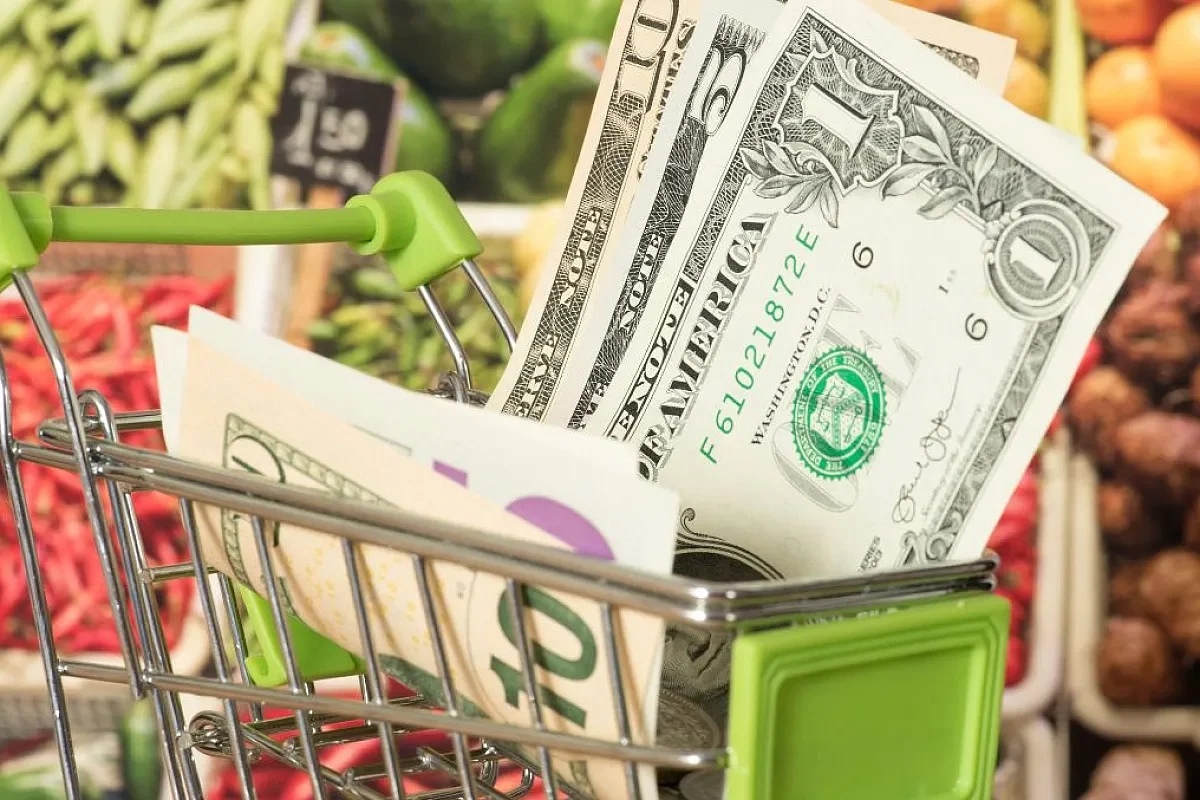
The basic food basket now costs around $367 monthly in Panama and San Miguelito, with notable increases in meats and cereals. As households allocate more money to fuel and food, their margin for other goods and services shrinks, further dampening domestic consumption.
Agricultural Sector Absorbs Labor But With Low Wages
Agriculture continues to absorb workers, Ferreira noted, though with high informality and minimum wages that remain low. The sector provides a buffer against unemployment but does little to improve household purchasing power or formal labor market participation.
The combination of falling full employment, rising underemployment, and persistent informality creates a labor market that looks improved on the surface but delivers less income security to workers. That gap between headline statistics and lived economic reality explains why consumer spending remains sluggish despite positive GDP figures for the first half of 2026.
Ferreira’s assessment underscores a central tension in Panama’s economic trajectory. Growth driven by international trade and logistics does not automatically translate into domestic prosperity when the majority of workers lack stable, adequately compensated employment. The data from August 2026 suggests that translation remains incomplete.