


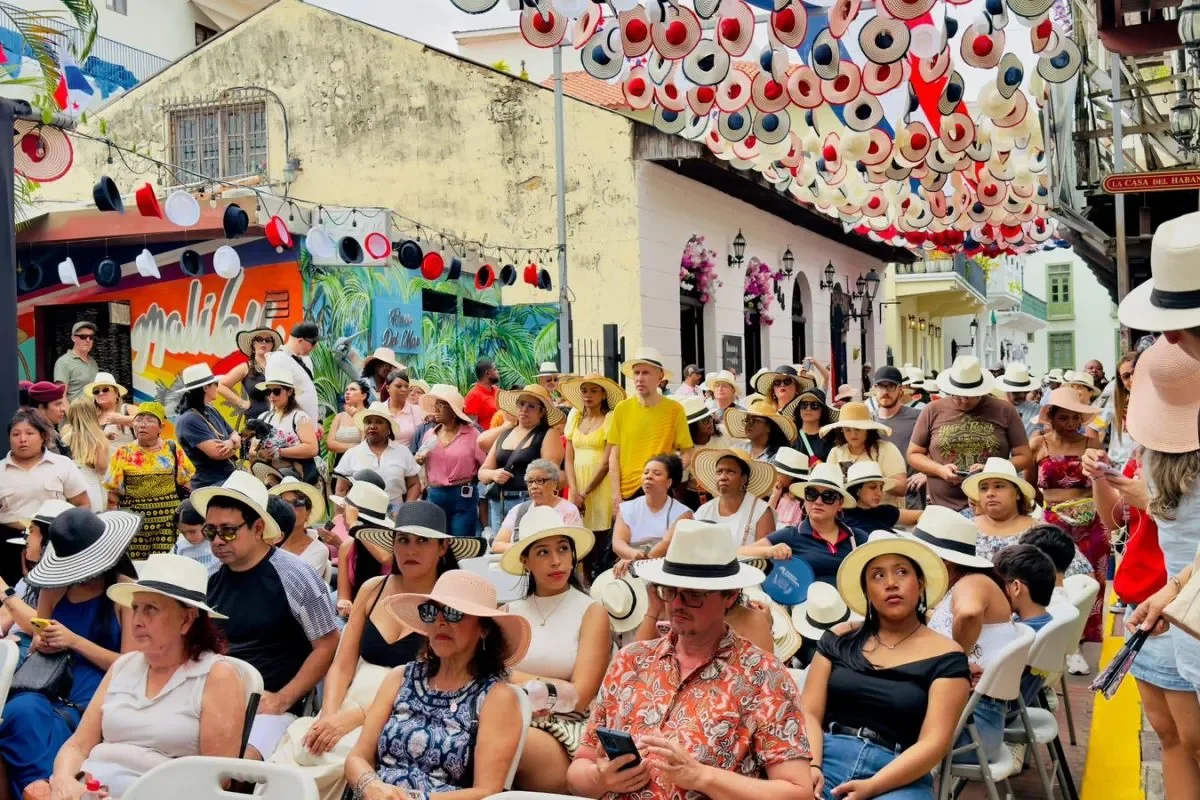
Walking through the cobblestoned lanes of Panama City’s Casco Antiguo, visitors now encounter an officially recognized thousand hats street that turns an ordinary walk into a riot of color and tradition. More than a thousand sombreros hang suspended above Calle Primera in the San Felipe district, a canopy of woven artistry that has finally earned its place on official maps. The Municipal Council of Panama formalized what locals and tourists already sensed, this narrow corridor deserved a name that matched its vibrant identity.
The designation arrived through Accord No. 204, a legislative nod that transforms the former Calle Primera into something far more evocative. Council members didn’t just rename a road; they acknowledged a community-driven hallmark that had quietly grown into one of the old quarter’s most photographed spots. For years, the hats appeared gradually, placed by residents and business owners, until the ceiling of the street became a floating museum of Panama’s most iconic accessory.

How a Vibrant Installation Redefined a Historic Lane
The thousand hats street isn’t a flashy municipal project with a ribbon-cutting and press kits. It started organically, with a few sombreros strung between balconies, then dozens, then a cascade that now defines the block. Walk beneath them and you’ll see sombreros pintados, the traditional black-and-white hats worn for folkloric dances, alongside wide-brimmed straw hats, colorful Panama hats, and even miniature versions dangling like festive ornaments. The effect is a kinetic ceiling that sways with the breeze, casting shifting shadows on the centuries-old stones below.
San Felipe locals say the installation turned a forgotten passage into a must-visit landmark. During the day, sunlight filters through the gaps in the weaves, creating patterns that photographers chase. At dusk, strings of fairy lights complement the hats, making the street feel like a permanent festival. It’s the kind of serendipitous urban art that guidebooks can’t manufacture, which explains why the council’s decision felt less like an order and more like a certification of reality.
The street sits within the Casco Antiguo, a UNESCO World Heritage site known for its colonial architecture, plazas, and churches. Yet among the historic treasures, the hat canopy provides a distinctly Panamanian flavor that resonates with both domestic visitors and international travelers. The location’s geography is simple: enter from Plaza de la Independencia, head down the slope past art galleries and cafés, and you’ll soon be under the sombreros. It’s a route that didn’t exist on tourist maps a decade ago but now anchors countless walking itineraries.
From Calle Primera to an Official Landmark
The legal mechanism that made the thousand hats street official is a straightforward municipal agreement, yet the symbolism runs deeper. Accord No. 204 amends the city’s cartographic records so that the name appears on signage, navigation apps, and public documents. A council spokesperson described the reasoning during the session.
“The Council recognized what the people had already embraced: this street is a living gallery of our traditions. Naming it Calle de los Sombreros locks that identity into our urban fabric.” [Translated from Spanish]
Previously identified as Calle Primera, the thoroughfare now carries a title that instantly communicates its uniqueness. Municipal authorities emphasized that the change won’t disrupt postal codes or property records; it simply layers the popular name onto official channels. For a district that thrives on heritage tourism, such clarity helps direct foot traffic and gives small businesses along the lane a brand to rally around. Restaurants, souvenir shops, and hat vendors already use the moniker informally. Now it’s permanent.

Cultural Roots and the Symbolism of the Sombrero
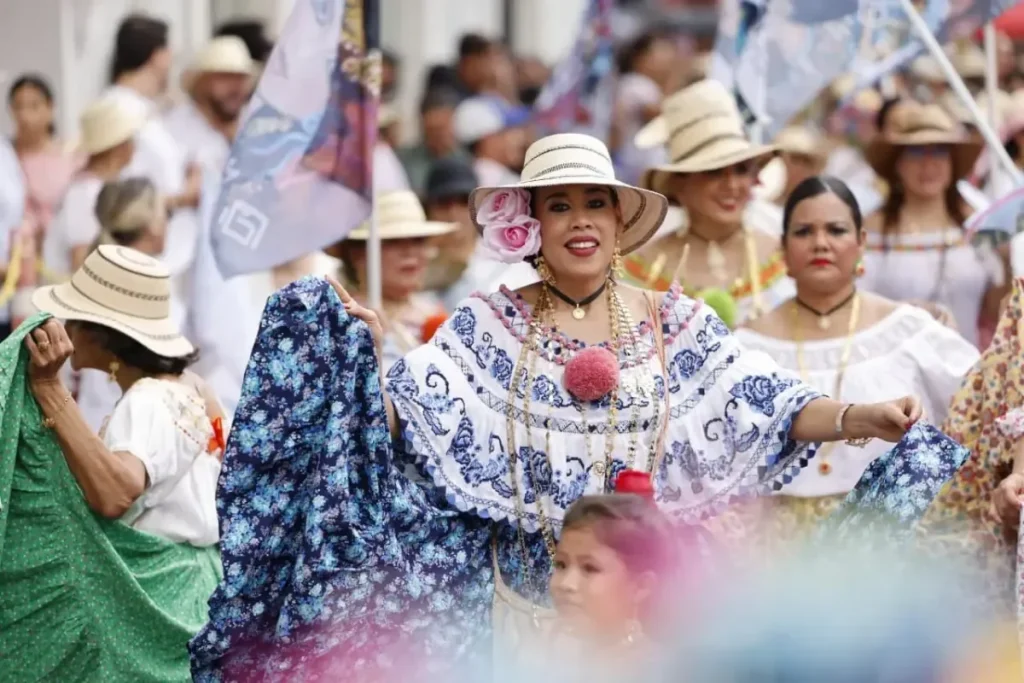
To understand why a thousand hats street resonates so deeply, glance at Panama’s relationship with headwear. The sombrero pintado, recognized by UNESCO as Intangible Cultural Heritage, is woven from fibers of the bellota plant and represents decades of artisanal skill. Another staple, the sombrero de paja toquilla, confuses many outsiders, commonly called a Panama hat, it actually traces its origins to Ecuador but became globally famous when Theodore Roosevelt wore one during his visit to the Panama Canal works. Panama adopted the hat as its own, and the narrative fits a country that has long been a crossroads of commerce and culture.
The street’s collection deliberately mixes these styles, plus modern interpretations from local designers. A few hats feature bright geometric patterns, others bear embroidered initials of couples who hung them there as a romantic gesture. The installation’s diversity mirrors the multigenerational makeup of San Felipe itself, where descendants of original settlers coexist with artists, expatriates, and entrepreneurs. What started as a whimsical decoration now functions as an unintended archive of Panamanian millinery.
Mediante Acuerdo N°204 el Consejo Municipal de Panamá designó oficialmente como "Calle de los Sombreros" a la Calle Primera del corregimiento de San Felipe.
— Telemetro Reporta (@TReporta) August 7, 2026
Esta calle, decorada con más de mil sombreros de diferentes estilos y colores, se ha convertido en uno de los principales… pic.twitter.com/g5Q4u7XcOh
The Impact on Tourism and Local Identity
Tourism operators have quickly adapted. Guided walks that once highlighted only the cathedral, the canal museum, and the presidential palace now pause under the hats for a ten-minute photo break. Online reviews of the Casco Antiguo routinely mention the thousand hats street as a highlight, sometimes with the candid caveat that visitors stumbled upon it by accident. The formal naming promises to make that accident less accidental. City officials hope the designation sparks similar creative placemaking elsewhere in the historic district, turning blank walls and empty alleys into canvases that celebrate Panamanian craftsmanship.
Local artisans also stand to gain. With the street’s official status, hat-makers in the interior provinces, Coclé, Veraguas, Herrera, may find a dedicated showcase for their work, whether through rotating exhibitions or pop-up markets organized by the municipality. Some residents have already floated the idea of an annual hat festival tied to the street, a move that could pull visitors deeper into the neighborhood’s side streets and away from the well-trodden waterfront.
Thousand Hats Street and the Future of Casco Antiguo
Urban planners see the decision as a subtle but significant tool for preservation. By granting recognition to a bottom-up artwork, the council incentivizes residents to maintain and expand the installation without heavy-handed regulation. The hats require periodic replacement, sun and rain eventually fray the fibers, and the community has evolved an informal system of upkeep that could now attract modest municipal support. In a district where gentrification pressure often pits new development against heritage, the street exemplifies how tradition can thrive within a living, breathing neighborhood.
The official naming also embeds the sombrero deeper into the city’s international brand. Panama City has long sought to complement its modern skyline and interoceanic canal with a historic core that feels authentic rather than curated. The thousand hats street delivers that authenticity in spades, it’s messy, colorful, and driven by the people who live there. As cruise ships dock at the nearby terminal and passengers fan out through the old quarter, the canopy of hats will greet them not just as decoration but as a statement: this is Panama, woven by hand and hung with pride.
In the end, the council’s gesture validates a simple truth that urban communities across the globe are rediscovering. The most compelling landmarks aren’t always carved in stone or designed by star architects. Sometimes they’re strung together with thread from a thousand hats, waiting for a bureaucracy to catch up to what the heart already knows. San Felipe’s renamed corridor now stands as a testament to that idea, an everyday street transformed into an unmissable destination, one sombrero at a time.