


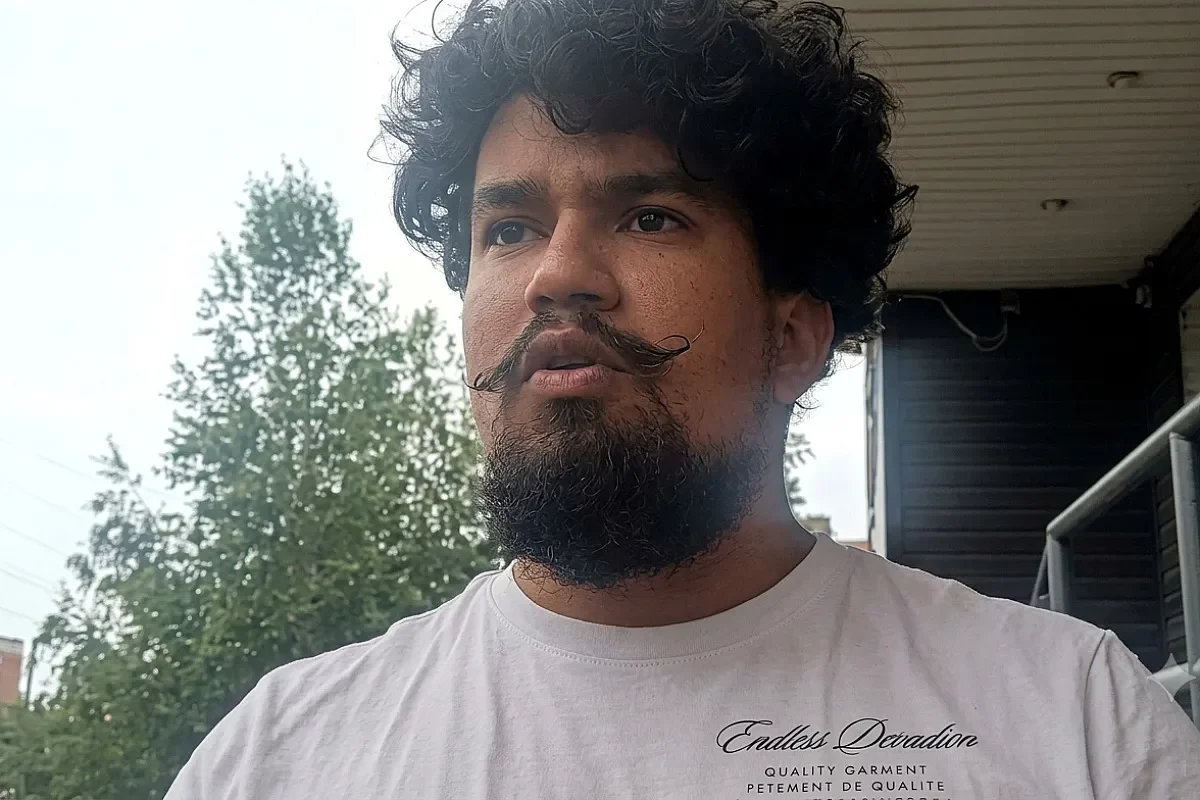
Ronnie González Castillo, a Panamanian volunteer Ukraine has spoken at length about, never imagined he would trade the routine of small business ownership for a bunker on the eastern front. The former entrepreneur, who spent years scrambling to support his family amid Panama’s economic pressures, found himself operating military drones and training fellow Latin Americans in the International Legion of Ukraine. In a candid account, he rejected allegations that a shadowy recruitment ring had tricked him into service, insisting that every step was his own, even when the destination meant almost certain danger.
A Personal Decision Rooted in Economic Collapse
Long before foreign armies dominated his daily life, González Castillo was wrestling with a more ordinary enemy: insolvency. His business ventures in Panama had stalled, and the financial strain made it increasingly difficult to provide for his family. A friend already deployed in Ukraine mentioned the International Legion, a formal entity established by Kyiv in early 2022 to absorb foreign volunteers. For a man watching his financial options narrow, the promise of a steady contract, coupled with the knowledge that his child would receive support even if he perished, tipped the scales.
“I knew I was coming to help, I knew I had to go to the front line, and I knew my life was at risk from the very first moment,” he said. [Translated from Spanish]
The decision, he now reflects, was never about ideology. It was a cold calculation framed by desperation. Unlike mercenaries who might chase paydays through opaque channels, González Castillo reached out directly to the Legion’s official contact points. He found scant information in Spanish at the time, so he navigated the process alone. That isolation, he argues, is proof enough that no recruiter steered him toward combat. The International Legion’s creation under President Volodymyr Zelensky’s decree gave foreign nationals a legal route to fight alongside Ukrainian forces, a framework González Castillo used without intermediaries.
Ronnie González Castillo es un panameño que participa en la guerra de Ucrania, quien luego de las denuncias sobre reclutamientos, aclaró que él sí conocía cuál sería la labor que realizaría, y cómo fue el proceso para llegar a ese país. "Mi primer contrato fue de ametrallador, yo… pic.twitter.com/H2WVktODS1
— Telemetro Reporta (@TReporta) July 28, 2026
Panamanian Volunteer Ukraine Details His Independent Path to War
“Nobody recruited me,” González Castillo stated bluntly, countering whispers of clandestine networks that have prompted the Panamanian Ministry of Security to issue cautionary statements about citizens heading to the conflict zone. [Translated from Spanish]
His account upends the theory that middlemen have been luring unsuspecting Panamanians with paid flights and false promises. Instead, he describes a meticulous vetting process conducted entirely through video calls: psychological evaluations, detailed interviews, and physical fitness assessments that left little room for deceit. Only after clearing those hurdles did he receive a contract, written solely in Ukrainian, which he pored over with a translator’s help before signing.
That contract slotted him as an infantry machine gunner, a role that placed him squarely in the line of fire. He entered the theatre fully aware that the paperwork aligned with Ukrainian law and carried no escape clause. The Legion at that stage, he recalled, accepted only applicants with prior military, police, or weapons-handling experience, a threshold that filtered out casual adventurers. By insisting that anyone interested “should research on their own,” González Castillo draws a firm boundary between his personal agency and the choices of others. He regularly receives messages from compatriots hungry for a way in, but he refuses to share contacts or smooth the path, unwilling to bear moral weight for a journey that could end in a body bag.
Combat Roles and a Shift to Drone Warfare
González Castillo’s first taste of combat came behind a belt-fed machine gun, a position where survival depended on instinct and relentless alertness. He does not romanticize those early weeks, acknowledging that every moment reinforced his awareness of mortality. Yet the static infantry role soon morphed into something far more technical. Today he works on the development and operation of unmanned aerial systems, commonly known as military drones, while training Latin American comrades in his unit to master the same gear. The shift mirrors the wider evolution of the war, where remote-controlled eyes in the sky have become as decisive as artillery.
The transition required a steep learning curve, but it offered a clearer vantage point over the battlefield, sometimes quite literally. Early this year, during a reconnaissance mission, he claims to have spotted several fallen soldiers wearing Russian army uniforms adorned with Panamanian insignia. The assertion remains uncorroborated by Panamanian authorities or independent sources, but González Castillo stands by what he saw through the drone’s lens. The image, if accurate, would raise uncomfortable questions about how such patches ended up on foreign soil and whether any jurisdiction had been compromised.
Unverified Sightings and Government Silence
The claim of Panamanian emblems on Russian military gear injects an unsettling layer into an already complex narrative. No official body in Panama has confirmed the sighting, and the government’s prior alerts about citizens travelling to Ukraine as combatives have focused on the perils of recruitment rather than on visual evidence from the battlefield. The Ministry of Security earlier clarified that it does not sponsor or endorse such travel, urging people to avoid offers that furnish plane tickets and vague promises. González Castillo’s testimony, But, suggests a different kind of entanglement: the potential presence of national symbols in a foreign army’s ranks, whether genuine or manufactured for psychological effect.
Without forensic corroboration, the report remains a footnote, but it underscores the fog of a war where information is manipulated and loyalties are rarely binary. For his part, González Castillo does not use the sighting to advance political arguments. He mentions it almost as an aside, a detail among many that illustrates the bizarre intersections of a globalized conflict. The focus stays on his personal code: stay alive, fulfill the contract, and never act as a broker for anyone else’s fatal decisions.
A Call for Personal Responsibility
What troubles González Castillo most is the thought of others borrowing money or leaning on third-party sponsors to reach Ukraine. He explicitly warns against accepting travel financing, arguing that it strips a volunteer of the ability to choose their military unit or assess risks independently.
“The one who wants to come should investigate on their own,” he said, explaining that he dodges pleas for guidance because he does not want to be responsible for another life. [Translated from Spanish]
The stance is born of experience: once inside the system, a soldier has little leverage. Contracts follow Ukrainian law, and battlefield conditions do not bend to nostalgia for home.
His story, from a struggling Panamanian entrepreneur to a drone operator training compatriots on European soil, challenges tidy assumptions about who becomes a foreign fighter and why. He did not cross an ocean out of a thirst for adrenaline or a blind ideological pull. Economic necessity, filtered through a unique window of opportunity, propelled him onto a path he now walks with open eyes. As the war grinds on, González Castillo remains inside the machinery he chose, a volunteer bound by law and circumstance, urging others to measure the true cost before they pack a bag.