


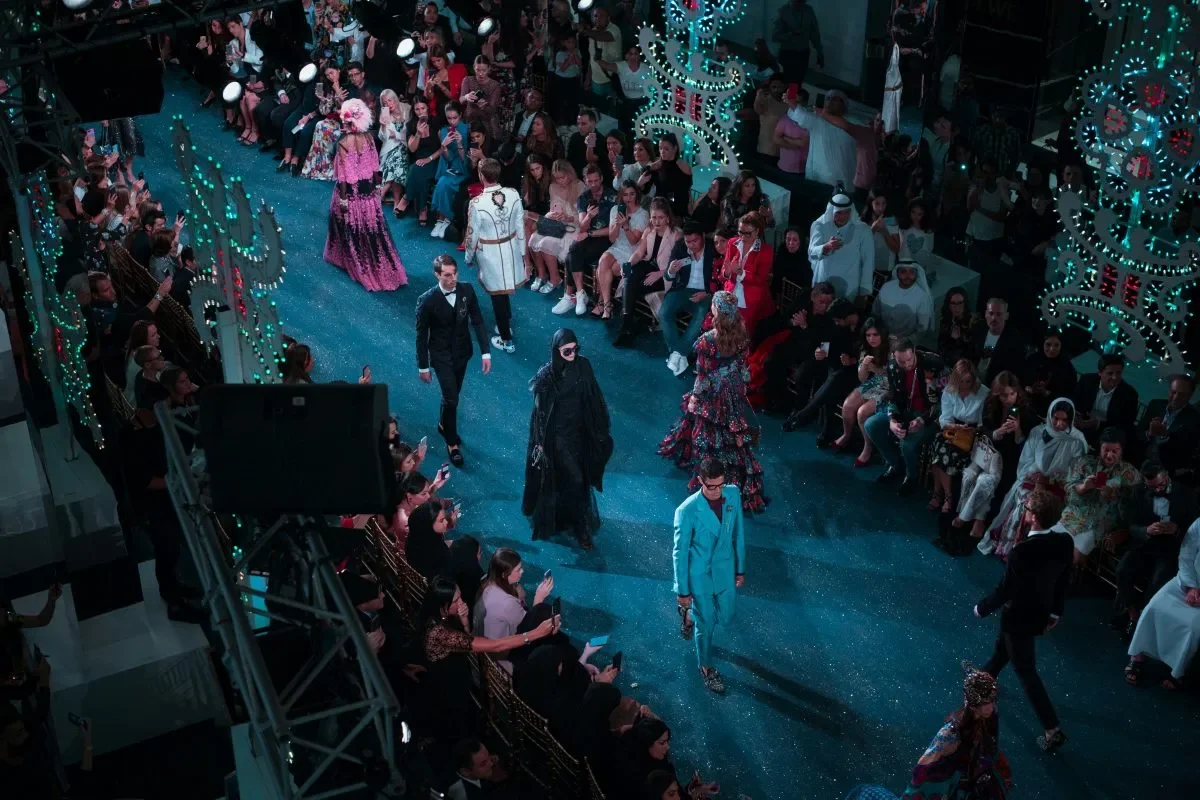
The countdown to the 26th edition of Panama Fashion Week has officially begun, and this year’s programming draws a direct line between the runway and real-world impact. Organizers unveiled an agenda anchored by charity shows and a renewed focus on textile reuse, setting the tone for an event that wants to prove fashion can be both glamorous and responsible. The gathering will run from September 24 to 27 at the Ciudad de las Artes, a cultural complex that has become synonymous with the country’s growing creative ambitions.
A Charitable Start and Close for Panama Fashion Week
The opening night belongs to the Atardecer Rosa runway, a production by the Fundación Judío Panameña. Ticket sales and donations from that evening will flow directly to the Instituto Oncológico Nacional, giving attendees an immediate way to contribute to cancer care. Designers Tatiana Uliantzeff and Moisés Sandoya are among the featured names for the inaugural show, and early glimpses of their work at the press presentation suggested collections that balance elegance with a clear point of view.
Four nights later, the event closes with another purpose-driven spectacle. Sustainable label Casoná will stage the finale, and its runway doubles as a fundraising effort. Proceeds are earmarked for communities still reeling from the earthquakes that struck Venezuela the previous year. By bookending Panama Fashion Week with benefit shows, the organizers signal that creativity and solidarity are not separate lanes but intersecting ones.
Sustainability Takes the Spotlight
Beyond the charity framework, the entire program orbits around smarter use of textiles. The organizers have positioned material longevity and waste reduction as the central conversation, not a sideshow. This emphasis surfaces in the designer lineup, panel discussions, and even the networking sessions. It marks a shift from past editions where sustainability was a buzzword rather than a structural pillar.
Designer Andrea Rebolledo, creative director of Mott.Project, exemplifies this ethos. Her label, which specializes in sustainable fashion, will be a prominent presence during the dedicated showcase. Attendees can expect collections that rethink fabric sourcing and production methods without sacrificing wearability. The message is simple: luxury and environmental accountability can coexist on the same garment rack.
Student Talent and International Showcases
Emerging voices have always found a home at the event, and 2026 extends that tradition. The PUNTO.CREA student competition, themed “Volumen sin exceso” (Volume Without Excess), challenges fashion design students to explore form while avoiding waste. Organizers pushed the registration deadline to July 31, ensuring more aspiring creators can submit proposals. The contest has evolved into a respected launchpad, and several past participants now show their own lines during the main schedule.
The international showcase complements the student platform. Designers from Costa Rica, Colombia, Spain, and Brazil will join the Panamanian contingent, turning the Ciudad de las Artes into a meeting point for Latin American and European fashion. This cross-border curation reinforces Panama Fashion Week as a bridge between markets, giving regional talent exposure that often translates into commercial relationships long after the lights dim.
Cultural Branding and Economic Strategy
Ministry of Culture officials see the event as a tool for national storytelling. Miky Fábrega, director of Creative Economy, linked the fashion week directly to Panama’s Marca País (Country Brand) strategy during the press conference at the Museum of Contemporary Art.
‘Initiatives like Panama Fashion Week strengthen the Country Brand strategy, whose new stage will be presented in August and seeks to project culture as one of Panama’s main assets to the world’ [Translated from Spanish]
His remarks suggest that the government views creative industries as a soft power lever, not just a domestic entertainment sector.
At the same venue, MAC director María Lucía Alemán drew parallels between the fashion programming and a current exhibition by Panamanian-British artist Trixie Briceño. Briceño’s pieces, filled with references to garment construction and identity, will remain on display until the end of August.
‘The dialogue between art and fashion is constant in today’s creation, and this exhibition is proof that the boundaries between disciplines are blurring in wonderful ways’ [Translated from Spanish]
Alemán’s framing places Panama Fashion Week inside a broader cultural ecosystem, where textiles, visual art, and national identity intersect.
With a 26-year track record, the event has grown from a local showcase into a fixture that attracts international buyers, press, and collaborators. As designers prepare their collections and the September dates draw nearer, the 2026 edition appears poised to deepen that legacy while asking sharper questions about what fashion owes to society and the environment.