



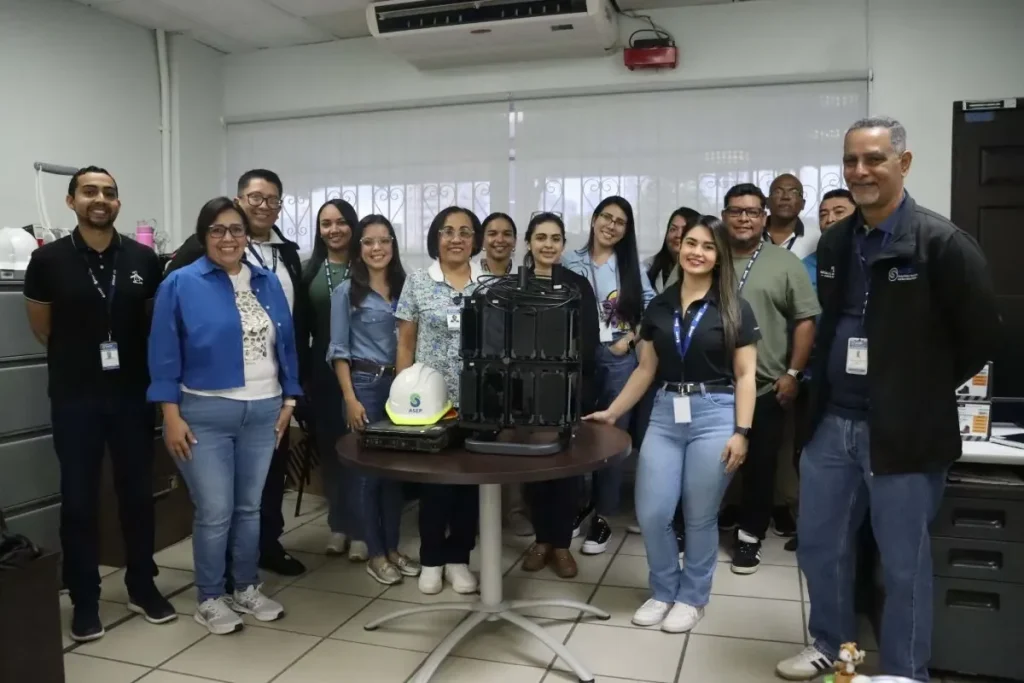
Regulators in Panama are stepping up their efforts to hold mobile operators accountable, unveiling a state-of-the-art portable monitoring system that will measure Panama mobile quality in real time. The National Authority of Public Services (ASEP) has acquired the Nemo Backpack Pro, a device that functions as a walking laboratory equipped with 12 smartphones to simultaneously test voice calls, data speeds, and network coverage across the country. Dropped calls, sluggish downloads, and dead zones in busy areas could soon trigger faster regulatory responses thanks to the backpack’s ability to beam results back to inspectors almost instantly.
Bringing Real-Time Accountability to Panama Mobile Quality
ASEP Administrator Zelmar Rodríguez confirmed the acquisition, framing it as a leap forward in enforcement capacity. The agency’s mandate already requires mobile providers to meet strict technical benchmarks written into their concession contracts, yet traditional auditing methods often relied on limited spot checks or consumer complaints. The Nemo Backpack Pro changes that equation by feeding encrypted performance data through a secure server straight to ASEP’s specialists, letting them analyze Panama mobile quality with a level of granularity previously unavailable.
With more than 6 million active mobile lines in a country of roughly 4.4 million people, the pressure on networks is intense. Operators such as +Móvil, Claro, Digicel, and Tigo compete fiercely, but service gaps persist in congested corridors and rural roads. ASEP now holds a tool that can roam those very locations and, within moments, flag when a carrier’s call stability or data throughput slips below contracted thresholds. That real-time visibility is expected to shorten the gap between detecting a problem and imposing corrective measures.
Inside the Nemo Backpack Pro’s 12-Phone Testing Arsenal
The backpack’s core strength lies in its dozen integrated smartphones, each capable of running simultaneous simulations of everyday user behavior. Instead of relying on a single handset to gauge a network, the system generates parallel voice calls, video streams, and file downloads, painting a composite picture of how a cell site handles load. An onboard computer processes the readings on the go, logging metrics like call clarity, upload and download speeds, network coverage footprints, and overall connection stability.
Technicians carrying the kit can walk through a shopping center food court or ride a bus along the Transístmica highway while the backpack quietly maps the ebb and flow of Panama mobile quality. The setup strips away the artificial conditions of a lab bench, capturing the exact experience a subscriber would face while streaming a soccer match or making a video call from a crowded plaza. Because the data flows back to ASEP in near real time, engineers in the office can spot a regional outage or a chronic slowdown almost as quickly as it unfolds on the street.
From Shopping Malls to Highways, Inspections Go Mobile
The device’s compact design means ASEP can deploy it anywhere citizens expect reliable connectivity. Airports, corporate towers, stadiums, and government buildings all rank high on the inspection list, but the backpack can also be strapped into a vehicle to measure how networks perform along arterial roads, residential subdivisions, and commercial strips. Previous testing regimens often confined technicians to predetermined static points. Now a single employee can cover kilometers of urban and suburban terrain in a day, compiling a moving map of dead spots and interference.
That mobility transforms the regulator’s ability to respond to public complaints. If travelers report dropped calls near Tocumen International Airport, an ASEP team can head there immediately, collect thousands of data points, and determine whether the fault lies with a specific carrier’s infrastructure or with a broader spectrum issue. The resulting reports become evidence that can support fines, mandatory upgrades, or renegotiation of service commitments, all backed by a digital trail that is difficult for operators to dispute.
Training and Regulatory Muscle Behind the Technology
ASEP didn’t simply unpack the equipment and send it into the field. Engineers and telecommunications technicians from both the agency’s tech department in Panama City headquarters and its regional offices completed hands-on training delivered by the manufacturer. The sessions mixed classroom theory with outdoor drills, ensuring staff could not just operate the backpack correctly but also interpret the dense streams of latency, jitter, and signal strength data it produces.
Zelmar Rodríguez emphasized that the investment is squarely aimed at protecting consumers and leveling the competitive playing field. The real-time feed from the Nemo Backpack Pro means ASEP can hold every operator to the same technical yardstick, identifying underinvestment before it becomes a months-long headache for subscribers. As inspections ramp up in high-traffic venues and along busy transit corridors, the regulator’s newfound visibility into Panama mobile quality could become the catalyst that pushes carriers to fix weak spots faster, without waiting for a flood of customer complaints to trigger action.