


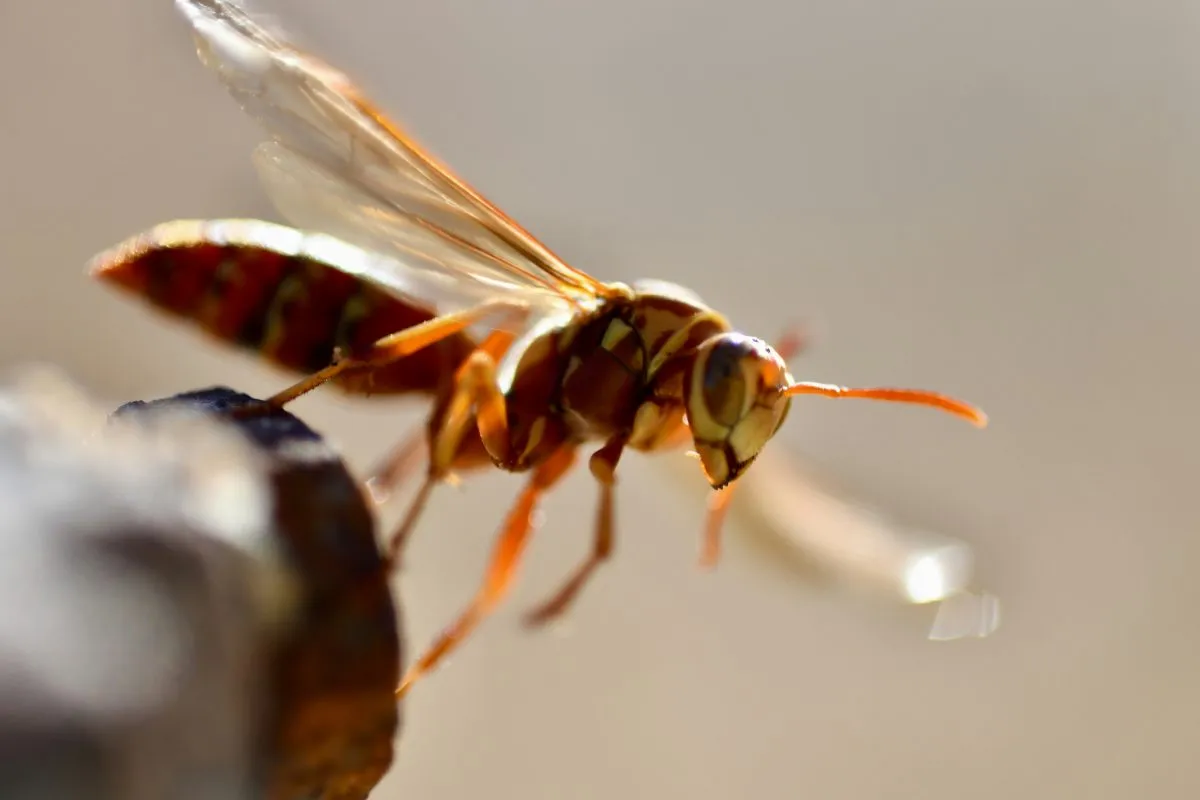
Scientists have officially described a new wasp species collected at Panama’s Summit Botanical Garden more than three decades ago. The specimen, named Lissocampsomeris bribri, was finally added to the University of Panama Entomology Collection in April 2026. This single female specimen represents the only known example of its species in the world.
📑 Table of Contents
Researcher Luis Damián Ramírez identified the wasp as a female. The male of the species remains completely unknown to science. The insect’s name honors the Bribri indigenous people, who inhabit the border region of Bocas del Toro province. The specimen was originally donated by Yostin Añino Ramos, a professor in the Department of Physiology and Animal Behavior, to the Invertebrate Museum at the University of Panama (MIUP).
Scientific Classification and Ecological Role
The new wasp belongs to the family Scoliidae, commonly called giant wasps or mammoth wasps. These insects play a vital ecological role. They act as parasitoids of beetle larvae, naturally controlling beetle populations in their habitats. The discovery raises the total number of known Scoliidae species in the Americas to 72.
“The fauna of Scoliidae in Central and South America still requires much revision. Discoveries like this demonstrate how much remains to be explored in the region’s humid forests.” [Translated from Spanish]
Researchers published their findings in the scientific journal Neotropical Biology and Conservation. Lead author Ramírez-Guillén and her collaborators detailed the wasp’s unique characteristics. The specimen was originally collected in November 1994 at the Summit Botanical Garden. It took more than 30 years for the species to receive formal scientific recognition.
Significance of the Discovery
This finding highlights the biodiversity hidden within Panama’s protected areas. The Summit Botanical Garden continues to serve as a critical site for entomological research. The Scoliidae wasps are known for their impressive size and striking appearance. Their role as natural pest controllers makes them valuable for agricultural ecosystems.
The specimen’s journey from collection to classification spanned three decades. Scientists say this delay reflects the challenges facing taxonomy in tropical regions. Limited funding and a shortage of trained specialists slow the pace of discovery. Each new species adds critical data to understanding global biodiversity patterns.
Researchers plan to continue surveying Panama’s forests for additional specimens. Finding a male Lissocampsomeris bribri remains a priority. The complete description of both sexes would provide deeper insights into the species’ behavior and reproduction. The scientific community now has a new benchmark for studying scoliid wasp diversity in the Neotropics.