


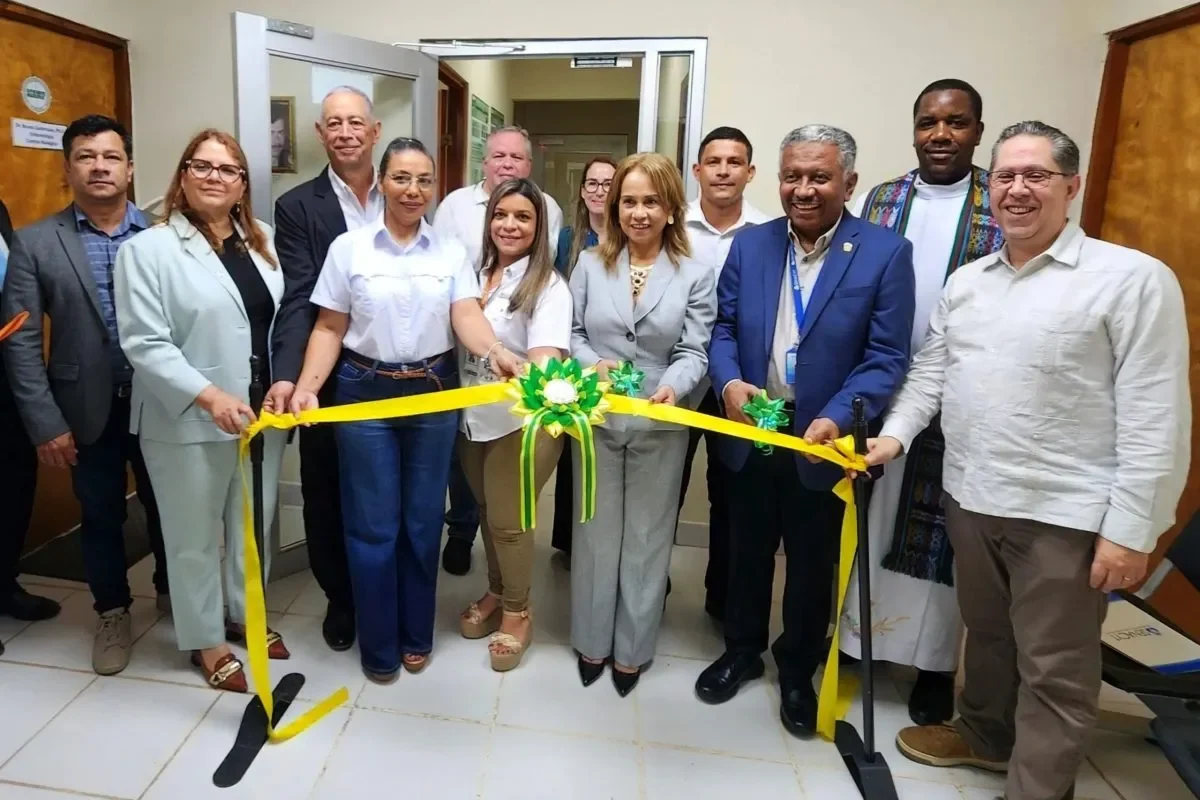
Scientists working at the newly inaugurated Chepo agricultural lab have documented a wasp species previously unknown to science, one of several breakthroughs that could reshape how Panama protects its rice and corn harvests. The facility, formally known as the Biological Control of Agricultural Pests Laboratory, opened at the Oriental Agricultural Innovation Center in El Naranjal, Chepo, through a joint effort by the National Secretariat for Science, Technology and Innovation (Senacyt) and the Agricultural Innovation Institute of Panama (Idiap).
Researcher Bruno Zachrisson, a member of the National Research System, led the project that equipped the lab using funds from Senacyt’s specialized equipment call for research and development activities. The initiative focused on establishing infrastructure for the multiplication and quality control of parasitoids, tiny organisms that naturally suppress pest populations without chemical intervention.
Chepo Agricultural Lab Pioneers Biological Pest Control
The Chepo agricultural lab concentrates on two small wasp species, Trichogramma pretiosum and Telenomus podisi, whose larvae develop inside the eggs of other insects. These parasitoids target Spodoptera frugiperda, commonly known as fall armyworm, and Oebalus insularis, a stink bug that damages rice and corn crops across Panama. Laboratory evaluations confirmed both wasp species maintain biological, reproductive, and flight capacities similar to populations found in the field, which backs their potential for future commercial releases.
Beyond validating known biological control agents, the research team identified and characterized Trichogramma soberania through morphological and molecular analysis. Described as new to science in 2024, this wasp was documented for the first time in Panama in association with fall armyworm and Tuta absoluta in eastern Panama and the Azuero region. Scientists also detected two species of the genus Telenomus that remain undescribed and are associated with Oebalus insularis, adding to the growing catalog of natural enemies available for pest management strategies.

Each new species represents a potential tool for farmers seeking alternatives to chemical pesticides, especially for staple crops that feed thousands of families across the country. The discoveries demonstrate how much remains unknown about Panama’s beneficial insect biodiversity.
Rethinking Pest Management Without Agrochemicals
Biological control relies on living organisms like predators, parasitoids, and pathogenic microorganisms to regulate pest populations and maintain balance in agricultural ecosystems. Eduardo Ortega Barría, national secretary of Senacyt, emphasized that this line of research opens alternatives for addressing agricultural challenges without exclusive dependence on chemical inputs.
“This type of research presents alternatives to confront agricultural problems without depending exclusively on chemical products” [Translated from Spanish]
For Panama’s rice and corn growers, the stakes are significant. Fall armyworm can devastate entire plantings, and stink bugs pierce developing grains, reducing both yield and quality. Traditional chemical controls raise production costs and carry environmental risks, including soil degradation and harm to pollinators. The parasitoid approach offers a targeted method that leaves beneficial insects largely unharmed while attacking specific pest species.

The Chepo agricultural lab will also serve as a hub for ongoing monitoring and quality assurance. By maintaining strict control over parasitoid reproduction, researchers can ensure that released organisms meet the standards necessary for effective pest suppression in commercial fields.
Building Scientific Capacity for the Future
Beyond the immediate research goals, the project strengthened Panama’s human capital in agricultural science. Students and researchers gained hands-on experience through internships, and the initiative supported a master’s thesis through the Central American Entomology Program at the University of Panama. Teaching activities
to biological control and integrated pest management also expanded the project’s educational reach across the country.
With the laboratory now operational, Panama has greater capacity to investigate, reproduce, and evaluate organisms for pest management purposes. This positions the country to develop solutions that lower agrochemical use while promoting ecological balance in farming systems. The discoveries already emerging from the Chepo agricultural lab, including a newly described wasp species and two others awaiting formal classification, suggest the facility will contribute to both scientific knowledge and practical agricultural tools in the years ahead.