


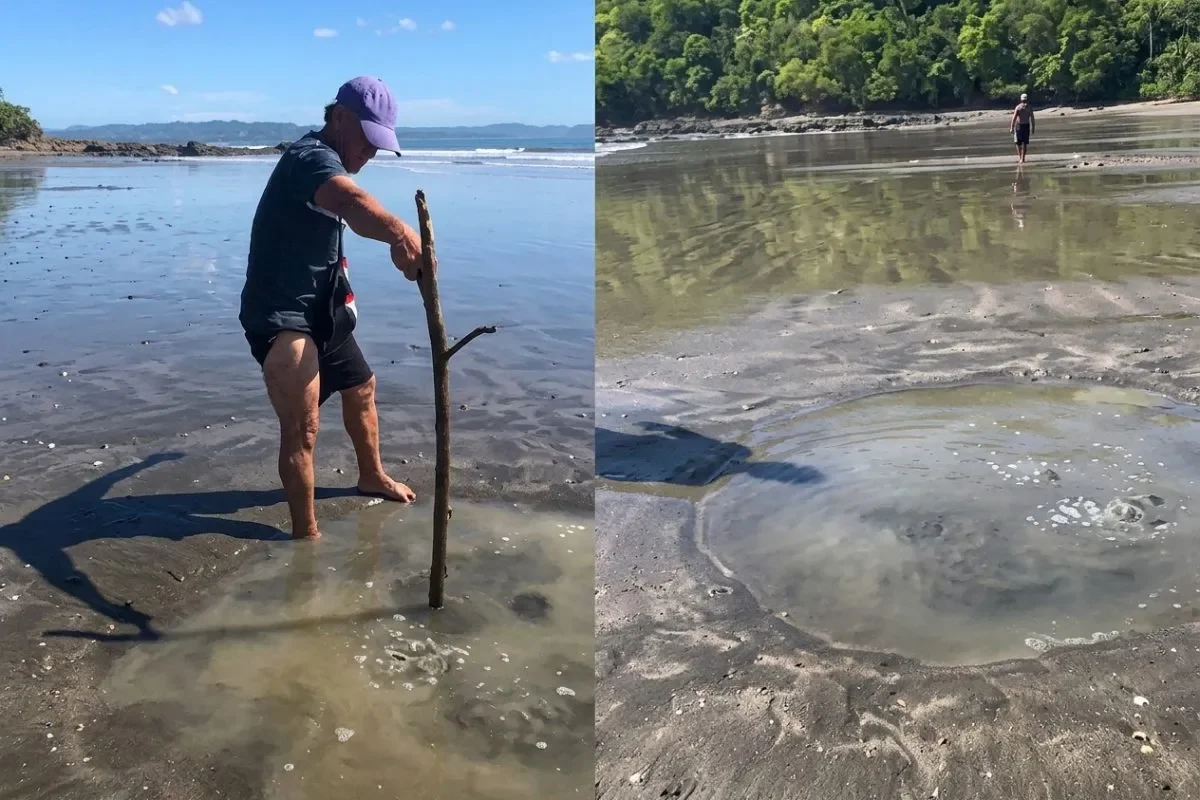
A strange emergence of hot water, mud, and gas bubbles on the sands of Bucaro beach in Tonosi, Los Santos province, has drawn attention weeks after the October 9 earthquake. The Bucaro beach phenomenon has sparked viral videos showing a rod sinking more than two meters into the saturated sand, prompting questions about safety and geological implications.
Rigoberto J. Diaz M., a watershed and environmental engineer with training in geology and geomorphology, told reporters that the event is a direct consequence of the seismic activity and does not signal an impending disaster. “There is no reason to be scared,” he said, explaining that the fluids are surfacing through newly opened fractures in the earth’s crust.
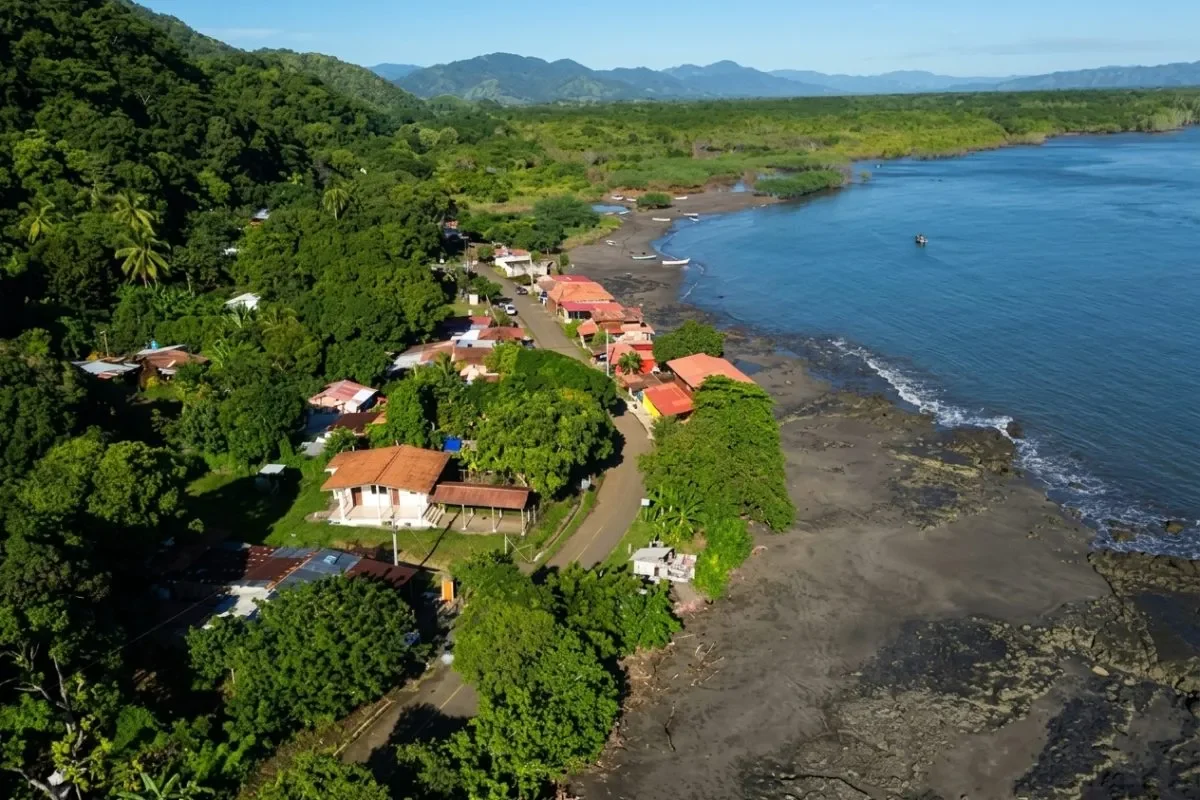
What Causes the Bucaro Beach Phenomenon
The mechanism behind the event involves hydrogeology and geomorphology. When the earthquake struck, shock waves fractured underground rock layers and changed their permeability. These new cracks function as natural chimneys, allowing pressurized groundwater to escape toward the surface.
As the water rises rapidly through the sand, it carries fine sediment that forms mud and releases trapped gases, creating the visible bubbling. The process is a surface manifestation of deep internal fluids finding an open path to the beach.
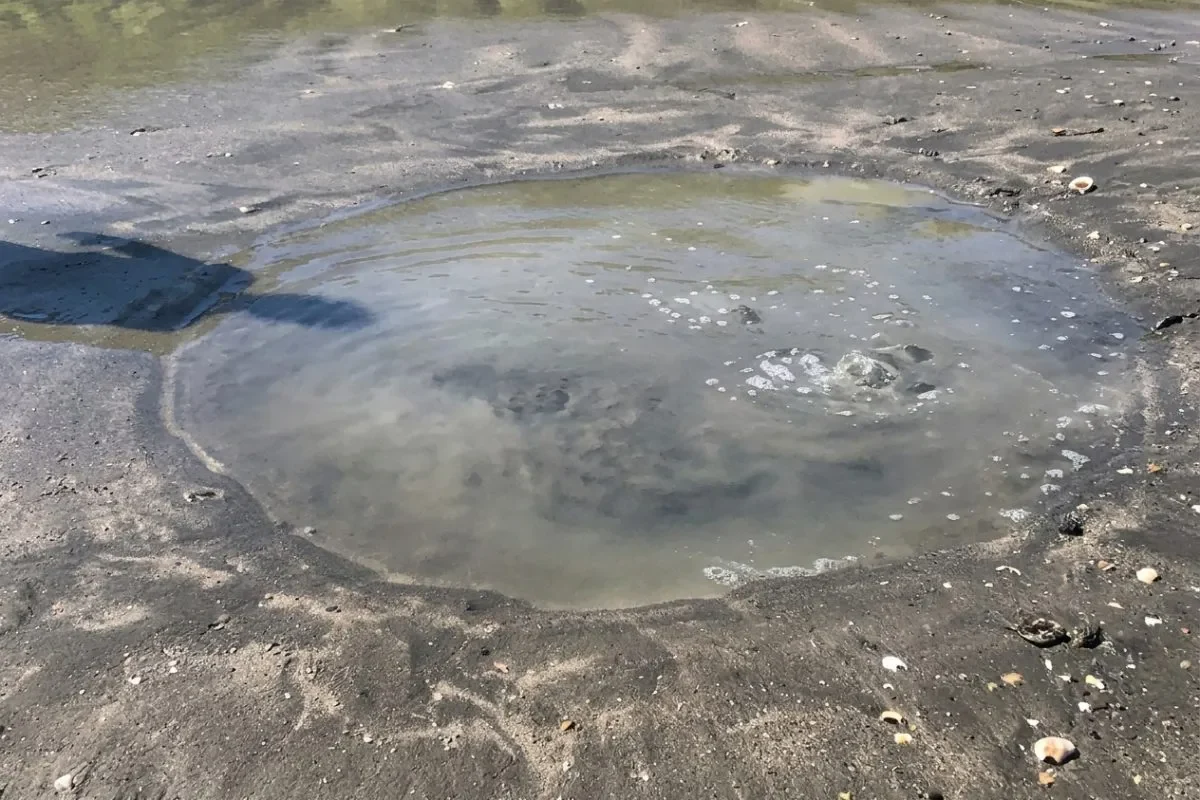
Why the Water Feels Hot and the Sand Acts Like Liquid
The elevated water temperature comes from the natural geothermal gradient of the Earth. Subsurface temperatures increase with depth, and the earthquake released water from deep aquifers that was already warm. The rapid ascent through cracks leaves no time for cooling, so it emerges hot.
Diaz characterized this as a geothermal and hydrothermal event tied to groundwater circulation through known tectonic faults in the Azuero region, not volcanic activity. The soft, unstable sand that swallowed the rod is a result of soil liquefaction. When high-pressure groundwater fills the spaces between sand grains, the beach temporarily loses its cohesion and behaves like a dense fluid. Solid objects, and even a person’s foot, can sink easily under those conditions.
Exclusiva | ¿Qué está pasando en la playa de Búcaro, Los Santos? Experto explica por qué brotan agua caliente, lodo y burbujas: ‘no hay motivos para asustarse’ Entra en https://t.co/Razd290KDW para más información 🔔
— Mi Diario Panamá (@MiDiarioPanama) October 29, 2026
Safety Risks and Volcanic Questions
Localized physical hazards do exist. The ground may be fragile and unstable after the quake, increasing the chance of sinking or getting trapped in mud. If water temperatures are high enough, skin burns are possible. Visitors should avoid approaching the affected area until conditions stabilize.
Some observers have linked the bubbles and hot water to volcanic activity beneath Azuero. Diaz said he cannot state there is a zero probability of volcanic involvement, but the regional geological evidence points to fault-driven hydrothermal circulation rather than magma. The peninsula sits within a seismically active zone with documented tectonic faults, and the phenomenon aligns with post-earthquake fluid migration through those structures.
Broader Context of the Bucaro Beach Phenomenon
Similar post-seismic fluid discharges have been documented in other tectonically active regions worldwide. After major earthquakes, groundwater levels often shift, springs can appear or dry up, and gas emissions may increase. These changes reflect the reconfiguration of underground flow paths following crustal deformation.
Panama’s Azuero Peninsula has a history of moderate seismic events, and its geology includes fault systems capable of channeling deep fluids. The current activity at Bucaro beach fits within that broader pattern of earthquake-induced hydrological change. Officials have not issued evacuation orders, and the phenomenon is not considered a precursor to a larger seismic event.
In summary, the hot water, mud, and bubbles at Bucaro beach represent a temporary geological response to the October 9 earthquake. While the spectacle is unusual, experts say it does not indicate an imminent threat to public safety beyond the immediate physical risks of unstable ground and hot fluids. Monitoring of the area continues as scientists assess whether the discharge will diminish or persist in the coming weeks.