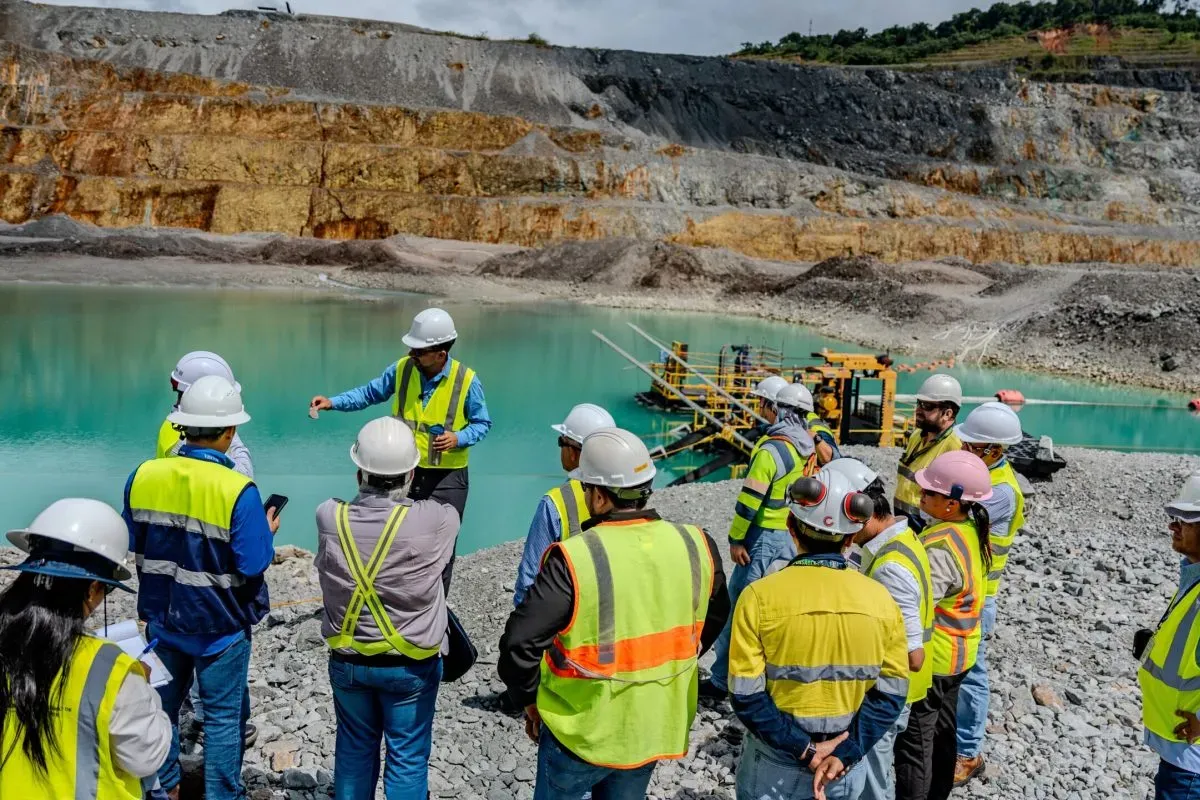
Across the mining belt of Panama’s Atlantic slope, the wait for promised funds has become unbearable. The exact phrase on everyone’s lips is copper royalties distribution. For thousands of families in Donoso, Omar Torrijos Herrera and La Pintada, the suspension of large-scale copper extraction in late 2023 didn’t just freeze a mine, it choked off public budgets that were supposed to be buoyed by mineral wealth. Now, as a high-level commission scrambles to define the future of the industry, a parallel battle is being fought over money that has already been generated but remains stuck in bureaucratic limbo.
The urgency hit home during a recent three-day tour by the Minister of Commerce and Industries, Julio Moltó. His mission was not to strike a deal or announce a reopening. It was to listen. And what he heard from local officials at the district of Omar Torrijos Herrera was blunt: the social and economic fabric is fraying, and only fast-tracked copper royalties distribution can stitch it back together.
Copper Royalties Distribution at the Heart of Local Demands
In the town of Coclesito, a place carved out of the jungle by the late General Omar Torrijos, municipal leaders laid out a stark timeline. Since late 2023, when operations at the Cobre Panamá mine were forced into a preservation-only mode, local government revenues have cratered. The royalties legally owed to the municipalities from exported copper concentrate have been piling up, yet the actual flow of cash into community coffers has barely trickled. The mayors and local representatives told Moltó that infrastructure projects have stalled, basic services are deteriorating, and young people are losing hope.
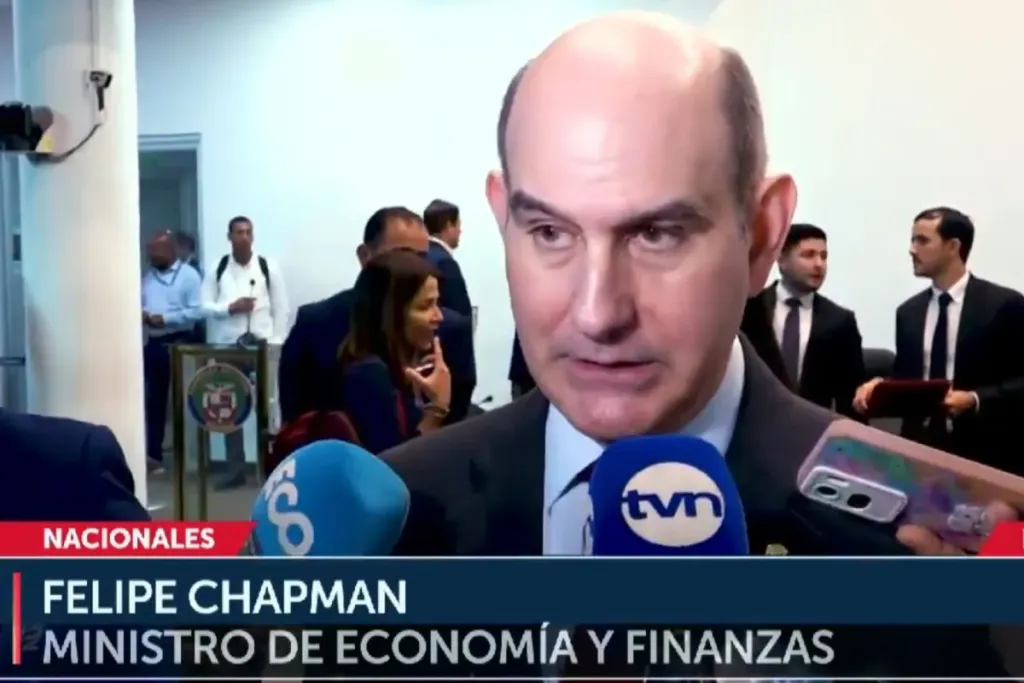
Moltó, who leads the interministerial commission alongside Environment Minister Juan Carlos Navarro and Economy and Finance Minister Felipe Chapman, didn’t deflect. He acknowledged that unlocking the copper royalties distribution is not merely an accounting exercise but a survival mechanism. The minister recalled a direct order from President José Raúl Mulino.
“There is a precise instruction from President José Raúl Mulino that these communities be a priority and be at the center of any solution” [Translated from Spanish]
The problem is both technical and political. Royalties from the limited processing of already-mined material have been authorized, but the legal pathways to disburse them rapidly require coordination between the national treasury, the mining authority and the local governments. Many of these municipalities lack the administrative capacity to absorb large financial transfers and turn them into roads, schools or water systems quickly, a point the local authorities themselves raised. They asked the government not just for money but for technical support to execute projects properly.
Human Capital Built by the Mine Cannot Be Ignored
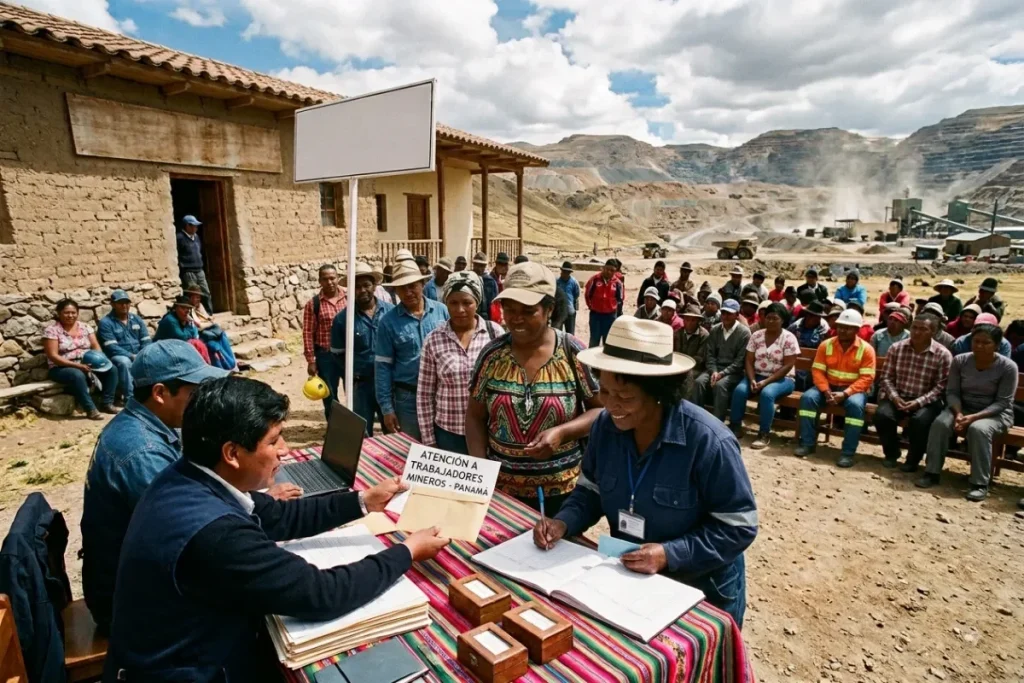
Before the royalty debate can be resolved, the commission must understand who bears the costs of the current limbo. Moltó’s first stop was in Donoso, where he met with workers still employed in the authorized processing and preservation activities. The figures they shared paint a picture of a deep-rooted labor force that defies the stereotype of transient extractive employment.
“The activity currently authorized by the Government generates 3,200 direct jobs and more than 3,000 indirect ones. Over 91% of the workforce is Panamanian, 48% comes from the surrounding municipalities, and 17% are women with professional and technical training” [Translated from Spanish]
That statement, issued by the Ministry of Commerce and Industries, underscores a reality often lost in polarized debates. The mine didn’t just extract ore, it cultivated a skilled local workforce. For Moltó, hearing the workers’ personal stories brought home the weight of the decisions ahead. Many told him they had completed technical degrees and certifications specifically to work at the mine, and now they watch their expertise atrophy while their families depend on a shrinking paycheck.
The human dimension is precisely what the interministerial commission must weigh against environmental concerns and legal rulings. The Supreme Court’s declaration that the previous concession contract was unconstitutional remains the defining legal backdrop. But the government’s decision to allow a controlled processing of stockpiled material gave a temporary lifeline to thousands of households. It is a fragile equilibrium, and any future decision about the mine will either solidify or shatter it.
Small Businesses Caught in the Supply Chain Fallout
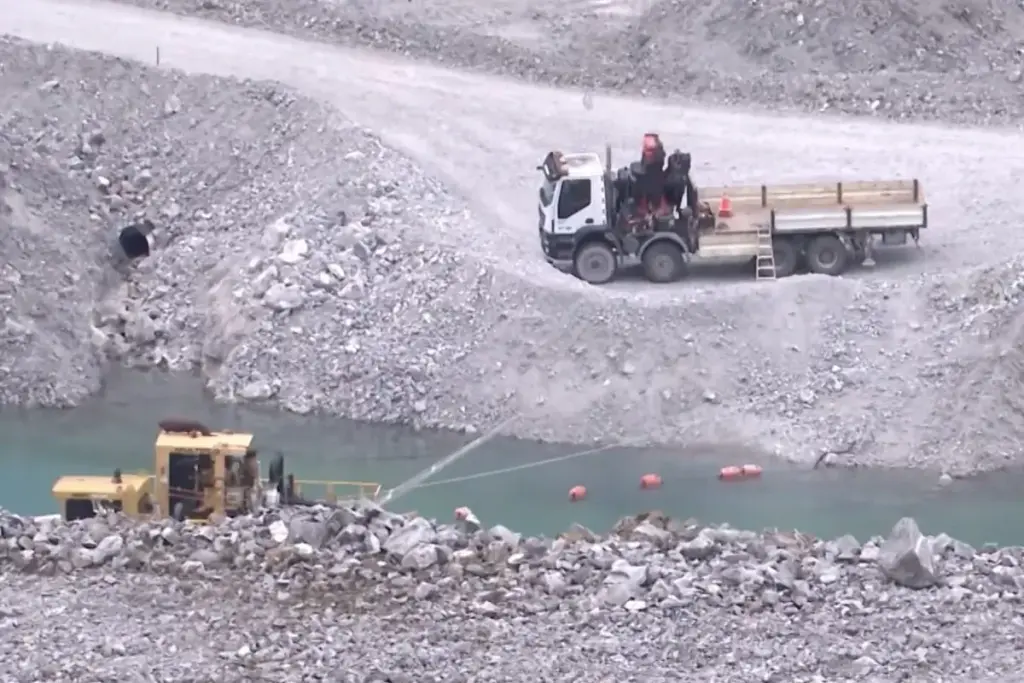
In La Pintada, the minister encountered a different face of the crisis. Inside the municipal market, members of the Association of Suppliers of the Panamanian Mining Industry (Apimpa) gathered to explain their ordeal. These are not multinational contractors. According to ministry data, 68% of the providers are small and medium-sized enterprises from the very municipalities Moltó visited.
The businessmen and women walked him through the cascade of cancellations that hit their companies after the mine’s full operations stopped. Repair shops, catering services, transportation firms and safety equipment dealers all saw their order books collapse. The authorized processing phase allowed them to claw back a fraction of their activity, enough to avoid total collapse but not to rehire the workers they had laid off. They warned that without a clear horizon, and without the economic stimulus that a steady copper royalties distribution could inject into local demand, many of these family businesses will disappear permanently.
Moltó took note of their predicament. He stressed that the commission’s final recommendations must factor in the entire supply chain, not just the direct employees of the mine. The dependency runs deep. When a supplier in La Pintada loses a contract, the impact spirals into the local economy, killing demand for everything from groceries to school fees.
A Deliberate Shift Toward Community-Centered Decision Making
The tour signaled a deliberate repositioning by the government. Previous discussions about the mine’s future often revolved around macro-economic figures, environmental audits and legal disputes. While those remain critical, the commission is now gathering what Moltó calls a “closer vision” of the social and economic reality on the ground. The message, repeated in three districts, was that no decision can be made solely in a Panama City boardroom.
That approach aligns with President Mulino’s early signals that his administration would not rush into reopening the mine without addressing the grievances and needs of those most affected. Yet the clock is ticking. The buffer provided by stockpile processing is finite. Once that material runs out, the direct jobs will vanish, and the indirect ones will follow with a brutal multiplier effect. At that point, the demand for copper royalties distribution will transform from an urgent request into an anguished cry.
The interministerial team is now digesting the testimonies and data from the field. Their conclusions, expected in the coming months, will have to navigate the triangular tension between environmental stewardship, legal certainty and the immediate material needs of tens of thousands of Panamanians. In a country where mining debates often descend into abstraction, Moltó’s journey served as a tangible reminder that behind every statistic is a household waiting for answers, and behind every royalty payment is a road that might finally get paved.