
Panamanian drivers will see lower prices at the pump starting Friday June 26. The National Energy Secretariat announced a new reduction in fuel costs as international crude markets continue their sharp decline. This marks the fourth consecutive decrease for consumers in the Central American nation.
📑 Table of Contents
The trigger came from a steep drop in West Texas Intermediate crude oil, which lost 3.9 percent on Wednesday June 24. The benchmark closed at $70.34 per barrel, its lowest level since the Middle East conflict began. During trading it even dipped below the $70 threshold.
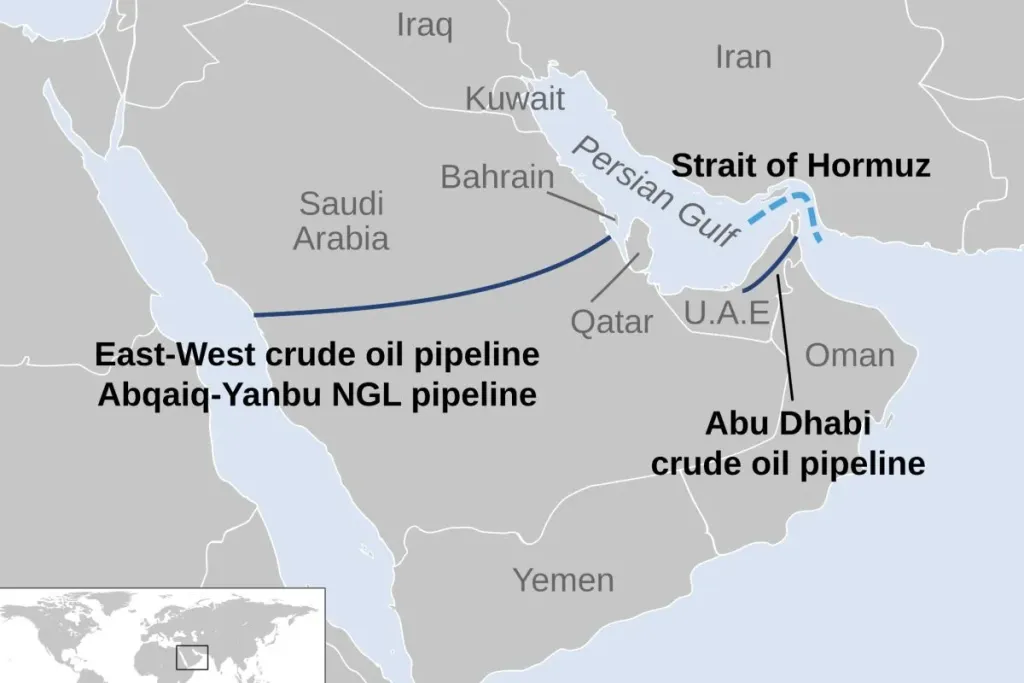
Markets are responding to easing tensions between the United States and Iran. Shipping traffic continues moving through the Strait of Hormuz, one of the planet’s most critical energy routes. A significant portion of global crude trade passes through this narrow waterway.
Geopolitical Risk Premium Disappears
Investors have interpreted these signals as a reduced threat to global supply. The geopolitical risk premium that pushed oil prices higher in recent weeks has started to fade. Vessel traffic remains below pre-conflict levels but the immediate danger of a major disruption has diminished.
Panama’s fuel pricing structure ties directly to international benchmarks. The effects are now reaching local consumers. Starting Friday, 95-octane gasoline will sell for $1.18 per liter, down four cents from the previous period. The 91-octane variety drops to $1.11 per liter.
Diesel sees the biggest reduction at 10 cents, landing at $1.10 per liter. This matters because diesel powers cargo运输, logistics operations, and much of the productive economy. The cut does not automatically lower living costs but it does ease pressure on transport-intensive sectors.
The decrease in diesel is particularly significant because this fuel is fundamental for merchandise transportation, logistics, and a good part of productive activity, officials stated. [Translated from Spanish]
Market Remains Vulnerable to Shifts
Specialists have consistently warned that oil markets stay highly sensitive to geopolitical events. Current negotiations between Washington and Tehran have temporarily reduced uncertainty. Any deterioration in those talks or a new disruption at the Strait of Hormuz could quickly bring volatility back to crude prices.
US President Donald Trump has warned Iran he will halt peace negotiations if Tehran imposes tolls on the strait. He later said the ayatollahs’ government “is behaving very well” in the process. For now markets send a clear message: supply crisis fears have decreased and international oil prices are returning to pre-conflict levels.
The visible effect in Panama will be a fourth fuel reduction, giving consumers and businesses a two-week breather. Panama fuel prices have shown steady declines as global conditions shift.
Some analysts caution the trend could reverse quickly. The region remains volatile and any new conflict escalation would hit prices hard. But for now, the downward trajectory offers relief to an economy that depends heavily on road transportation for goods and people.