


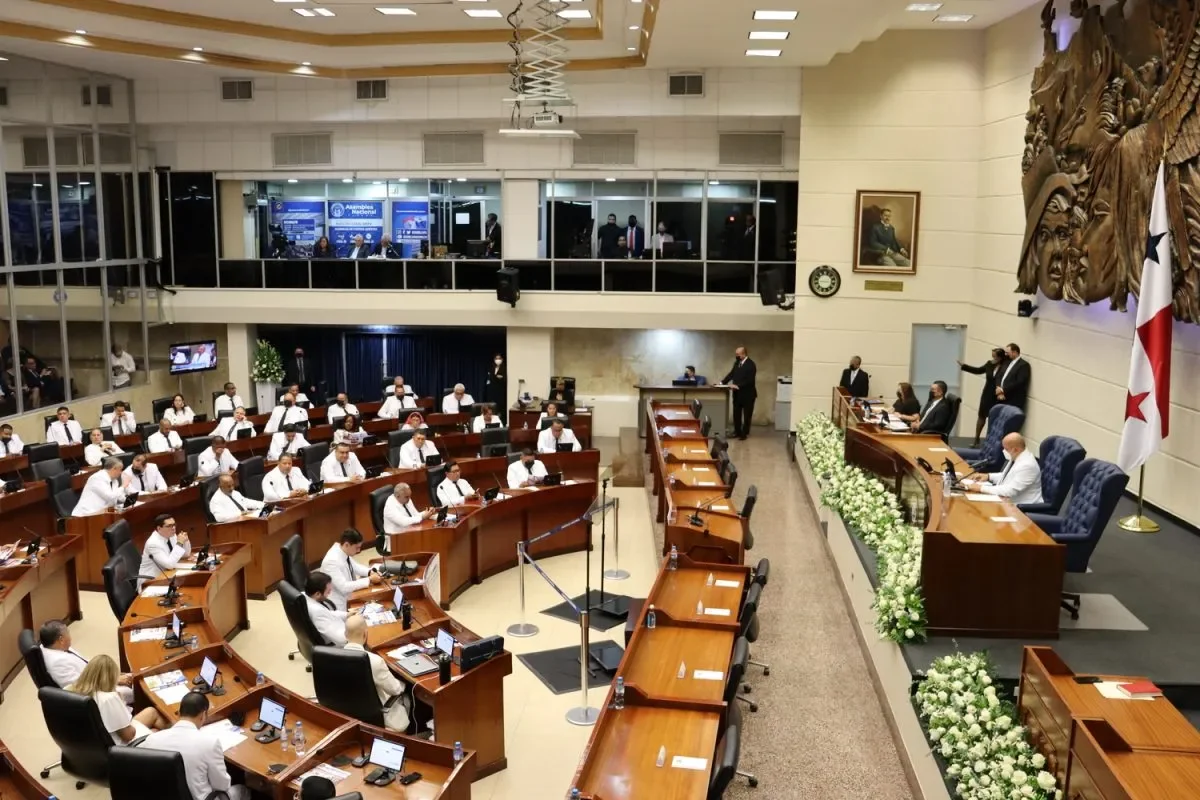
A $37 million proposal for Panama state advertising surprised even the finance minister during a marathon budget hearing on Tuesday, August 11. Deputy José Pérez Barboni flagged the spending while Felipe Chapman, the minister of economy and finance, defended the 2027 general state budget of $35,111.7 million. The line item, number 132 in the draft, covers promotion and advertising and sits one million dollars above the $36 million the deputy first mentioned.
Panama State Advertising Under the Microscope
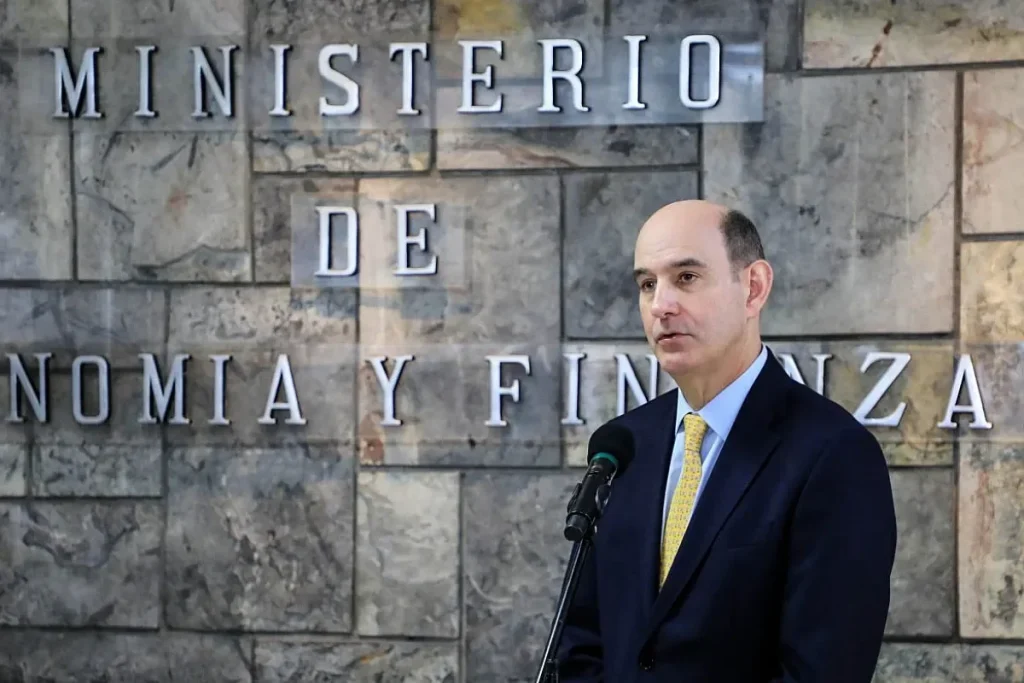
Pérez Barboni, from the Movimiento Otro Camino party, didn’t hesitate. He called the amount concerning and tied it directly to government self-promotion. Chapman initially asked which section of the budget contained the figure and admitted the number worried him too. The minister offered to add up all institutional advertising allocations and share the totals with lawmakers.
When the deputy located line 132, the conversation shifted. Chapman explained that the $37 million includes public enterprises and financial companies, which is why the figure wasn’t immediately on his radar. The minister then made a candid admission about his reaction.
“That is why I was surprised and scared,” [Translated from Spanish]
The session didn’t dig into how much each institution would spend on advertising. But the exchange made clear that promotional spending will face closer examination during upcoming budget hearings.
How the $37 Million Compares to Agency Budgets
Pérez Barboni drew sharp comparisons to put the advertising allocation in perspective. He noted that entire public institutions operate with less money than the state advertising line. The National Authority for Transparency and Access to Information, known as Antai, has a budget approximately ten times smaller than the advertising amount, according to the deputy. The National Secretariat for Children, Adolescents and Family, Senniaf, also manages fewer resources.
“Minister, I’m a bit concerned about the $36 million for government self-promotion, for state advertising,” [Translated from Spanish]
Chapman responded that the Ministry of Economy and Finance uses its advertising funds to promote the fiscal lottery and publicize the sale of seized goods. Pérez Barboni said he worries that part of the state advertising budget could end up promoting projects like a bridge built in Boquete, for example. He urged reconsideration of the amount, and the minister replied with a brief “No problem.”
Payroll Tensions and Fiscal Restraint
Beyond the advertising debate, the hearing revealed deeper tensions over public spending discipline. The proposed budget reflects $5,728 million in cuts to requests from public institutions, a point Chapman used to defend what he called the ordering of public finances. But payroll costs keep climbing. Panama now has 269,997 public employees, and salaries will consume $7,923.6 million in 2027, according to figures the minister shared.
Special laws in education, health, and security add another $340 million in payroll pressure. Asked how to control payroll growth, Chapman didn’t offer a direct solution.
“My wish would be for the payroll not to keep growing. This minister does not control that,” [Translated from Spanish]
Pérez Barboni also pressed for a reliable tax evasion figure. Chapman admitted that no calculation is completely trustworthy but said his hypothesis is that evasion does exist. He highlighted the transformation of the revenue authority through the fiscal lottery and technology. Revenues rose 8.5 percent through June 30 compared with the same period in 2025.
The conversation also touched on local representation. Deputy Carlos Afú questioned why every township representative receives the same $110,000 allocation regardless of population. Chapman said he had asked the same question upon taking office and pointed to Law 37 of 2009, which decentralizes public administration.
Institutional Allocations and Upcoming Hearings
The 2027 budget proposal concentrates its largest allocations in education, health, security, and public works. The Ministry of Education leads with $3,757 million, followed by health with $2,001 million, security with $1,101 million, and public works with $953 million. Deputy Luis Duke asked for three priorities, but Chapman listed five: education, health, security, public works, and water.
El ministro del MEF, afirma que la salud es prioridad, pero los recortes al presupuesto dicen otra cosa. Es indignante ver como al Hospital del Niño y al Materno Infantil se les niegan los fondos urgentes para insumos, medicinas y operaciones, aprobando apenas una fraccion minima… pic.twitter.com/zEVZ5OB7kO
— Lucho Duke (@LuchoDuke) August 11, 2026
Duke’s party colleague Yamireliz Chong raised questions about the Ministry of Education’s execution during 2025. Chapman said that entity transferred $139 million to other institutions, which he described as a very low percentage of its total budget.
Budget hearings begin on August 17. Each institution will have to justify its allocation before the same commission, and the advertising line items are already under legislative scrutiny. The $37 million state advertising figure now stands as a test of whether the government can reconcile its austerity narrative with promotional spending that one deputy called self-promotion.