


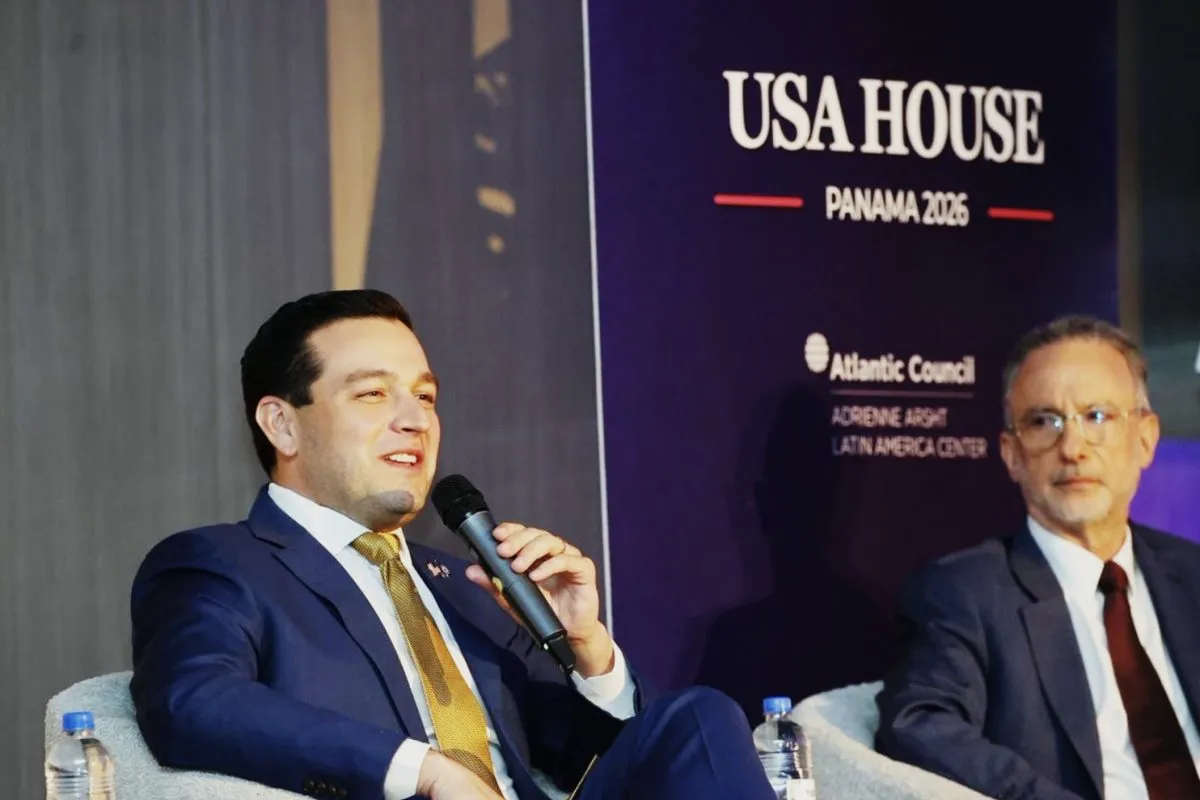
Panama must guarantee transparency in public bidding processes and pay suppliers on time to maintain investor confidence. United States Ambassador to Panama Kevin Marino Cabrera delivered this message during a high-level panel on logistics and trade. The event took place at the 56th General Assembly of the Organization of American States in Panama City.
Cabrera spoke alongside government officials and business leaders at the Atlantic Council panel titled “Trade and Logistics: The Opportunity to Attract Investments in Panama.” The discussion focused on keeping the country competitive as a regional business hub. Panama currently ranks as one of Latin America’s top destinations for multinational corporations. Its maritime, air and land connectivity creates a strong foundation for logistics operations. But the ambassador made clear that past success does not guarantee future growth.
“What does an investor want? They want certainty,” Cabrera said. [Translated from Spanish] He emphasized that Panama must ensure predictable rules for public tenders and processes linked to the Panama Canal. These rules must remain stable beyond each five-year administration. The diplomat also highlighted the importance of orderly public finances and the payment of outstanding commitments to suppliers. According to information shared by US companies working with the government, more open accounts have been paid compared to previous administrations. “You want to be sure that when you provide a service, you will be paid,” Cabrera stated. [Translated from Spanish] He called this a basic but decisive factor for companies considering contracts, tenders or infrastructure projects.
Panama’s Investment climate in Panama depends on clear rules and reliable institutions. Cabrera urged the country to continue creating opportunities for US companies to bid on projects related to logistics, critical infrastructure, education and talent development. The panel included Minister of Commerce and Industries Julio Moltó, Panama Canal Deputy Administrator Ilya Espino de Marotta and Panama Pacific Director General Henry Kardonski. All agreed that the country must strengthen its competitive advantages through clear regulations, reliable infrastructure and better human capital preparation.
Panama Canal Remains Central to Economic Security
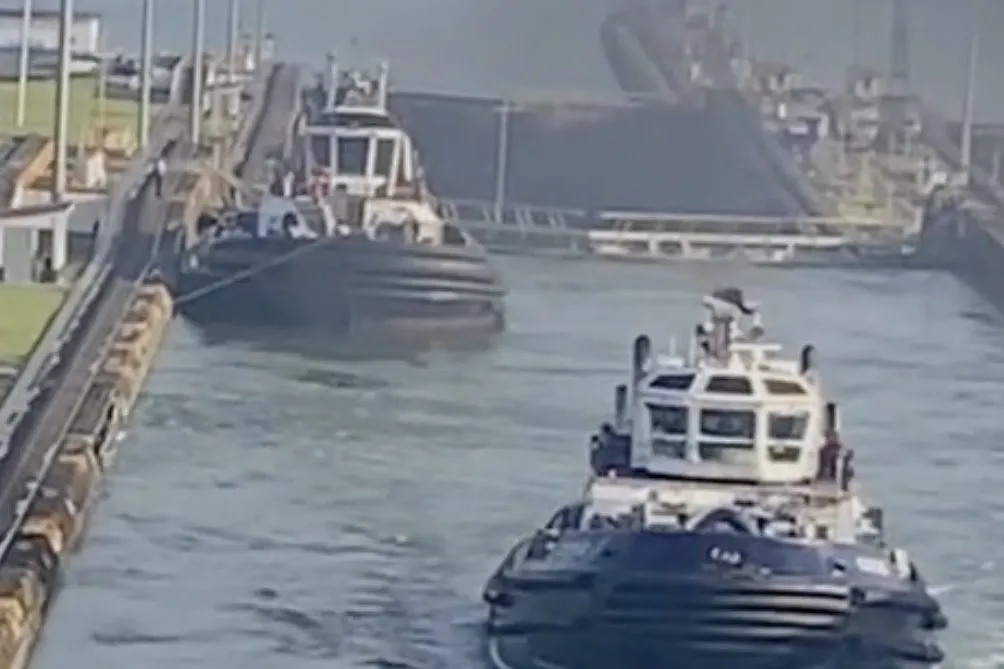
Cabrera stressed that the Panama Canal holds strategic value for both the United States and global supply chains. Approximately 70 percent of cargo transiting the waterway either originates from or is destined for the United States. The canal handles about 5 percent of world trade. “For us, when we look at the canal issue, it is so important for our economy to ensure that products are on the shelves,” the ambassador explained. [Translated from Spanish] He framed economic security as a component of national security.
The US representative added that Panama and the United States share a responsibility to protect and maintain the canal’s operations. “There are two countries that, according to the treaties, have that responsibility to protect the canal: the United States and Panama. Together,” Cabrera said. [Translated from Spanish] Cooperation between the two nations extends beyond security. It includes attracting long-term investments, training local talent and improving English language proficiency. Many companies consider English skills essential when hiring local staff.
The ambassador’s remarks come at a time when the Panama Canal faces operational challenges. Climate change and rainfall variability have emerged as major threats to the waterway’s reliability. Deputy Administrator Ilya Espino de Marotta warned that the canal has experienced some of its driest years on record over the past decade.

Water Scarcity Threatens Canal Operations and Public Supply
In 2023, water restrictions forced the canal authority to temporarily reduce daily transit slots for vessels. The measure aimed to protect both canal operations and drinking water supplies for the population. Espino de Marotta explained that water from the canal’s lakes serves a dual purpose. It powers the locks for ship transit. It also provides drinking water to more than 2 million people. The same water supports ports, airports, free trade zones, universities and commercial activities.
“When we think about water, we think about the future of the canal and the future of the country,” Espino de Marotta said. [Translated from Spanish] The canal authority has invested in water management projects and explored new sources. But the deputy administrator acknowledged that climate patterns remain unpredictable. Long-term solutions require regional cooperation and significant capital investment.
Minister of Commerce Julio Moltó echoed the need for strategic planning. He noted that Panama’s role as a logistics hub depends on infrastructure reliability. The government has prioritized public-private partnerships to modernize roads, ports and airports. Moltó also emphasized the importance of digital transformation for customs and trade facilitation. Faster clearance times and digital documentation reduce costs for businesses operating in the country.
Panama Pacific Zone Attracts Global Companies
Panama Pacific Director General Henry Kardonski highlighted the success of the special economic zone. The area hosts more than 170 companies from sectors including logistics, technology and financial services. Kardonski said the zone offers tax incentives and streamlined procedures for multinational firms. But he agreed with Cabrera that legal certainty remains essential. Companies need assurance that regulations will not change abruptly.
The panel concluded with a call for long-term strategy. Participants stressed that Panama must respond to climate, technological and geopolitical challenges. The country cannot rely solely on its geographic advantage. It must invest in human talent, infrastructure and governance. Cabrera summarized the message clearly. “Certainty is what keeps investors coming back,” he said. [Translated from Spanish] “Panama has the assets. Now it needs to protect the trust.”
The event took place during the Organization of American States General Assembly, which brought together foreign ministers and delegates from across the hemisphere. Panama used the occasion to showcase its economic achievements. But the ambassador’s remarks served as a reminder that maintaining investor confidence requires constant effort. Transparency, timely payments and legal security form the foundation of a healthy investment climate. Without these elements, even the most strategic location can lose its appeal.