


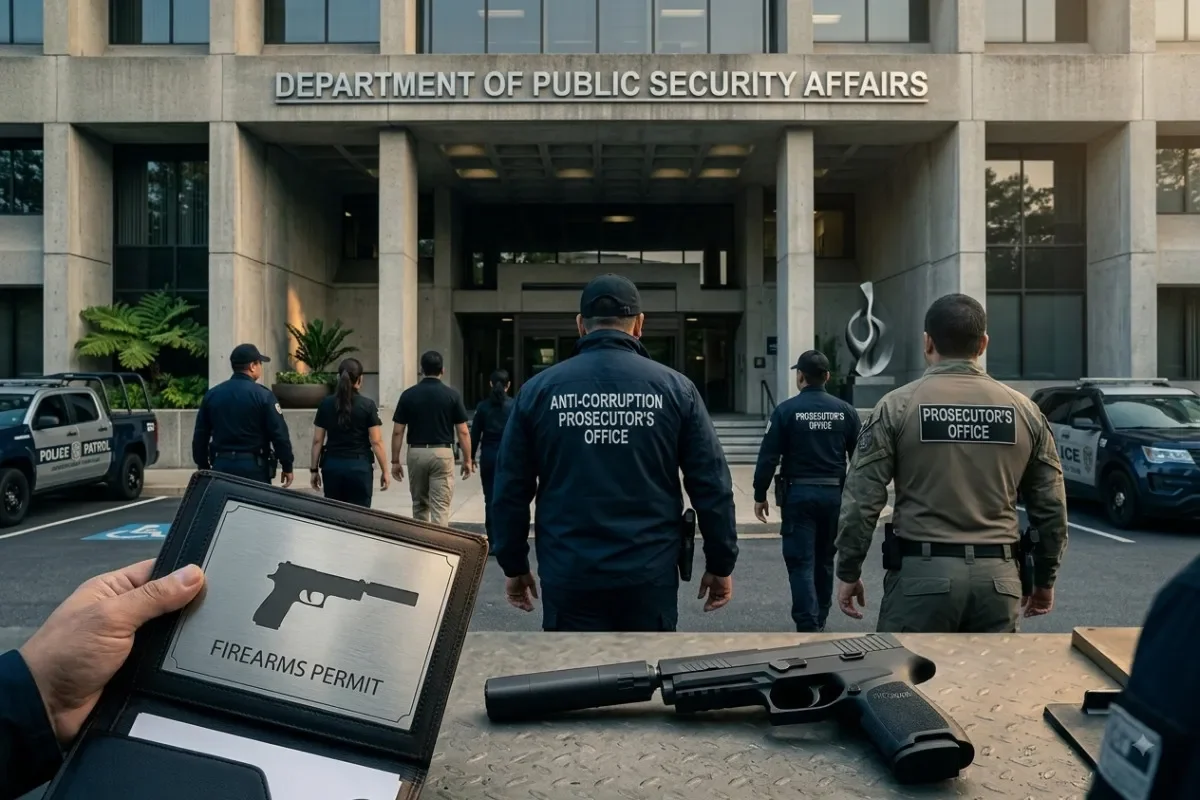
A cache of weapons, documents, and electronic equipment is now in the hands of Panamanian investigators after coordinated raids Wednesday exposed an alleged scheme to illegally obtain Panama gun permits. Six people were arrested during the operation, including current and former public officials as well as private citizens, prosecutors said.

Panama Gun Permits Investigation Unfolds Across Three Provinces
The court-authorized searches took place in the provinces of Panama, Panama Oeste, and Colón. Security forces seized firearms of various types, paperwork, and digital devices believed to be connected to the suspected corruption network. The operation, named Tamiz, appears to reference a sieve or filter, reflecting an effort to separate legitimate permits from fraudulent ones.
Authorities have not disclosed the full list of detained individuals, but confirmed that the group includes government employees, former officials, and people outside the public sector. The arrests mark a significant escalation in a case that has drawn attention to how firearms permits are reviewed and approved across the country.

Origins and Mechanics of the Alleged Fraud
The investigation traces back to a complaint filed in February 2026 by the Dirección de Asuntos de Seguridad Pública, the public security affairs directorate known as DIASP. That complaint alerted prosecutors to what appeared to be a coordinated effort in which applicants and insiders worked together to submit falsified documents for firearm permits.
Rather than following the normal route of background checks and eligibility reviews, some applicants allegedly relied on forged records to secure authorization. Investigators suspect that current and former employees may have helped move those applications through the system. The manipulation of Panama gun permits in this way would bypass safeguards designed to keep weapons out of the hands of people who do not qualify. The involvement of private individuals suggests the scheme extended beyond just official misconduct.

Why Firearm Licensing Integrity Matters
Panama has long required applicants to meet specific criteria before receiving a firearm permit, including criminal background checks and proof of a legitimate reason to carry. When Panama gun permits are issued based on falsified records, those controls weaken considerably. Unauthorized weapons can enter circulation without the usual scrutiny, raising risks for public safety.
The case also highlights a broader challenge seen across Latin America, where gaps in paperwork and oversight can fuel illegal firearm flows. Even countries with relatively strict rules, like Panama, face pressure from corruption inside licensing offices. The existence of an alleged document fraud ring shows that the threat often comes not from a lack of laws, but from weaknesses in how those laws are enforced. That is why the current investigation has drawn serious attention from judicial authorities.

Judicial Process and Official Response
Prosecutors are expected to present the gathered evidence before a judge as the case moves forward. The Attorney General’s Office said it remains committed to pursuing criminal action in the courts while respecting the constitutional rights of those detained. Investigators will likely examine the seized computers and documents to determine how many permits may have been improperly issued and over what period.
The arrests represent one of the more notable recent efforts to target corruption within Panama’s firearm authorization system. As the case develops, it may prompt calls for stronger internal audits and tighter verification procedures at every stage of the permitting process. For now, the operation has put a spotlight on the risks that emerge when documentation is manipulated and has sent a clear signal that authorities intend to act against those accused of exploiting the system.