


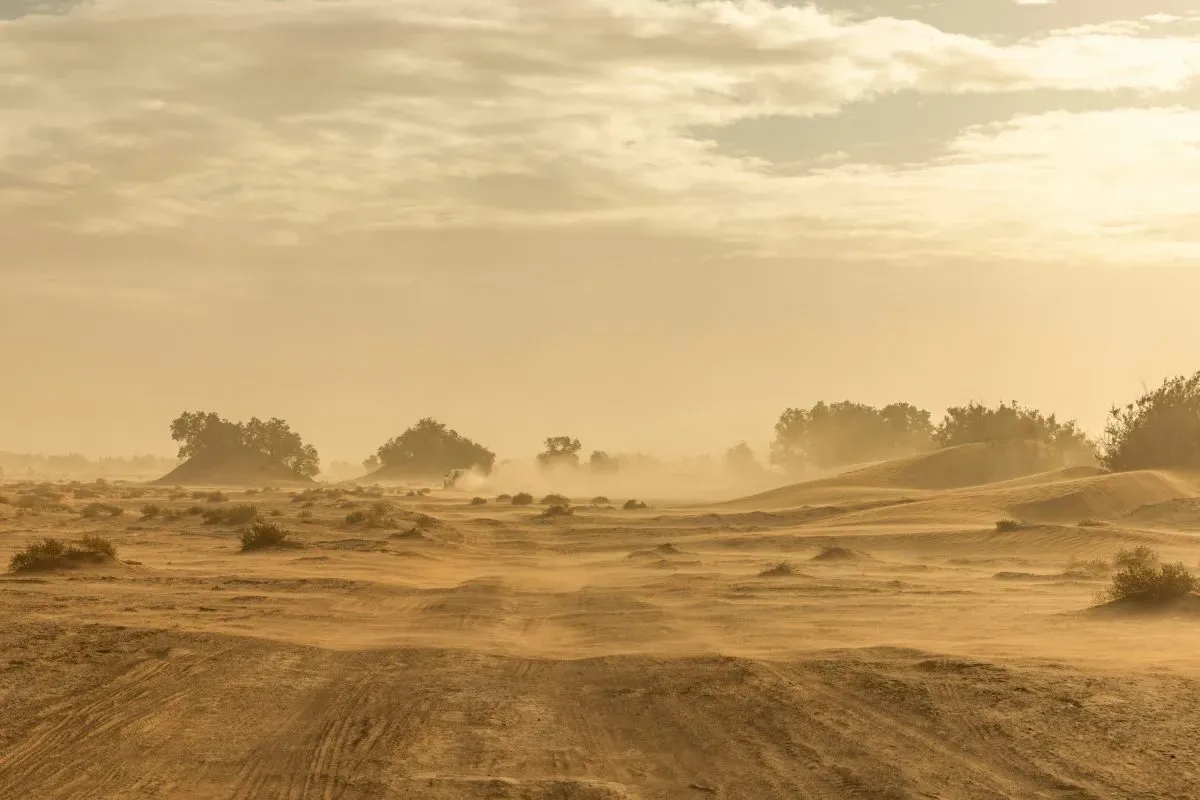
A mass of dust particles from the Sahara Desert is moving over Panama in the coming days. The Panama meteorological institute issued this warning on Saturday. Hazy conditions and increased thermal sensation are expected across the country.
The Institute of Meteorology and Hydrology of Panama (IMHPA) released the official alert. A vigilance notice for Saharan dust remains active from early Saturday, June 27 until the night of Monday, June 29. Forecasts show the highest dust concentrations will hit most of the national territory. The Caribbean region will experience the strongest effects.

Dust Concentrations Vary Across Panama Regions
The IMHPA detailed specific concentration levels for different areas. Low concentrations will appear in the Central and Western Pacific sectors. Moderate levels are expected in Bocas del Toro, Coclé, Panama Oeste, the metropolitan region, and the eastern zone of the country.

These atmospheric particles will cause several noticeable effects. Visibility may reduce significantly. Skies will appear more opaque than usual. Residents should also prepare for an increase in heat sensation.
We recommend that the population, especially people with allergies or respiratory sensitivity, take preventive measures given the potential impact on air quality, said officials from the meteorological institute. [Translated from Spanish]
Health Precautions and Next Steps for Panama Residents
Authorities urge residents in affected areas to limit outdoor activities. People with pre-existing respiratory conditions should wear masks in dusty environments. The IMHPA will continue monitoring the dust plume’s movement across Panama.
The weather agency expects conditions to improve by Tuesday morning. Cleaner air should return as the dust mass moves westward. Officials will issue updates if concentration levels change significantly.
This event follows a pattern typical for this time of year. The Sahara Desert releases massive dust plumes annually. These clouds travel thousands of kilometers across the Atlantic Ocean. Panama sits directly in the path of these seasonal dust migrations.
Citizens should keep windows closed during peak dust hours. Pet owners should also limit animal exposure to the dusty air. The IMHPA advises staying hydrated as the dust increases heat retention in the atmosphere.