


When Maritza Castillo first floated the idea of a Panamanian folkloric parade in Texas, she expected maybe a few dozen interested families. Instead, her social media post exploded with thousands of responses from Panamanians across the United States. “I realized we had been waiting for something like this our whole lives,” Castillo said.
‘The response showed me that our community has been hungry to showcase our heritage in a visible, public way’ [Translated from Spanish]
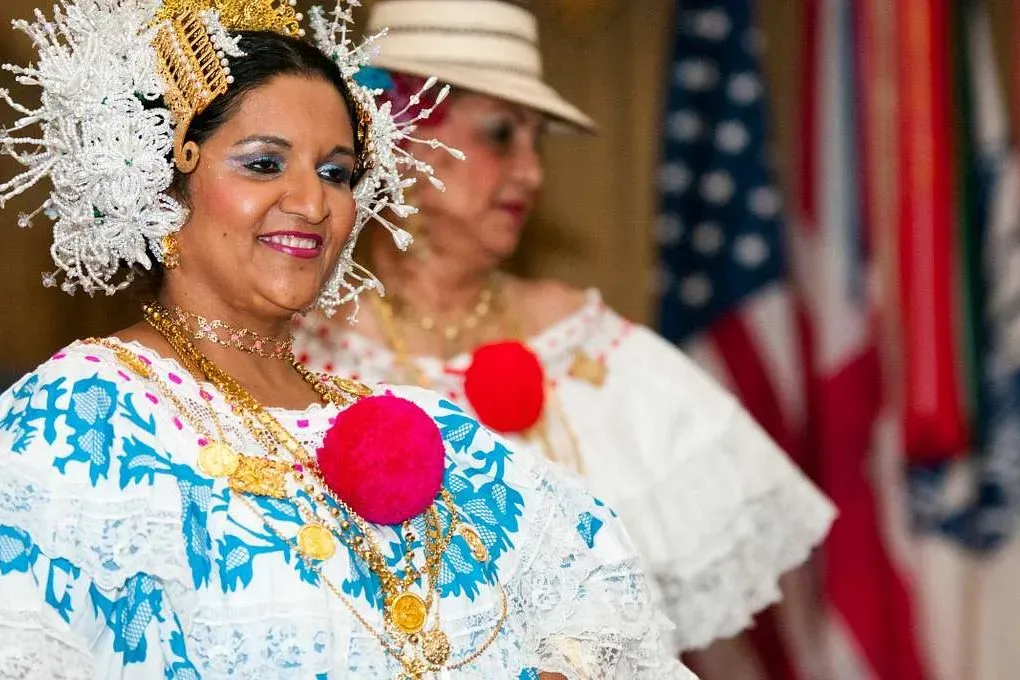
That dream is now becoming reality. For the first time in American history, Dallas Texas will host the Gran Desfile de las 100 Polleras & Montuno in 2026. The event promises to transform the city’s streets into a living museum of Panamanian culture, featuring the iconic Pollera dress alongside traditional Montuno attire for men.
A Cultural Statement on Foreign Soil
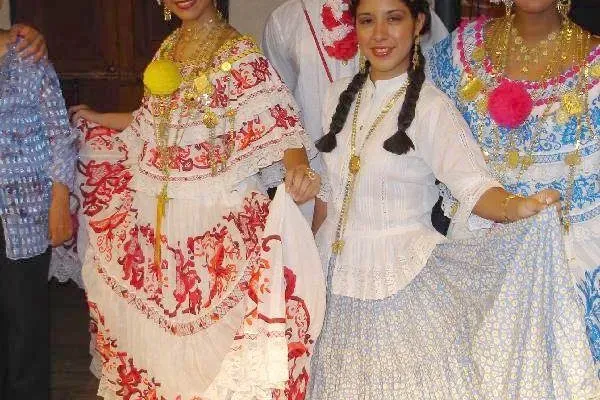
The Pollera dress represents far more than fabric and embroidery. Each hand-stitched creation can take months to complete, with intricate floral patterns and gold jewelry that vary by region. Panama’s different provinces each have their own distinct Pollera style, from the elaborate Pollera de Gala to the more practical Pollera de Trabajo. The parade will feature all of these variations, creating a visual tapestry of Panama’s diverse cultural landscape.
Organizers emphasize that this event targets the Panamanian diaspora in the United States, a community that has grown significantly over the past three decades. Census data shows that Panamanian-American communities have established strongholds in Florida, California, New York, and increasingly in Texas. The Dallas location was chosen strategically, sitting at the crossroads of multiple migration patterns and offering central access for families traveling from across the country.
Juan Carlos Miranda, a cultural historian based in Houston, noted the significance of holding such an event in Texas. “Texas has its own strong ranchero and vaquero traditions,” he said.
‘Seeing Panamanian folkloric dress alongside Texas Western wear creates a beautiful dialogue between two cultures that share historical roots in cattle ranching and rural life’ [Translated from Spanish]
More Than a Parade, It Is a Family Reunion
The event organizers have stressed that this celebration welcomes everyone. Women, men, children, grandparents, and even non-Panamanians who love the culture can participate. For many second-generation Panamanian-Americans, this parade offers something they have never experienced before. Growing up in the United States, many felt disconnected from their parents’ homeland. This event gives them a tangible way to connect with their heritage.
Maria Elena Vargas, a teacher in San Antonio whose parents emigrated from Chiriqui Province in the 1980s, said she plans to bring her entire family. “My children have only seen Polleras in photographs,” she explained.
‘I want them to see real women wearing them, to hear the tamborito music live, to feel what it means to be Panamanian in their bones’ [Translated from Spanish]
Organizers have also addressed a major barrier to participation. Many families do not own Pollera or Montuno outfits, which can cost thousands of dollars and require specialized knowledge to acquire. The planning committee is working on rental programs and group purchasing arrangements to ensure financial constraints do not exclude anyone. They have promised to share detailed information about affordable options in the coming months.
Tamborito Music and the Sound of Home
No Panamanian folkloric event would be complete without tamborito music. This traditional genre combines African drumming rhythms with Spanish melodic structures, creating a sound uniquely Panamanian. The parade will feature live musicians playing drums, accordions, and the distinctive mejorana guitar. Dancers will perform the traditional steps that accompany each musical piece, with different provinces showcasing their regional variations.
The choice of Dallas as the host city also reflects the growing Panamanian presence in Texas. While cities like Miami and New York have long-standing Panamanian communities, Texas has seen a surge in arrivals over the past decade. Many have come for job opportunities in healthcare, construction, and technology sectors. The parade gives these newer arrivals a chance to build community and introduce their American neighbors to Panamanian traditions.
Building a Legacy for Future Generations
The 100 Polleras & Montuno Parade represents more than a single day of celebration. Organizers envision it as an annual event that will grow over time. They hope to eventually include educational workshops, cooking demonstrations featuring traditional Panamanian dishes like sancocho and tamales, and art exhibitions showcasing Panamanian crafts.
For the Panamanian diaspora, this parade offers something intangible but powerful. It provides a platform to tell their own stories on their own terms. Too often, Latin American cultures get lumped together in American media, with specific national traditions getting lost. This event forces people to see Panama specifically, to recognize its unique contributions to world culture.
One organizer, who asked to remain anonymous due to her day job in corporate America, summed up the feeling driving this effort. “We have spent years adapting to American culture, speaking English, blending in,” she said.
‘On this day, we will be unapologetically, joyfully, loudly Panamanian. And that is a gift we are giving to ourselves and to our children’ [Translated from Spanish]
The parade is scheduled for 2026, giving the community time to prepare costumes, coordinate travel, and spread the word across state lines. Organizers continue to accept volunteers and participants through private messages on their social media channels. They have one clear message for Panamanians everywhere. Your moment has arrived. Come to Dallas. Bring your Pollera. Bring your pride.