


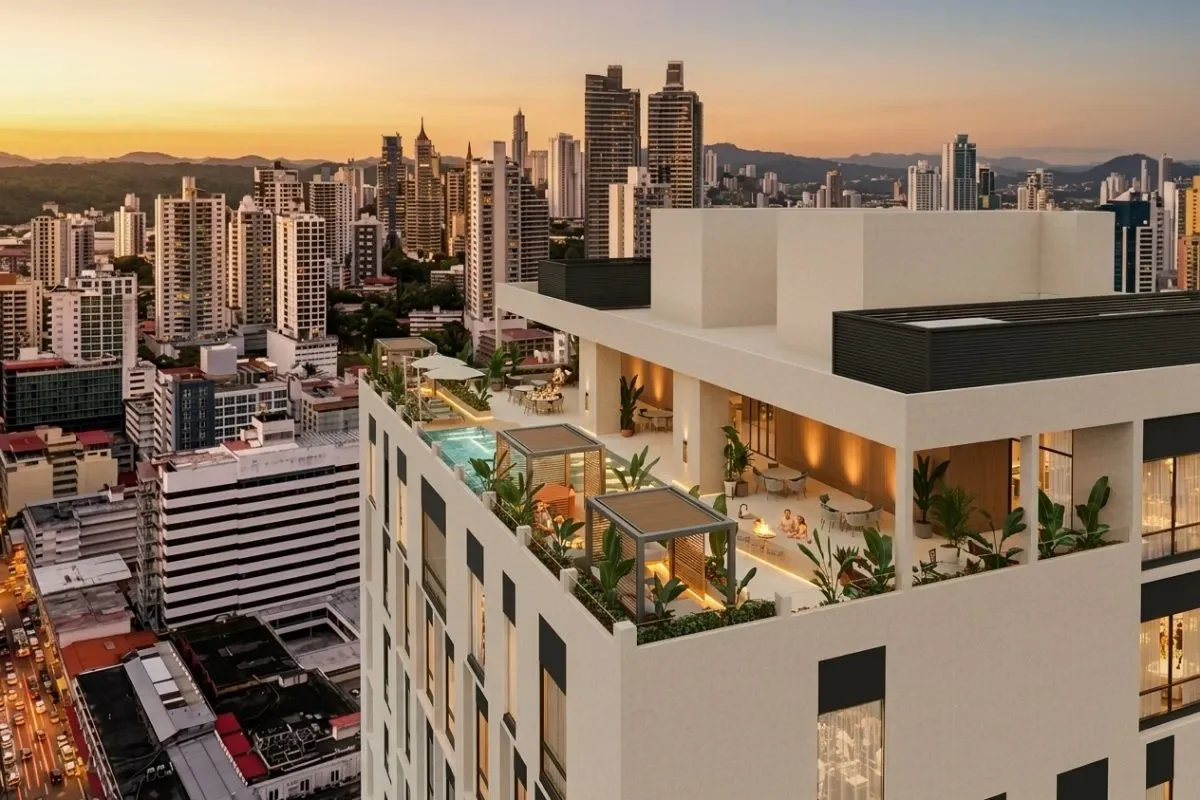
A hotel building in Obarrio that sat dark and unused for six years is about to get a second life, powered by a $40 million Panama hotel investment from Canadian group Mercan. The company has acquired the former Sonesta property in Bella Vista and plans to transform it into the Pullman Panama City, marking the debut of both Mercan and the Pullman brand in the country’s hospitality market.
Announced this August 2026, the project represents a partnership with French hospitality giant Accor, which owns the Pullman Hotels and Resorts brand. The development will feature more than 300 keys split between 180 traditional hotel rooms and 126 executive suites. Beyond lodging, the complex is set to include restaurants, bars, meeting areas, coworking spaces, a gym, a spa, and other amenities designed to draw both international travelers and Panama City residents.
Reviving a Shuttered Obarrio Landmark
Gloria De León, administrator of the Panama Tourism Authority (ATP), confirmed that the property had remained closed for approximately six years before Mercan’s acquisition. Its rehabilitation will be led by Mallol Arquitectos, a Panamanian architecture firm tasked with reinterpreting the building’s design for a new era. The scheduled opening is set for 2028.
Jordi Vilanova, president of Mercan Properties, framed the initiative as something far broader than a conventional hotel.
“What we intend is that this be a center, not just a hotel center, but also a center for Panamanians” [Translated from Spanish]
The executive pointed to the inclusion of restaurants, meeting spaces, and spa facilities as evidence of that vision, which aims to position the property as a gathering place for the local community as much as a destination for visitors.
Branded Residences Reshape the Panama Hotel Investment Model
One distinctive feature of the Pullman Panama City development lies in its 126 executive suites, which will operate under a horizontal property regime. These units will be individually owned but linked to the hotel’s management agreements and brand standards. This structure introduces the branded residences model to the Panama market, a segment that has been gaining momentum globally as investors seek income-generating real estate tied to established hospitality names.
The blend of traditional hotel rooms and privately owned suites reflects a broader shift in how hotel projects are financed and marketed worldwide. By selling individual units, developers can offset construction costs while maintaining consistent service quality under a single brand umbrella. For Panama, the model could attract a new class of international buyers already familiar with similar products in cities like Miami, Dubai, and Lisbon. This approach may well set a precedent for future Panama hotel investment projects looking to diversify their funding sources.
Tourism Demand and Occupancy Trends Support Growth
The arrival of this new development comes as the capital’s hospitality sector shows solid recovery. According to ATP data from the STR reporting program, hotel occupancy in Panama City approached 70 percent in July 2026. De León noted that roughly 70 percent of available rooms in the market now participate in the reporting system, giving officials a clearer picture of sector performance and trends.
Visitor arrivals have climbed nearly 17 percent compared to the previous year, while Panama continues to attract congresses and conventions that fill hotel inventories during weekdays. Those demand indicators underpin confidence in new hotel supply, particularly in prime urban districts like Bella Vista and Obarrio where business and leisure demand naturally intersect. The timing of this Panama hotel investment aligns with an upward trajectory in tourism flows and meeting activity.
Jobs and Mercan’s Expanding Panama Footprint
Vilanova estimated that the Pullman project could generate more than 5,000 direct and indirect jobs across construction and permanent operations, though the company did not break down the split between phases. The employment scale reflects both the renovation work itself and the ongoing staffing needs of a full-service hotel complex with multiple food and beverage outlets, wellness facilities, and event spaces.

Beyond the hotel, Mercan is also promoting a separate residential project in Santa María featuring more than 200 apartments. Investment figures and construction timelines for that development remain undisclosed. The Canadian group reports working with investors from more than 90 countries and has accumulated over $2 billion in investments across various markets. Pullman Panama City represents its first hotel venture in the country, positioning the firm for a deeper role in the local real estate and hospitality sectors.
The project signals renewed confidence in Panama’s urban core, where dormant assets are being repositioned to meet evolving demand from tourists, business travelers, and residents alike. With its branded residences component and community-oriented amenities, Pullman Panama City could serve as a model for future mixed-use hospitality developments across the region, reinforcing Panama’s standing as a destination for sophisticated real estate ventures.