


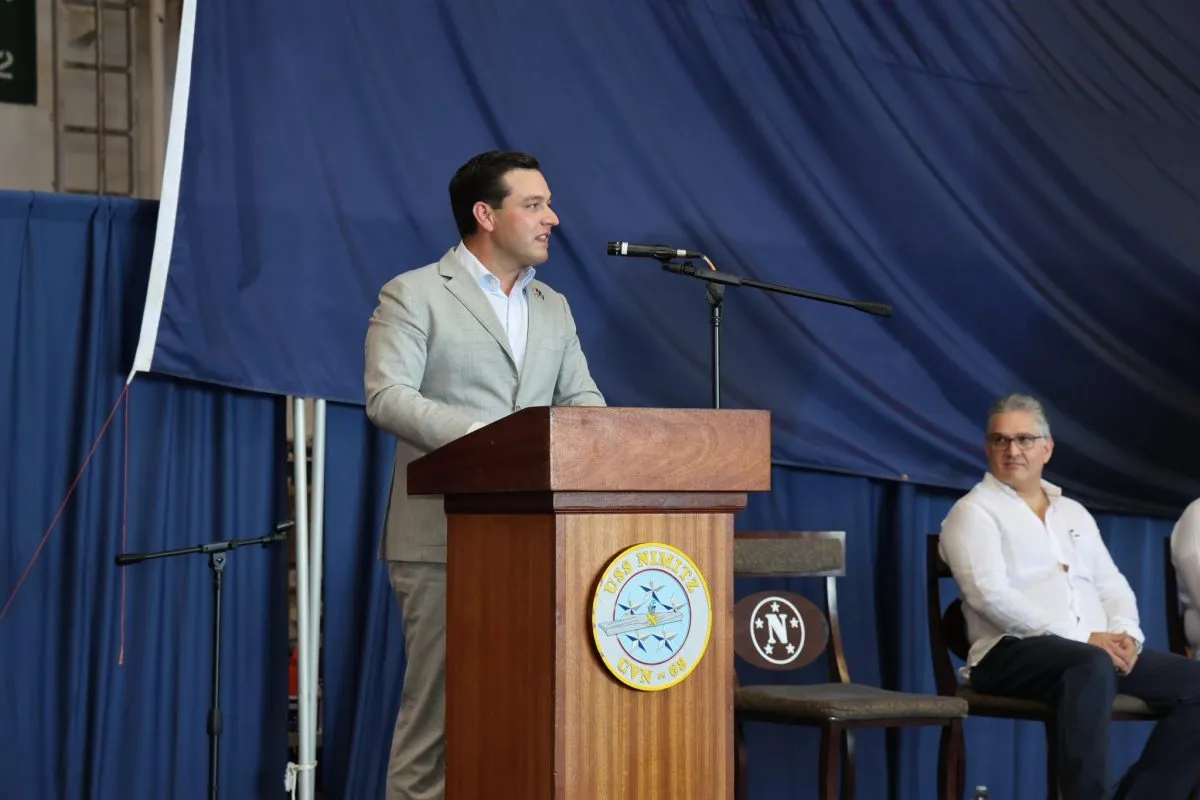
United States Ambassador to Panama Kevin Marino Cabrera announced the extradition of a key suspect in a deadly 1994 aviation bombing. Ali Jalil arrived at Tocumen International Airport from Caracas on a flight that landed at 2:45 p.m. local time, escorted by a heavy security detail.
The suspect’s transfer marks a pivotal moment in the long-dormant investigation into the Alas Chiricanas case. Authorities accuse Jalil of involvement in the bombing of Alas Chiricanas Flight 901, which killed 21 people. His extradition resulted from extensive cooperation between Panamanian, U.S., and Venezuelan officials.
Ambassador Kevin Marino Cabrera made the announcement at a press conference attended by victims’ families. He framed the event as a significant victory for international justice and a warning to transnational criminals.
“Today represents a step toward justice,” Cabrera stated. [Translated from Spanish] “This extradition sends a clear message from the Government of President Trump to all terrorists and transnational criminals everywhere. If you commit crimes against the United States, our people, and our friends, we will never stop pursuing you until we bring you to justice.”
Following his arrival at the aeropuerto internacional, Venezuelan agents transferred Jalil into the custody of the Panamanian National Police. He was then transported to the Judicial Investigation Directorate headquarters, where he remains detained pending legal proceedings.
Three Decades of Investigation Culminate in Arrest
The ambassador described the 1994 attack as a “terrible crime.” He revealed that the Federal Bureau of Investigation (FBI) has worked alongside Panamanian authorities for three decades to solve the case. Cabrera specifically thanked investigators from all three nations for their collaborative effort, which ultimately enabled this extradition.
The bombing occurred on July 19, 1994. Flight 901 exploded shortly after takeoff from Enrique Jiménez Airport in France Field, Colón Province. The tragedy, one of the most severe in Panama’s history, claimed 21 lives and left a lasting scar on the nation.
For 31 years, the investigation saw little public progress. The case remained one of the country’s most shocking unresolved attacks. Jalil’s transfer from Venezuela reactivates formal judicial proceedings, offering families a long-awaited chance for accountability.
Marino Cabrera emphasized that the operation demonstrates a sustained commitment. He argued that it proves criminal acts against allied nations will not be forgotten with time. The diplomatic and legal coordination required sets a precedent for handling complex, cross-border terrorism cases.
Panamanian authorities are now tasked with moving the case through the domestic legal system. Officials have not yet announced a specific timeline for Jalil’s formal arraignment or trial. The suspect’s arrival, however, immediately shifts the narrative from investigation to prosecution.
This development underscores the evolving nature of international security partnerships. It also highlights the persistent efforts by victims’ families and law enforcement agencies to seek closure for historical acts of violence. The alas chiricanas case re-enters the public spotlight as a test of judicial resolve.