


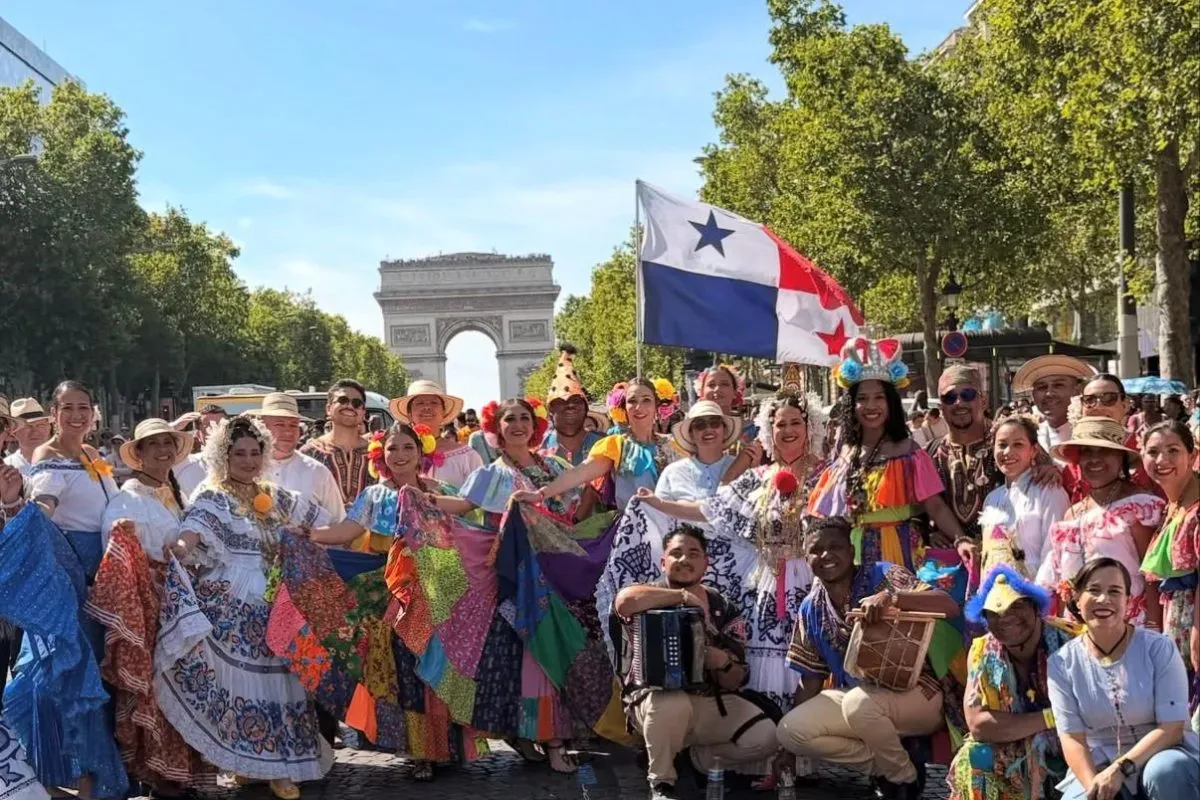
For the first time in its history, Panama sent an official delegation to the Paris Tropical Carnival this year. The event took place on July 5 along the iconic Champs Elysees Avenue, drawing thousands of spectators. Panama’s presence marked a significant step in the country’s efforts to showcase its cultural heritage on the global stage.
The delegation featured traditional dancers and cultural representatives who displayed some of Panama’s most recognizable folkloric attire. Among the garments presented were the formal pollera, the Ocueno-style pollera, the basquina, and the Congo pollera. Each piece of clothing tells a different story about Panama’s regional traditions and historical influences.
Panama’s Ambassador to France, Ambassador Joanna Villarreal, led the diplomatic team during the parade. She explained that this year’s carnival theme focused on countries with Afro-descendant heritage. That focus guided Panama’s decision to highlight the Congo pollera as a central element of their presentation.
‘This year the Paris Tropical Carnival was oriented toward countries of Afro-descent, so for us it was very important to highlight the Pollera Congo’ [Translated from Spanish]
This debut participation forms part of a broader strategy by Panama’s Ministry of Foreign Affairs, working alongside the Ministry of Culture. The two agencies have been coordinating efforts to expand Panama’s international cultural footprint through what experts call Cultural diplomacy. This approach uses artistic and traditional expressions to build bridges between nations.
A Tradition That Tells a Story
The Pollera Congo holds special significance in Panama’s cultural landscape. Unlike the elaborate pollera de gala worn during festivals and formal occasions, the Congo pollera traces its roots directly to Afro-Panamanian communities. Its design incorporates bright colors, layered fabrics, and symbolic accessories that reflect resilience and cultural pride.
Historians note that the Congo pollera emerged from the descendants of enslaved Africans who settled along Panama’s Caribbean coast. The garment became a symbol of identity and resistance. By featuring this specific style at an international event, Panama sent a message about the depth and diversity of its cultural roots.
The Paris Tropical Carnival attracts participants from across the globe. This year’s edition brought together nations with strong Afro-descendant traditions. For Panama, the timing aligned perfectly with ongoing efforts to strengthen ties with France and other European nations through shared cultural appreciation.
Building Bridges Through Shared Heritage
Cultural exchanges of this nature serve multiple purposes. They promote tourism, foster mutual understanding, and create opportunities for artistic collaboration. Panama’s Ministry of Culture has been actively seeking platforms where the country’s folkloric traditions can reach new audiences.
The Caribbean influence on Panama’s culture remains one of its most distinctive features. From music and dance to clothing and cuisine, the Afro-Caribbean community has shaped national identity in profound ways. The decision to lead with the Congo pollera at the Paris carnival reflected an intentional choice to center that heritage.
Ambassador Villarreal and her team spent weeks preparing for the event. They coordinated with local cultural groups in Panama to ensure authentic representation. The result was a procession that moved through the Champs Elysees with color, rhythm, and purpose.
International Recognition and Future Plans
Observers at the carnival noted the enthusiastic response from the French audience. Many spectators had never seen Panamanian folkloric dress before. The visual impact of the polleras, combined with traditional music and dance, created moments of genuine cross-cultural connection.
Panama’s diplomatic mission in Paris sees this as a starting point. Officials have indicated interest in participating in future editions of the carnival and exploring other cultural events across Europe. The goal is to build sustained engagement rather than one-off appearances.
The Ministry of Foreign Affairs has framed this initiative within a larger vision of projecting Panama’s soft power. By sharing cultural assets with the world, the country hopes to attract visitors, investors, and partners who appreciate its unique blend of influences.
For the dancers and artisans who participated, the experience carried personal meaning. Many come from communities where these traditions have been passed down through generations. Seeing their heritage celebrated on an international stage reinforced the value of preserving and promoting folkloric practices.
Panama’s debut at the Paris Tropical Carnival may have been a first. But if the response from the crowd and the commitment from officials are any indication, it will not be the last. The Congo pollera has found a new audience, and Panama has found a new platform for sharing its story.