


When Nilo Murillo walks through his agency’s permanent food market in San Miguelito on a Tuesday morning, he sees something that numbers alone cannot capture. Families line up before 7 a.m. with reusable bags and careful budgets. The director of Panama’s Agricultural Marketing Institute (IMA) insists these scenes justify a program that private retailers have called unfair competition.
The controversy erupted after Roberto Pretelt, president of the Association of Grocery Merchants of Panama (Acovipa), questioned the expansion of IMA’s subsidized markets. He asked the government to loosen food import restrictions instead. But Murillo pushed back hard during a recent interview, arguing that the agency serves a completely different customer base than commercial supermarkets.
‘There is no unfair competition at IMA’ [Translated from Spanish]
Murillo explained that the agency uses a QR code system to prevent bulk purchases. Each family can shop only once per week. Stores operate from Tuesday to Friday, between 7 a.m. and 11 a.m., specifically targeting people with limited incomes. According to the director, studies show that 92 percent of buyers earn less than $500 per month.

The debate touches on broader questions about Panama’s food security policy and the government’s role in ensuring basic nutrition. Murillo framed the program as a constitutional responsibility rather than a commercial venture.
‘The Panamanian State is obligated to guarantee accessible food for the people’ [Translated from Spanish]
Price differences that change household budgets
The savings for families who shop at IMA markets add up quickly. A single purchase of all available products can save a household $66. The average weekly savings range between $40 and $42, translating to roughly $160 per month. Additional purchases directly from producers of legumes, meats, and eggs save another $11 weekly.
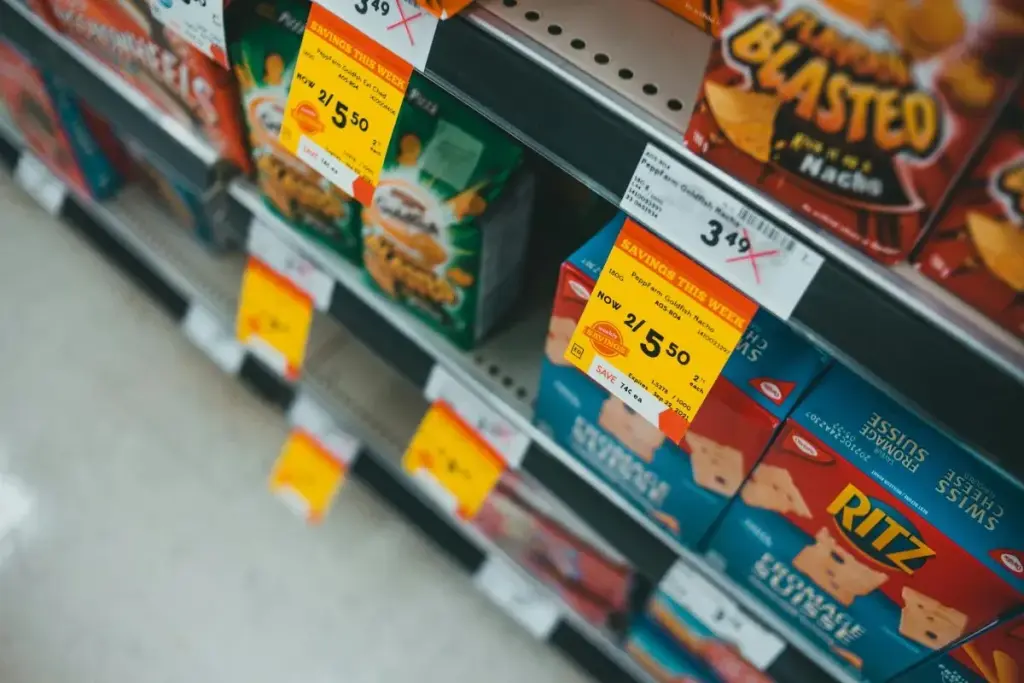
Murillo offered specific price comparisons to illustrate the gap. Five pounds of rice costs $1.25 at IMA stores. The same product in supermarkets ranges from $2.75 to $3. Cooking oil tells a similar story. A bottle priced at $2.45 to $2.75 in private stores sells for $1 at the agency’s markets.
‘The Panamanian puts in 50 percent and the State puts in 50 percent’ [Translated from Spanish]
These subsidies represent a deliberate investment in household nutrition. The director described the program as a partnership between taxpayers and families struggling with rising costs. A regular IMA fair attracts approximately 4,000 visitors per day. The permanent San Miguelito location sells between 2,000 and 2,500 quintals of rice during a single shift.
An olive branch to the private sector
Rather than deepening the confrontation with retailers, Murillo proposed collaboration. He suggested that IMA products could be sold through supermarkets under partnership agreements. The director revealed that these discussions have already started behind closed doors.
‘I think they were mistaken. Instead of looking at whether this is unfair competition or not, let’s find formulas to provide solutions for these people’ [Translated from Spanish]
The Agricultural Marketing Institute (IMA) focuses on speed as much as price. Murillo emphasized the need to accelerate payments to producers, aiming for a 15 to 20 day turnaround on sales revenue. This efficiency helps maintain the supply chain that keeps subsidized prices possible.
Panama has experimented with various Panama food subsidies over the years, learning from regional crises and inflation spikes. The current model represents a more targeted approach than previous broader subsidy programs that sometimes benefited wealthier households more than intended.
Christmas baskets locked at $15
Looking ahead to the holiday season, Murillo announced that IMA has already begun organizing its traditional Christmas markets. The agency secured 500,000 “picnic” baskets made from domestic production. The price of the holiday package will remain at $15 despite rising food costs across the country.
‘The product chain for the Christmas table has been expanded and the $15 price will be maintained’ [Translated from Spanish]
The director acknowledged that Panama’s food distribution system faces structural challenges. He argued that the conversation should focus less on competition between public and private sellers and more on the basic question of who eats and who struggles. For the families earning under $500 monthly who make up the vast majority of IMA customers, the difference between $1 rice and $3 rice determines whether other bills get paid.
Murillo closed with a challenge to critics. Rather than fighting over market share, he wants to see the entire food system become more affordable. The agency’s doors remain open to partnerships that could extend subsidized pricing to more neighborhoods. In his view, the measure of success is not how many bags of rice IMA sells, but how many Panamanian families can afford to eat.