


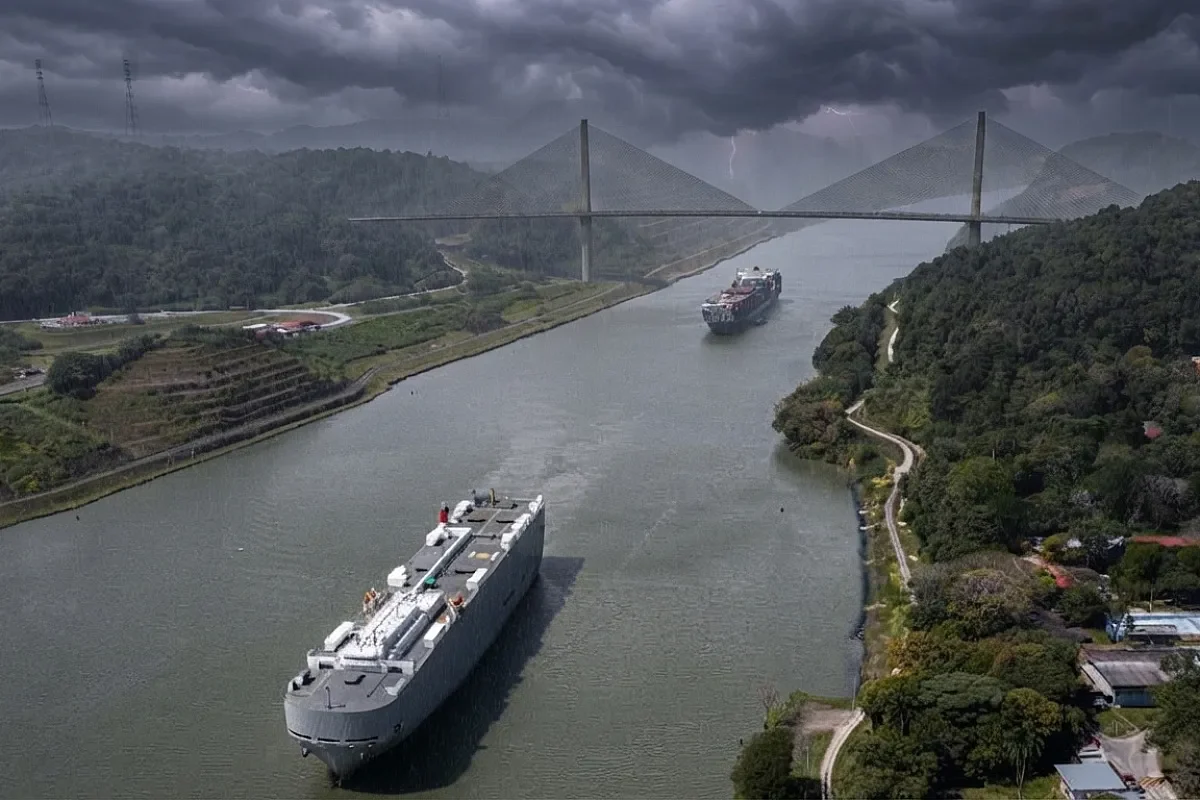
The Panama Canal will maintain its current canal transit restrictions at 32 daily vessel crossings and a 48-foot draft through at least December, as improved rainfall patterns have eased pressure on the waterway’s reservoir system, canal administrator Ilya Espino de Marotta said Tuesday.
The announcement marks a significant departure from the operational crisis that gripped the interoceanic route in 2023, when severe drought conditions forced the Panama Canal Authority to implement aggressive cutbacks that disrupted global shipping schedules and pushed freight rates higher across major trade lanes.

Rainfall Recovery Reshapes Canal Transit Restrictions
Recent precipitation across the Panama Canal watershed has outperformed earlier forecasts, according to Espino de Marotta. The unexpected rainfall has stabilized water levels in Lake Gatún and Lake Alajuela, the two reservoirs that supply the millions of gallons required for each transit through the lock system.
“The rain scenario has improved somewhat compared to what we had anticipated, so much so that the restrictions we had planned to announce to further reduce the 48-foot draft are being held, at least until December,” Espino de Marotta said.
‘The rain scenario has improved somewhat compared to what we had anticipated, so much so that the restrictions we had planned to announce to further reduce the 48-foot draft are being held, at least until December’ [Translated from Spanish]
The administrator’s comments signal that the authority sees no immediate need for additional operational tightening, a relief for shipping companies that had braced for another round of capacity reductions heading into the peak holiday shipping season.

Stark Contrast With 2023 Drought Crisis
The current outlook stands in sharp contrast to conditions one year ago. By September 2023, the canal authority had already imposed staggered reductions in both daily transits and allowable draft depths as an El Niño-driven drought drained reservoir levels to historic lows.
“If we look at 2023, by this time we had already announced many more restrictions on the number of ships. So we are maintaining that figure of 32 daily transits, which can be sustained until December,” Espino de Marotta said.
‘If we look at 2023, by this time we had already announced many more restrictions on the number of ships. So we are maintaining that figure of 32 daily transits, which can be sustained until December’ [Translated from Spanish]
At the height of the 2023 crisis, daily transits fell to as few as 22 vessels, while maximum draft dropped to 44 feet. The recovery to 32 daily crossings represents meaningful progress, though the figure remains below the canal’s pre-drought capacity of 36 to 38 transits per day.
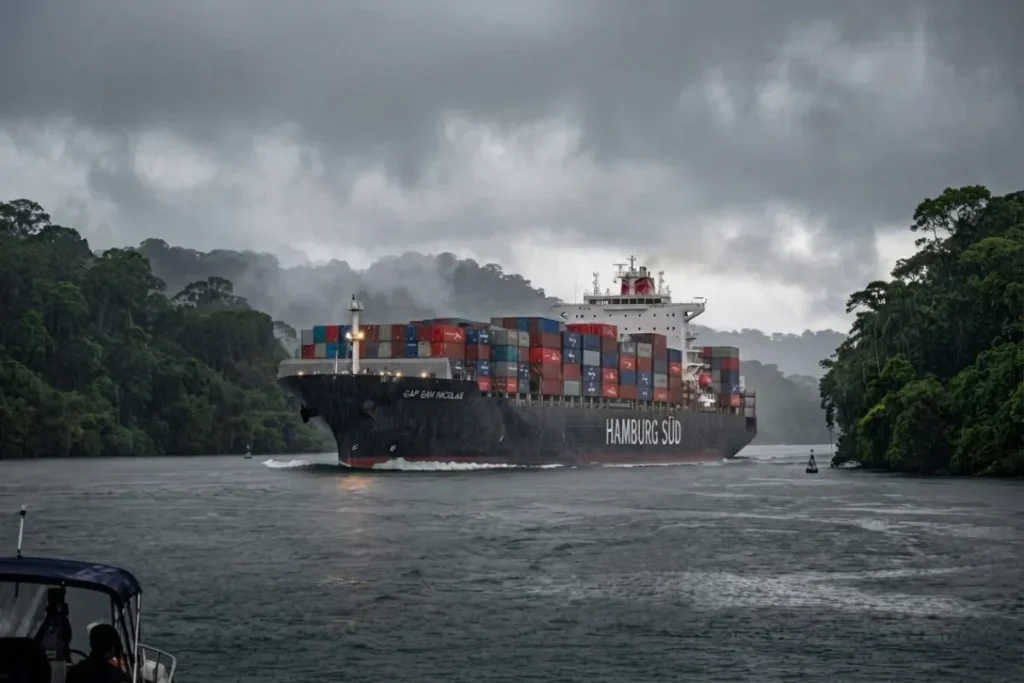
Seasonal Risks Loom for Waterway Operations
Despite the improved conditions, canal officials remain cautious about the months ahead. October and November typically deliver the heaviest rainfall in Panama, and the authority is watching weather patterns closely before committing to any further operational changes.
“We still have October and November ahead, which are the months with the most precipitation. If we have good rainfall behavior during this two-month period, we aspire to not further reduce the number of transits,” Espino de Marotta said.
‘We still have October and November ahead, which are the months with the most precipitation. If we have good rainfall behavior during this two-month period, we aspire to not further reduce the number of transits’ [Translated from Spanish]

The administrator acknowledged that draft restrictions will likely persist into the dry season, which begins in December. But she expressed confidence that the waterway will avoid a repeat of the emergency conditions that defined 2023. The canal handles roughly 5% of global maritime trade, making its operational stability a critical factor for supply chains connecting Asia, the Americas, and Europe.
Shipping industry analysts note that even maintaining the current canal transit restrictions through year-end provides much-needed predictability for carriers planning fourth-quarter sailings. The alternative, a return to deeper cuts, would force more vessels onto longer routes around Cape Horn or the Suez Canal, adding weeks to transit times and millions in fuel costs.