


Automatic salary increases and rigid legal mandates are pushing Panama’s 2027 budget costs upward by $340 million, yet the country still needs one of the smallest fiscal adjustments in Latin America to keep public debt under control. Moody’s Ratings calculates that Panama debt stabilization requires a correction equal to just 0.2 percent of gross domestic product, putting the nation far below many regional peers in the effort needed to place its finances on a sustainable path.
Why Panama Debt Stabilization Is Within Reach
The August 13 report from Moody’s Ratings compared spending rigidity across 18 governments in Latin America and the Caribbean. For Panama, the required adjustment of 0.2 percent of GDP stands out as one of the region’s most manageable numbers. That is notable because Panama’s debt burden grew by 22 percentage points of GDP between 2019 and 2025, one of the largest increases in the region. The regional median debt ratio climbed from 45 percent to 55 percent over the same period.
Moody’s had projected in May that Panamanian debt would stabilize between 66 percent and 67 percent of GDP around 2027. That path implies a modest correction, not a painful fiscal shock. Strong nominal GDP growth and lower debt service costs are doing part of the work. The challenge is not the size of the adjustment, but the political capacity to deliver it.
Rigid Spending Traps 70 Percent of Government Budget
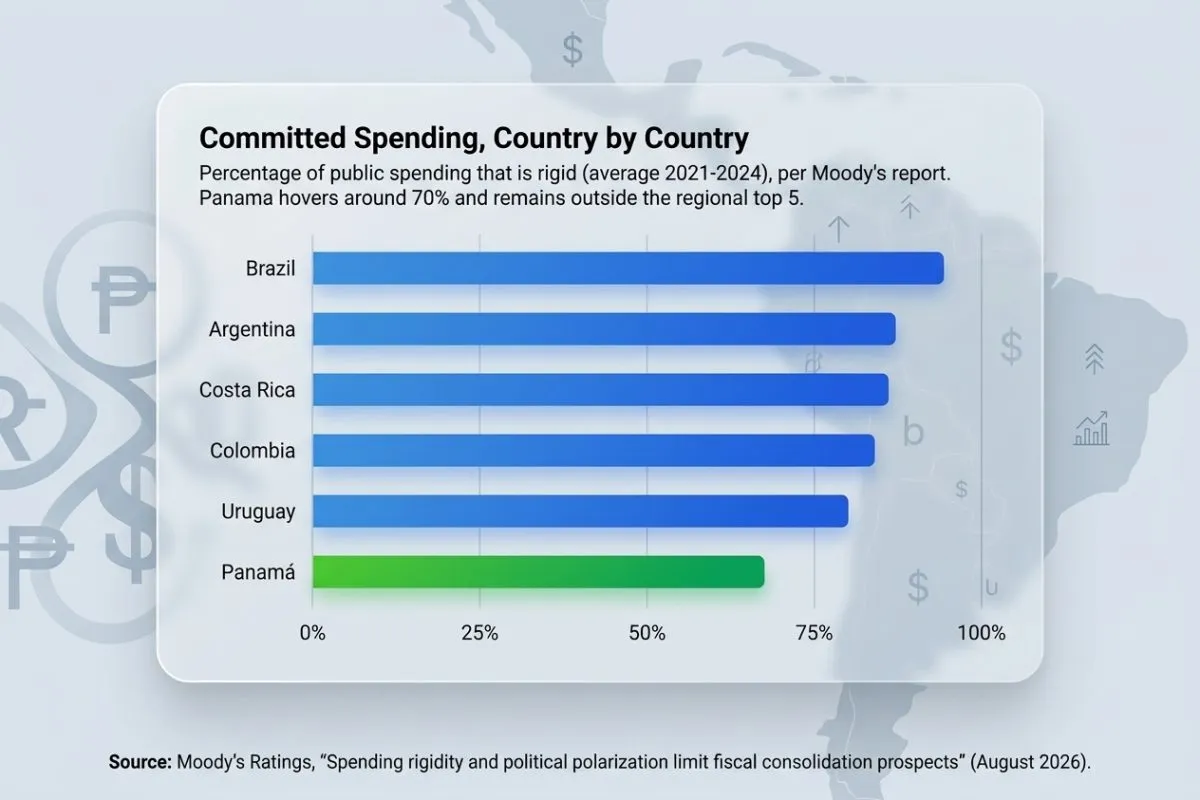
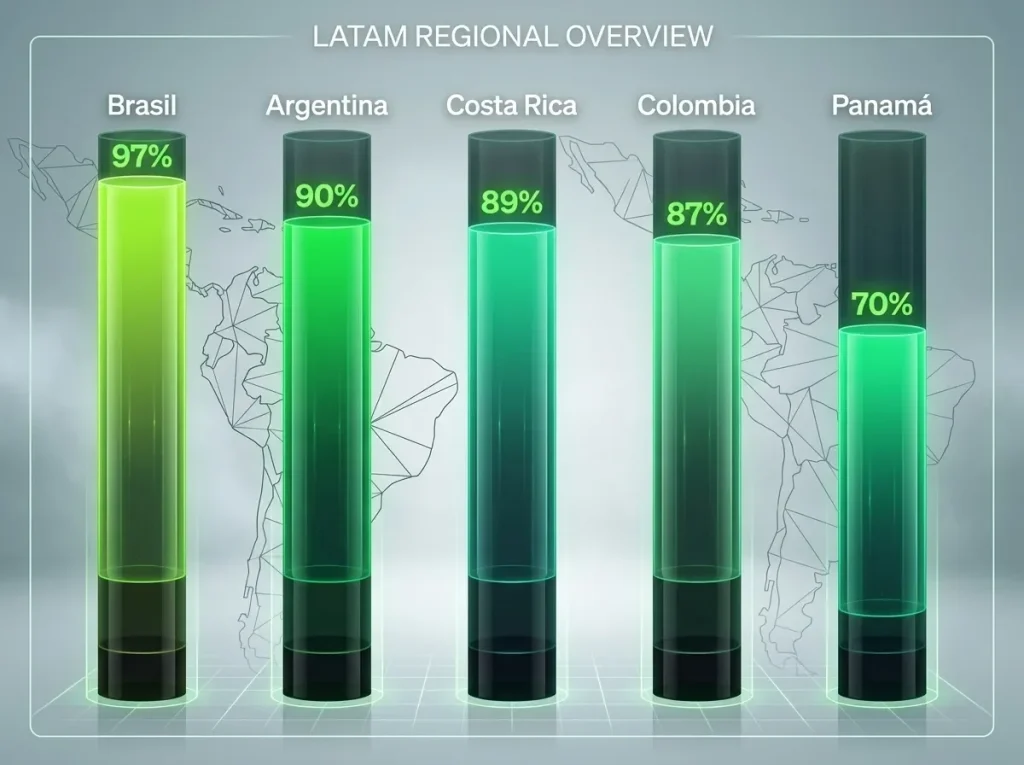
Around 70 percent of Panama’s central government spending was classified as rigid during the 2021 to 2024 period, according to Moody’s. This means a large share of the budget is locked in by legal mandates covering payroll, transfers, subsidies and other mandatory outlays. When fiscal pressures forced spending cuts between 2019 and 2024, the reductions landed mainly on capital investment, the flexible part of the budget and the account from which contractors and state suppliers are paid.
Alicia Jiménez, president of Fedecámaras, put the cost of that legal rigidity into concrete terms. Special laws that require automatic salary adjustments and step progressions for public workers will add $340 million to 2027 spending. The state payroll budgeted for 2027 reaches $7,923.6 million. Transfers and subsidies are also climbing sharply, from $2,486.6 million in 2026 to $3,400 million in 2027, an increase of 36.7 percent.
For anyone selling goods or services to the state, the rigidity math is direct. With 70 percent of spending tied up by law, fiscal adjustments tend to hit capital projects first. That squeezes investment just when Panama needs it most to sustain growth and keep the debt ratio stable.

2027 Budget and the Battle Over Special Laws
The proposed 2027 budget sets the fiscal deficit at 2.97 percent of GDP and frees $2,443 million for public investment thanks to a decline in debt service costs. That investment space is central to the government’s growth strategy. But the budget still must move through the National Assembly, and the bigger structural fight is over the special laws that keep spending rigid.
Minister of Economy and Finance Felipe Chapman announced back in December that the executive branch would attack spending rigidities. The proposed reform of those special laws has not yet reached the Assembly. Without changes, automatic salary increases will continue to consume new fiscal space each year. The $340 million in mandated spending pressure identified by Fedecámaras shows why the rigid share of the budget cannot be ignored, even when the overall stabilization gap looks small.
November Rating Review Holds the Key
Moody’s next decisive review comes in November. Panama currently holds a Baa3 rating with a negative outlook. That rating directly affects the interest rates the government, local banks and mortgage holders pay. A downgrade would push financing costs higher across the economy, while stabilization or an outlook change would reinforce investor confidence.
The Moody’s report warns that spending rigidity and political polarization are limiting the prospects for fiscal consolidation across the region. Panama’s path to debt stability does not require a dramatic fiscal contraction. The 0.2 percent of GDP adjustment is small by regional standards. The real test is whether the government can confront legally protected spending that keeps such a large share of the budget off the table.
With the November review approaching, investors, contractors and ordinary borrowers will watch closely. The numbers suggest Panama debt stabilization is achievable. The remaining question is political will, not arithmetic.