


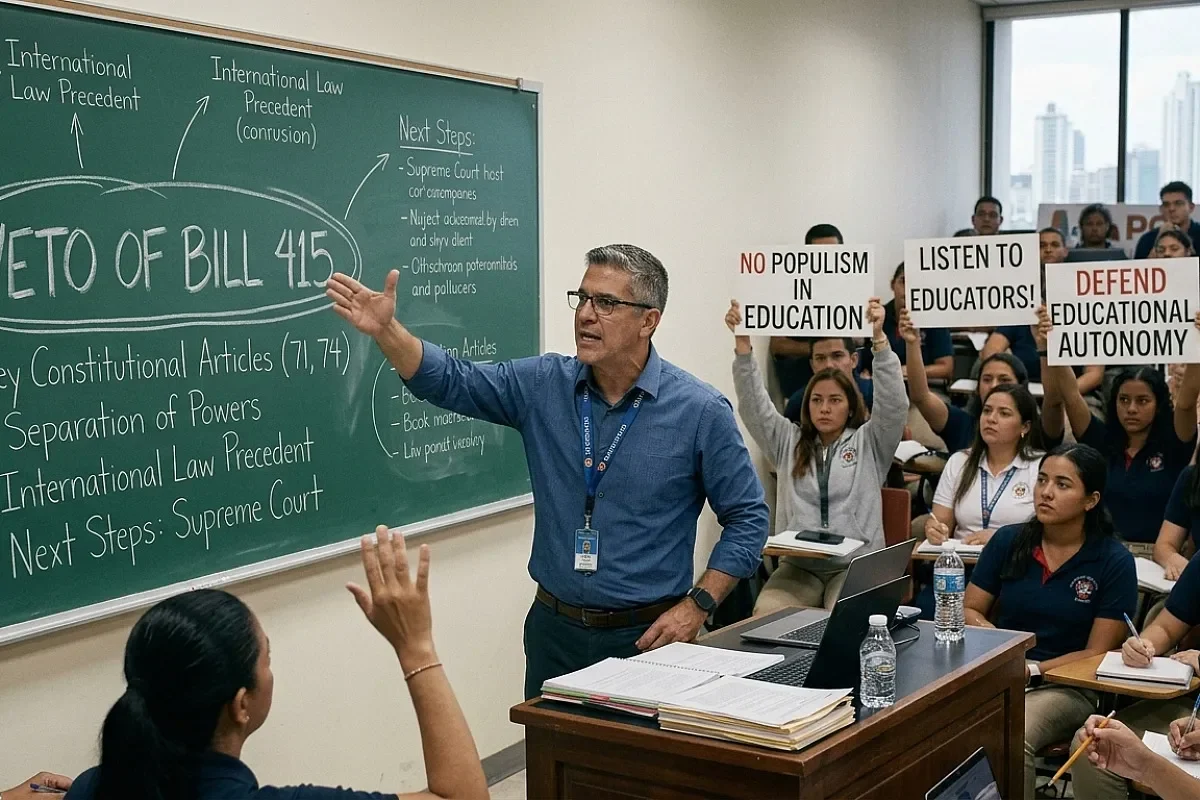
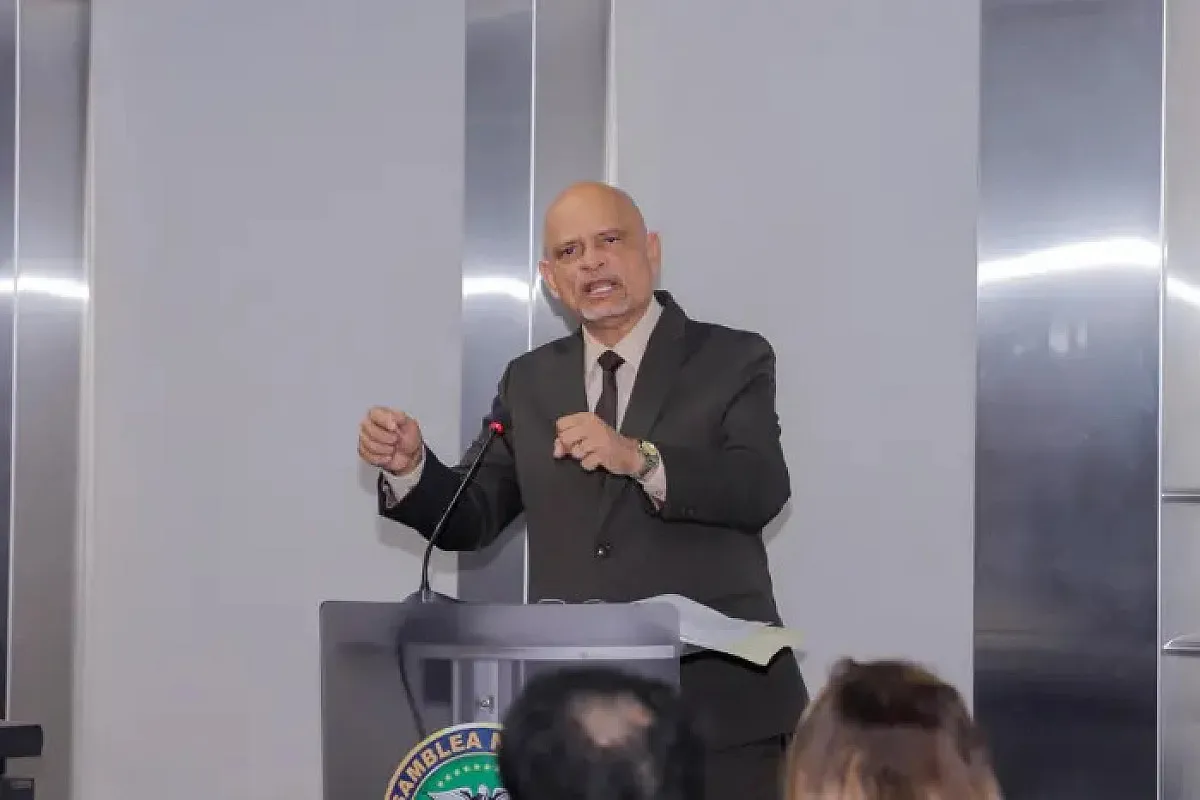
Leaders from Panama’s private education sector have formally demanded a presidential veto of Bill 415, describing the legislation as part of a troubling wave of populist education laws that could cripple independent schools. Mario Muñoz of the Panamanian Association of Private Educational Centers and Edwin García of the National Chamber of Education and Innovation confirmed they have petitioned President José Raúl Mulino to reject the measure proposed by Deputy Ernesto Cedeño. The bill, according to both organizations, contains serious constitutional flaws and places undue financial burdens on small educational enterprises that serve a vital public function.
The Constitutional Challenge Behind the Veto Request
García confirmed that his chamber has formally requested the veto, citing multiple articles of Panama’s Political Constitution that the bill allegedly infringes. The measure, he said, violates due process protections and legal security guarantees established under Article 32, leaving private educational businesses exposed to arbitrary regulatory demands. That concern resonates strongly among smaller school operators who lack the legal resources to contest sudden government requirements.
Privacy protections under Article 26 also come into play, according to the education leaders. Centralizing massive volumes of student records on a government platform would compromise the inviolability of private documents, they argued. The chamber further contends that the bill restricts freedom of enterprise and private property rights protected by Articles 47 and 277, both of which guard the autonomy of private institutions. García and Muñoz emphasized that most private schools in Panama operate as family-run ventures financed through personal credit and mortgages, making them particularly vulnerable to regulatory disruption.
Digital Platform Fears Surrounding Populist Education Laws
One of the bill’s most contentious provisions mandates a unified digital system where more than one million students would register grades, credits, and certifications. Muñoz questioned whether the Ministry of Education and the broader government possess the operational capacity to maintain such a massive platform, pointing to recurring crashes in the current system. The scale of the proposed infrastructure, he suggested, exceeds anything the public sector has successfully managed in Panama.
“If we as private schools sometimes have problems with our platforms and we manage between 1,000 and 3,000 students, how will the Government be able to work with these platforms that crash all the time, when more than one million students will be working on them?” [Translated from Spanish]
Private institutions would also bear the financial responsibility for adapting and maintaining these systems using their own resources, Muñoz said. That requirement transforms what might appear as a technological upgrade into a significant unfunded mandate for schools already operating on tight budgets. The chamber has raised similar concerns about the practical implementation timeline and the absence of clear technical standards in the proposed legislation.
Tuition Risks and the Textbook Freeze Debate
Another provision drawing sharp criticism would allow parents to withdraw students at the end of any trimester without settling outstanding tuition balances. Muñoz warned that this rule would leave private schools in a state of financial defenselessness, unable to recover fees for services already rendered. The operational impact could force schools to maintain larger cash reserves or reduce investments in facilities and teacher training.
The bill’s proposal to freeze textbook editions and curriculum plans for a minimum of five years has generated more nuanced reactions. Both organizations expressed support for measures that ease economic pressure on families, yet they voiced serious reservations about locking pedagogical content in place for half a decade. Panama already ranks near the bottom in international academic assessments, and freezing educational materials could deepen that disadvantage, they argued. García redirected the conversation toward the real cost drivers in textbook markets, suggesting policymakers should examine publisher pricing and intermediary markups instead of penalizing schools.
“We provide an educational service of teaching and learning; we are not textbook distributors. If the market is opened and editorial costs are lowered, families will have more accessible books. The same thing happens with medicines; the focus should be reviewing what is happening with those origin costs.” [Translated from Spanish]
Demographic Pressures Compound Private Sector Anxiety
Beyond the legislative battles, Panama’s private schools face a structural challenge that no veto can reverse. Continuous declines in birth rates documented through census data have triggered a chain reaction starting in preschool enrollment and advancing through primary, secondary, and higher education levels. Fewer children entering the system means fewer tuition-paying families, placing additional stress on institutions already contending with regulatory uncertainty.
The chamber leadership acknowledged the demographic reality but insisted that the more immediate threat comes from laws that discourage private investment in education. Each new restriction on school autonomy or financial stability makes it harder for existing institutions to maintain quality standards and for entrepreneurs to justify launching new educational ventures. That combination of shrinking demand and expanding regulation could accelerate the consolidation of private education into fewer, larger operators, reducing options for Panamanian families.
The controversy surrounding Bill 415 reflects a broader tension between populist political appeals and the operational realities of running educational institutions. Muñoz and García have positioned their organizations as defenders not just of private school interests but of educational quality and parental choice across Panama. Whether President Mulino will heed their veto request remains an open question, but the constitutional arguments raised by the education leaders have established a clear framework for the legal and political battle ahead.