


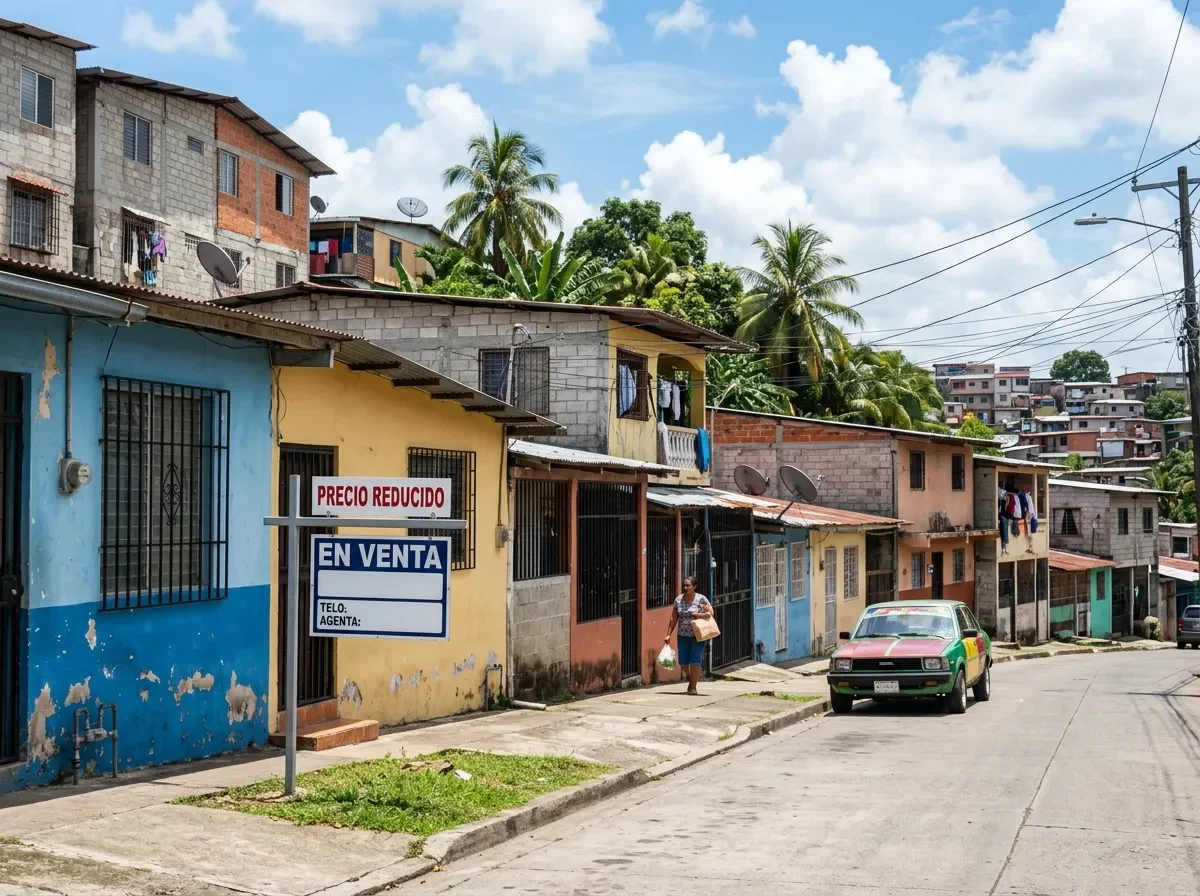
Panama’s housing market is confronting a palpable real estate deceleration in the segment most crucial to local families, prompting industry leaders and government officials to sharpen their pitch to foreign buyers. Sales of homes priced up to $180,000 have softened since the start of the year, according to the Panamanian Association of Real Estate Brokers and Developers, known as Acobir. That cooling trend is pushing the country to lean more heavily on its qualified investor visa program as a counterweight, linking residency rights to minimum property acquisitions of $300,000.
Real Estate Deceleration Erodes Affordable Home Sales
The slowdown is not a whisper in boardrooms. Acobir’s president, Katherine Reyes, confirmed that the affordable tier of the market has been struggling. She acknowledged the real estate deceleration in direct terms, while noting that recent signals from the executive branch offered some encouragement. The unease is concentrated where Panamanian wage earners are most active, leaving developers anxious about inventory and the pace of new projects.
Behind the numbers sits a tangle of higher financing costs and cautious household budgets. Builders who typically depend on steady turnover in the sub-$180,000 category are recalibrating. Some have paused land acquisitions, and others are reworking unit sizes to squeeze prices lower without collapsing margins. The sector’s sensitivity is amplified because homeownership in Panama has long been a primary vehicle for family wealth creation, and any sustained real estate deceleration threatens to erode that pathway.

Qualified Investor Visa Offers Residency Through Property
While local demand wobbles, the qualified investor visa shines as a fully articulated lure for foreign capital. Katherine Cardoze, national director for Investment Promotion, outlined the program’s three tiers during an Acobir general assembly. A real estate investment of $300,000 opens the door to expedited residency. Alternatives include a $500,000 commitment routed through investment funds, or a $750,000 fixed-term deposit. All routes promise a relatively quick application window, a feature Cardoze stressed as a competitive advantage.
The mechanism is not new, but its prominence is growing precisely when the domestic market needs a jolt. Panama’s dollarized economy, territorial tax system, and geographic position already form a sturdy pedestal. Adding a clear, fast-track residency path makes the proposition harder to ignore for investors scouting Latin America. Real estate agents report that many foreign buyers are less focused on immediate rental yields and more on securing a hemispheric foothold with a residence permit attached.
Government Talks Seek to Revitalize the Market
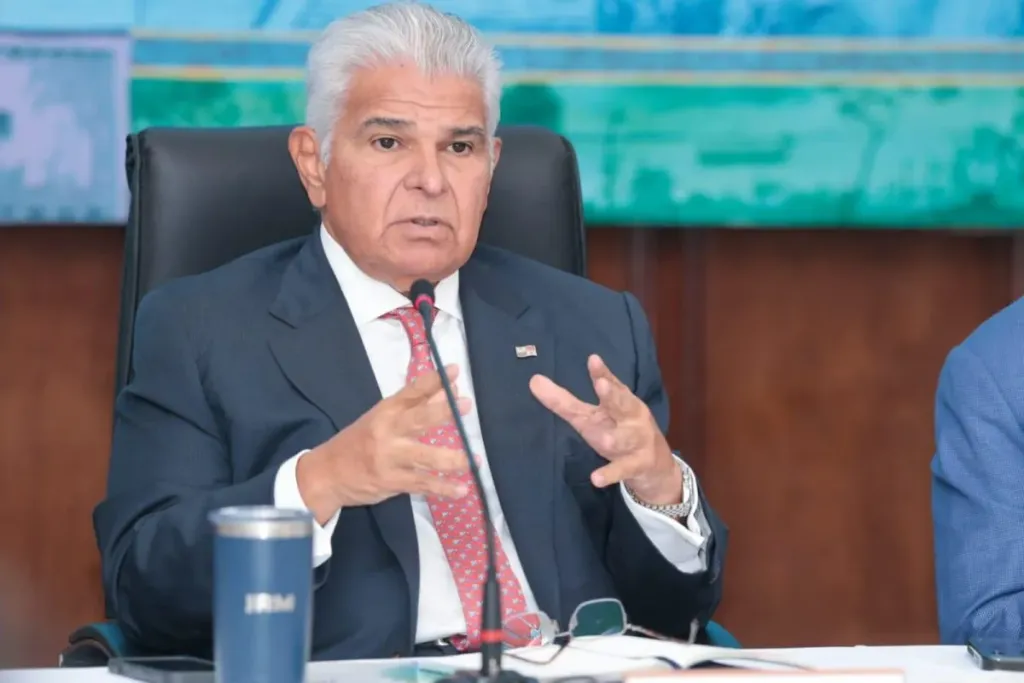
Multiple ministries are now at the table. Acobir has been holding talks with the Ministry of Housing and Territorial Planning, the Ministry of Economy and Finance, and the National Assembly. The aim is to craft proposals that can accelerate home purchases without distorting the market. Reyes described the engagement as productive, stating that the industry is presenting concrete actions that could help Panamanians access homeownership and build family assets.
“The real estate sector in the $180,000-and-below bracket has experienced a deceleration since the beginning of the year. But we view the president’s pronouncements positively and we have held meetings to contribute ideas and specific actions so that Panamanians can opt for a home and generate family wealth,” [Translated from Spanish]
The cooperation signals a shift from passive observation to active policy tweaking. Potential measures under discussion could include adjustments to mortgage guarantee programs, streamlined permitting, or incentive packages that nudge banks toward more flexible lending in the entry-level segment. No final package has been announced, but the intensity of the conversations suggests that the real estate deceleration is being treated as a near-term priority rather than a statistical blip.
Foreign Capital Flows from North America and Colombia
Acobir’s data points to a consistent source of relief. Canada, the United States, and Colombia rank as the top nationalities among foreign real estate investors. North American buyers, in particular, have been pouring capital into both pre-construction condominiums in Panama City and beachside properties along the Pacific coast. Colombians, sharing cultural and linguistic ties, often gravitate toward commercial real estate and mixed-use developments.

The steady flow from these three countries helps cushion the blow of a softer local market. Developers who once focused exclusively on Panamanian first-time buyers are now partnering with relocation agencies and international marketing platforms. By presenting the qualified investor visa not as a bureaucratic hurdle but as a lifestyle passport, the industry is converting what could be a moment of vulnerability into an opportunity to diversify its buyer base.
Panama’s broader economic narrative still leans positive. The government’s recent alliance with IDB Invest to mobilize up to $1 billion in private financing underscores the country’s ability to attract institutional money. That macro confidence trickles into real estate, even if the affordable segment requires its own set of remedies. The interplay between foreign residency incentives and domestic housing policy will likely define the next phase of the cycle.
Ultimately, the real estate deceleration in lower-price homes is not unfolding in isolation. It is lighting a fire under public-private collaboration and pushing Panama to refine its most globally appealing tool, the investor visa, at a moment when many countries are tightening theirs. Whether that strategy can fully compensate for domestic headwinds remains an open question, but for now, the industry is betting that a wider pool of buyers is the surest bridge back to growth.