


Panama has officially closed the door on shell companies and paper businesses. The country approved Law 526, a major reform to the Tax Code that introduces strict economic substance requirements for multinational groups. The legislation was published in Official Gazette No. 30534-B and will take effect for the fiscal period starting in 2027.
The new law forces multinational corporations to demonstrate real business activity within Panama. If they can’t prove genuine operations, they will face a 15 percent tax on net income. This represents a fundamental shift in how the country approaches corporate taxation and international financial regulation.
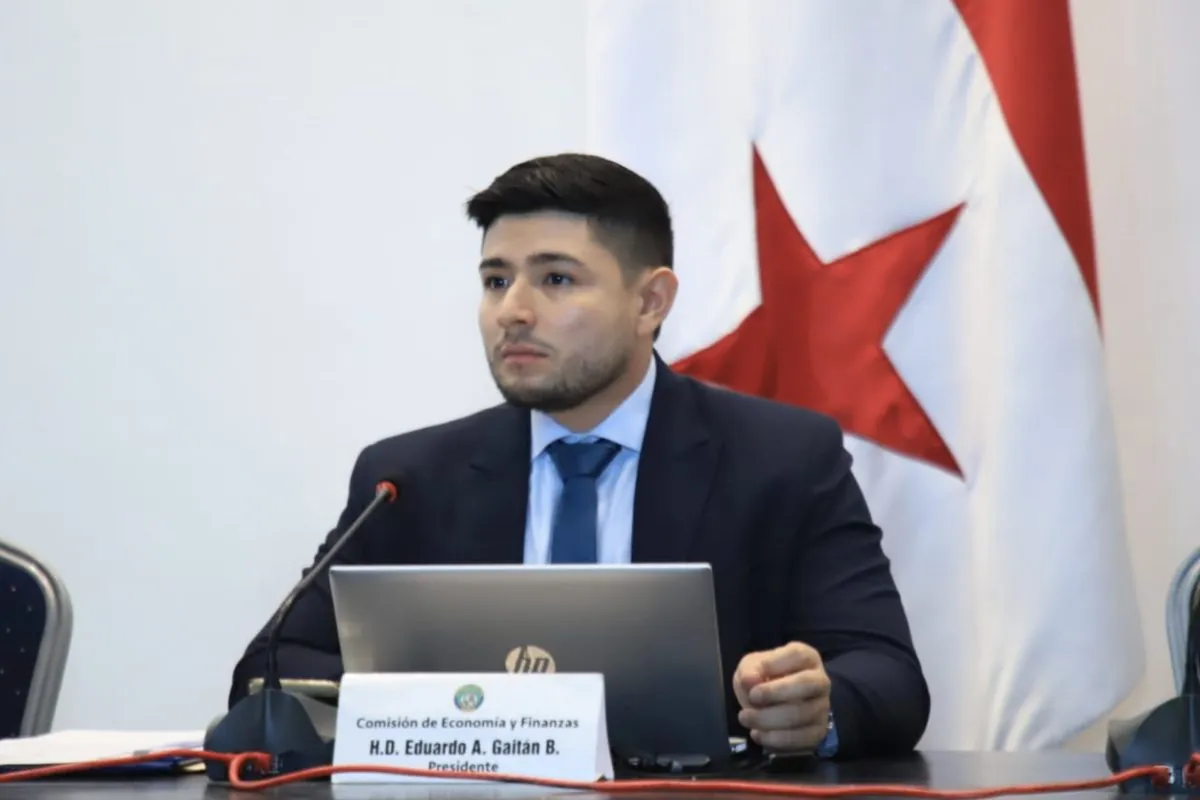
Deputy Eduardo Gaitán from the Vamos party chairs the Finance Commission in the National Assembly. He believes this reform will clean up Panama’s international reputation. “Panama can no longer be a refuge for paper companies,” Gaitán said. [Translated from Spanish]
“During the pandemic I dedicated myself to cleaning houses. Now in the Assembly with this law I felt a commitment to clean the country’s reputation,” Gaitán said in an interview with La Prensa. [Translated from Spanish]
The deputy acknowledged the reform process was a titanic task. His commission gathered observations from more than 35 trade associations and about 150 individuals who participated in the debate. Gaitán described it as a personal challenge to study international taxation, European Union regulations, and the complex web of tax evasion by phantom companies that used Panama as a shelter without providing any real benefit to the country.
Law 526 Aims to Remove Panama From Tax Blacklists
Gaitán expects the European Union’s tax technical arm, TAXUD, to evaluate the legal reform favorably in October. The assessment will consider the progress Panama has made by passing and approving the economic substance law. Success could mean removal from the EU list of non-cooperative tax jurisdictions.
The reform emerged from a proposal initially presented by the Ministry of Economy and Finance. It consolidates a wide range of observations and proposals into a single legislative package. The process required balancing competing interests while maintaining alignment with international standards.
“One of the main challenges was being able to reach a final product that was a consensus with all the trade associations,” Gaitán explained. “The conversations we had produced that consensus.” [Translated from Spanish]
Key changes included shifting from gross income to net income calculations. The exclusion of the maritime sector also proved critically important. Lawmakers took into account the merchant marine and ship registration industries. Style corrections and other adjustments provided certain guarantees for affected sectors.

Territoriality Principle Maintained Under New Rules
Many stakeholders worried about losing Panama’s territorial tax system. Gaitán clarified that these concerns were addressed during working groups and commission discussions. “We realized that the issue of territoriality is actually being maintained,” he said. [Translated from Spanish]
The only change involves a more flexible criterion for seeking economic substance. Other countries with territorial tax regimes have already implemented similar substance laws. Panama is following an established international path rather than breaking new ground.
The law excludes sectors that already face strict regulation. These include banks supervised by the Superintendency of Banks, financial services, securities, insurance, reinsurance, and the merchant marine. These exclusions are explicitly stated in the legislation.
Outsourcing rules were also relaxed. This generated significant debate during the legislative process. “Outsourcing must be a tool available for companies to use,” Gaitán said. “If they don’t have expertise in a certain area, they should be able to outsource those activities.” [Translated from Spanish]
Real Economic Activity Becomes Mandatory for Multinationals
The final product will begin taxing passive income from foreign sources at 15 percent of net income. This directly targets companies that maintain only a mailing address in Panama while conducting operations elsewhere. Economic substance requirements force these entities to demonstrate genuine business presence.
Gaitán emphasized that the reform addresses one of three key criteria evaluated by the European Union. The first criterion involves tax transparency and automatic information exchange. This law helps minimize the threat of companies using their tax domicile in Panama solely to evade taxes or pay less in their home countries.
“With this legislation we seek to have fewer phantom companies, fewer paper companies and more companies with real substance that generate employment, expenses, have offices and real presence in the country,” Gaitán stated. [Translated from Spanish]
During commission debates, various economists presented data showing how shell companies operated without contributing to Panama’s economy. The Economic Substance law directly addresses these concerns by establishing concrete requirements for physical presence, local employees, and genuine business activities.
Panama Tax Reform 2026 Sets New Compliance Standards
The Panama tax reform 2026 represents a comprehensive overhaul of the country’s fiscal framework. It brings Panama closer to international standards while preserving key features of its territorial tax system. The reform demonstrates that public-private dialogue can produce effective legislation.
Companies operating in Panama must now prepare for the new compliance requirements. They need to document their physical presence, employee counts, operational expenses, and actual business activities within the country. Failure to meet these standards will trigger the 15 percent tax on passive foreign income.
The law sends a clear signal to the international community. Panama is serious about ending its reputation as a tax haven. The country wants to attract genuine businesses that create jobs and contribute to economic growth rather than shell companies seeking tax avoidance opportunities.
Implementation will begin with the fiscal period starting January 1, 2027. This gives multinational groups time to restructure their operations and ensure compliance. The transition period also allows regulatory authorities to develop detailed implementation guidelines and enforcement procedures.
Gaitán expressed gratitude to the many stakeholders who participated in the legislative process. “At the end we had broad participation from many people who came to the Assembly. I am grateful they engaged in the debate with us,” he said. [Translated from Spanish]
The reform positions Panama to exit international tax blacklists while maintaining its competitive advantages as a regional business hub. Success will depend on consistent enforcement and continued dialogue with international regulatory bodies.