


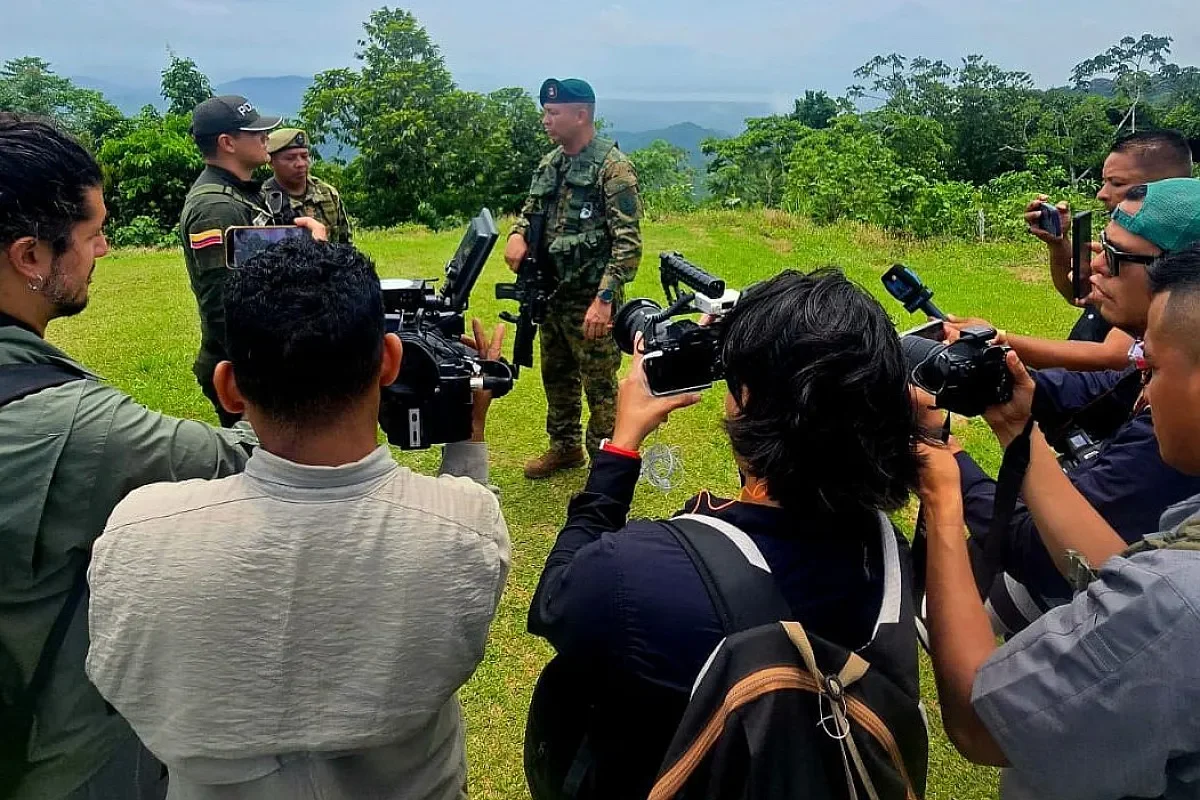
Deep in Panama’s Darién province, the frontier with Colombia has rarely been quiet. But this week, helicopter sweeps and expanded patrols around the remote binational post at Alto Limón told a sharper story. Panama has widened its Colombia border security footprint after intelligence suggested that organized criminal groups could try to shift their operations into national territory.
The deployment is not a routine exercise. It brings together specialized units from Panama’s National Border Service, known as Senafront, and Colombian police forces along a boundary where dense jungle, river routes, and limited road access have long favored illicit activity. Officials say the goal is to close off those advantages before criminal networks can exploit them.
Strengthening Colombia Border Security in Darién
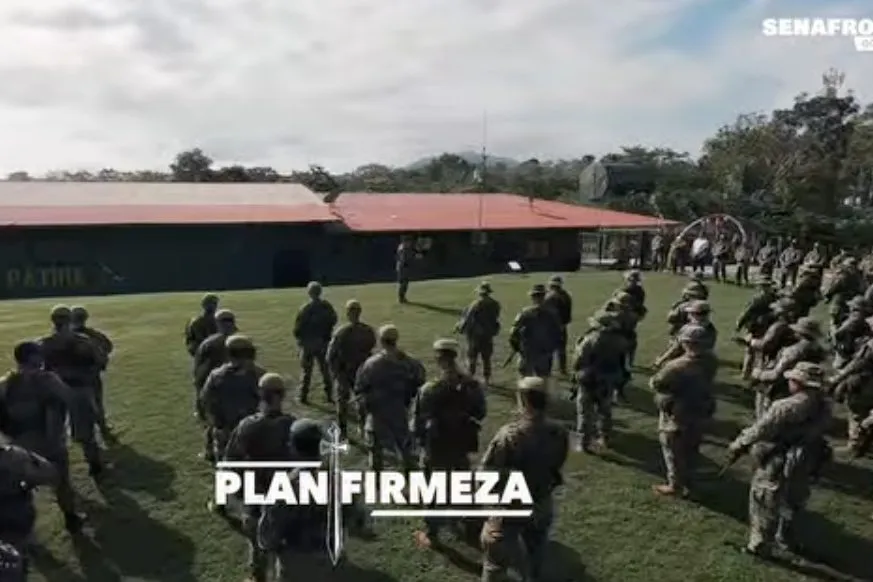
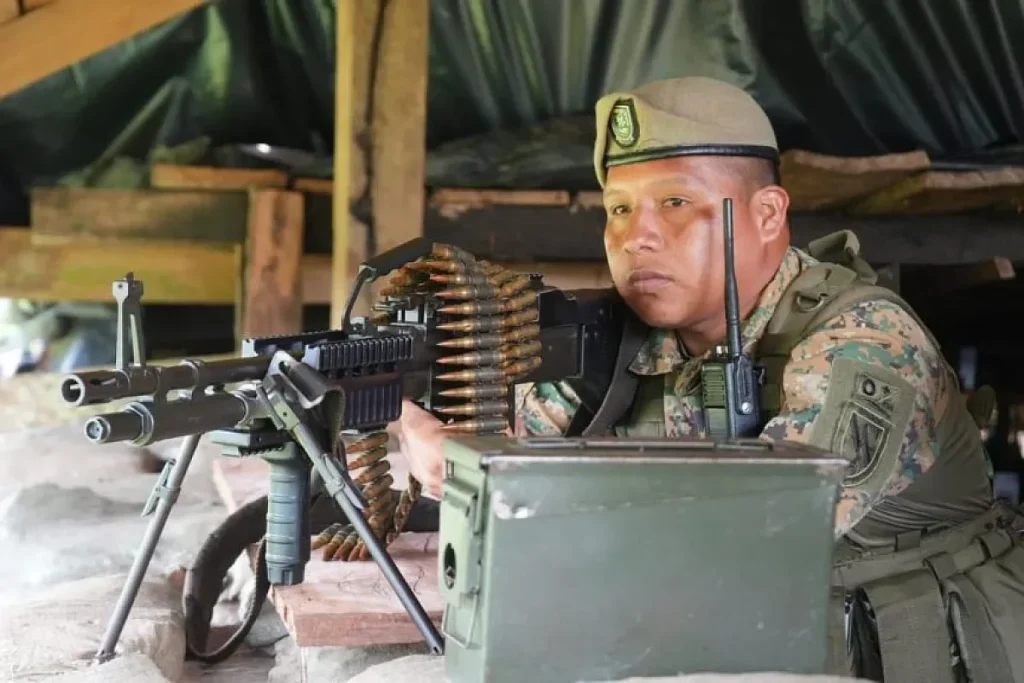
The operation stems from a direct order by President José Raúl Mulino to harden the border cordon with Colombia. Minister of Public Security Frank Alexis Abrego then launched Operation Steel Shield, a coordinated effort between Senafront and the National Aeronaval Service. More than 700 special forces personnel have been moved into tactical positions, including binational surveillance posts shared by Panama and Colombia.
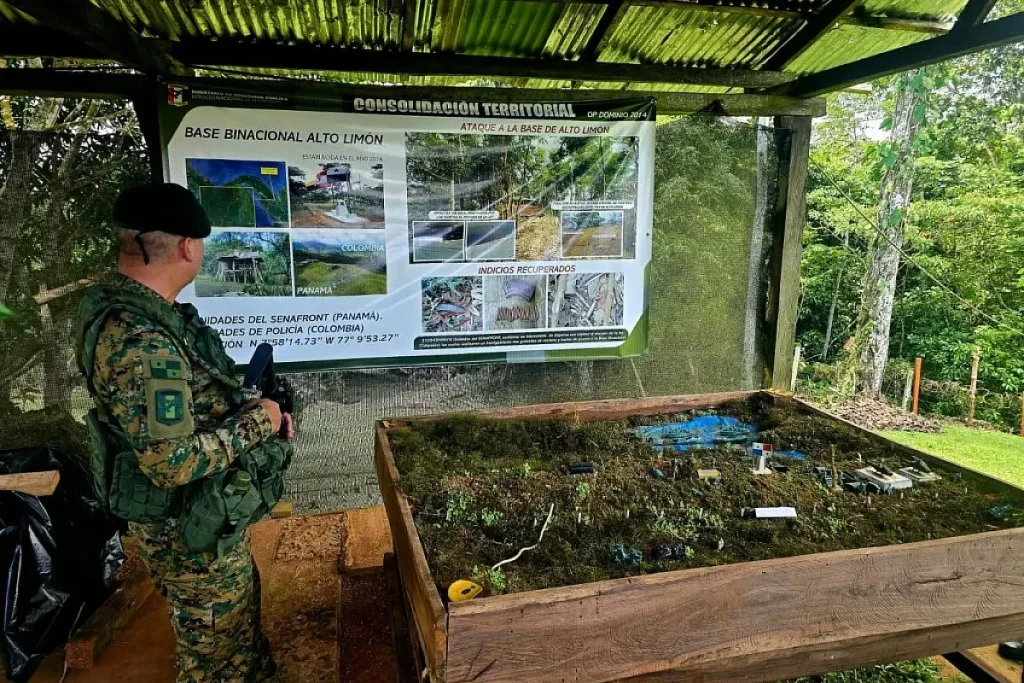
At Alto Limón, the increased presence was clear. Senafront units worked alongside Colombian police, maintaining patrols and exchanging information in real time. The area sits on the boundary line and has been identified as a vulnerable point where groups moving through the jungle could enter Panama without detection. Authorities have reinforced not just the physical posts but also the communication routes between the two countries.
This buildup reflects a broader shift in Panama’s security posture. Rather than waiting for criminal groups to establish themselves, the government is positioning its forces directly on the frontier. The strategy is designed to interrupt movement patterns and make the border less attractive as a transit zone.
Aerial Surveillance Exposes Hidden Threats
During an aerial patrol over forested sectors, security personnel observed stretches of jungle stripped along riverbanks, a pattern authorities associate with illegal mining. Several plantations were also spotted that investigators suspect could be marijuana crops tied to armed groups. From the air, the damage to the Darién’s canopy offered a visible map of where illicit economies have pushed into remote terrain.
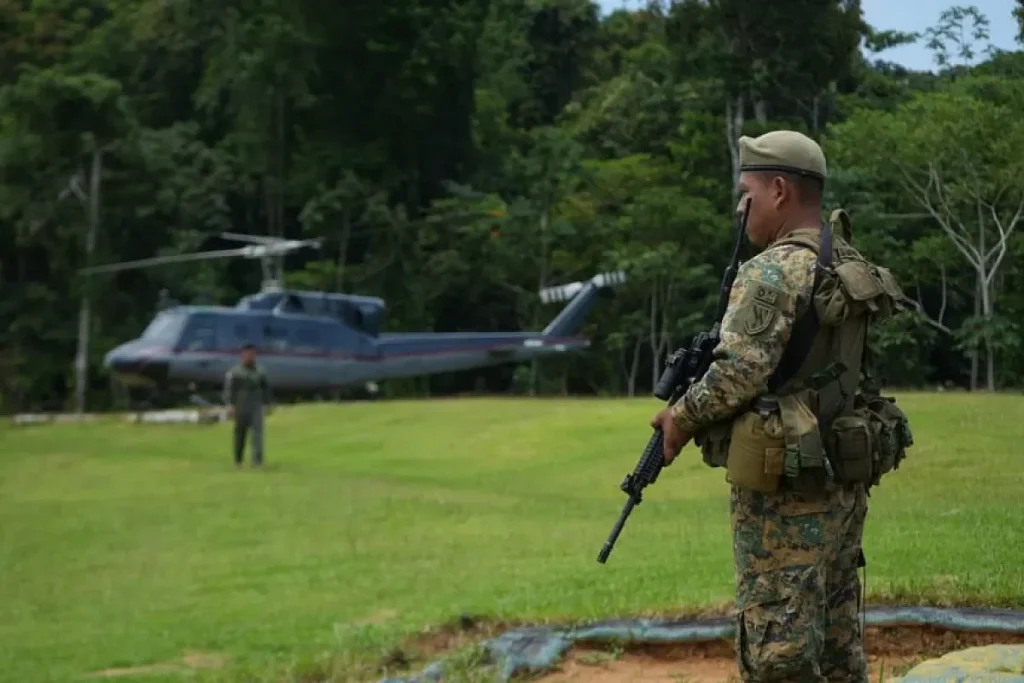
Illegal mining has become a major concern for Panama because it fuels criminal revenues and devastates environmentally sensitive areas. The Darién is a key biodiverse regions in Central America, but its isolation makes it hard to police. Officials believe that the same routes used for mining and drug cultivation are also used to move people, weapons, and contraband across the border.
Senafront Deputy Director Héctor de Sedas said the deployments are meant to counter a specific threat.
“At present, the so-called terrorist group Clan del Golfo exercises criminal influence; that is why we are positioned along these border strips to neutralize and control any criminal activity by this organization.” [Translated from Spanish]
The Clan del Golfo has long been identified by Colombian and Panamanian authorities as a key powerful organized armed groups in the region. Its involvement in cocaine trafficking, human smuggling, and illegal mining has expanded over the past decade, especially in areas where state presence is thin.
Legacy of the FARC and Criminal Corridors
The Darién border region is not new to armed groups. More than three decades ago, sectors near Alto Limón were used by the now-dissolved FARC’s Front 57 and other Colombian subversive organizations. Those groups moved drugs, weapons, and contraband through jungle trails that remain in use today, often under different command structures.
After the 2016 peace agreement with the FARC, many former corridors did not disappear. New organizations filled the void, and the Clan del Golfo became a dominant force in Colombia’s Urabá region, which pushes directly toward the Panamanian border. The historical knowledge of those routes gives current criminal networks a significant advantage, which is why Panamanian forces are focusing on the same crossing points used decades ago.
Colombian anti-narcotics officer Miguel Vega described the day-to-day concerns on the ground.
“We have information about backpackers who are currently moving through the terrain; our function here is to control and supervise so that these individuals do not commit criminal acts or attack any official of our forces, whether from Panama or Colombia.” [Translated from Spanish]
The term backpackers refers to couriers who navigate jungle trails carrying supplies, information, or illicit goods for larger criminal structures. Tracking them requires constant patrolling because the paths shift with seasons and enforcement pressure.
Bilateral Pressure and Territorial Control
Operation Steel Shield is built on cooperation between Panama and Colombia, with more than 700 Senafront special forces distributed across strategic points. The binational posts allow both countries to coordinate patrols, share intelligence, and respond quickly to crossings. The Panamanian government has said the operations will continue in Darién province to maintain territorial control and prevent criminal groups from entering or consolidating inside Panama.
This sustained pressure matters because the border remains a strategic corridor for multiple illicit activities at once. Drug trafficking and human smuggling often overlap along the same trails. Illegal mining creates landing zones and financing streams. The presence of armed groups amplifies all of those risks, especially for border communities that live far from central government services.
Colombia border security cooperation between the two countries has deepened in recent years, but Operation Steel Shield marks one of the more visible deployments in the Alto Limón area. The terrain itself remains the biggest challenge. Jungle cover, unpredictable rivers, and the sheer length of the boundary make total control impossible, so authorities are concentrating on known choke points and observation routes.
For Panamanian officials, the frontier remains a strategic vulnerability. Keeping a visible state presence around Alto Limón and other critical posts is meant to send a clear message that criminal corridors will not be allowed to take root. The real test will be whether that presence holds after the helicopters leave and the patrol rotations change, because the groups operating on the other side have proven they can wait.