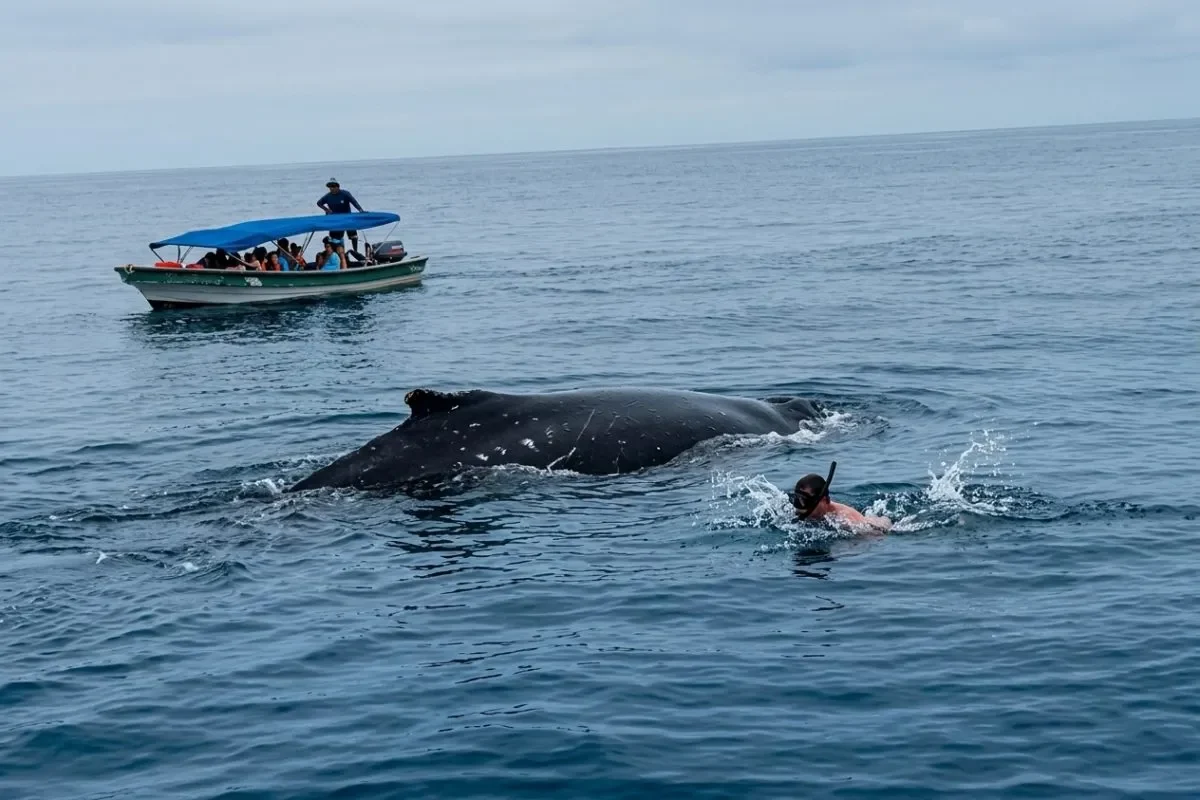
A family on a private boat in Panama’s Las Perlas archipelago triggered an official investigation this week after one passenger entered the water just meters from a humpback whale, a direct violation of the country’s whale swimming ban that authorities say is becoming increasingly common as fewer cetaceans reach Panamanian waters this season. (***video below)
Investigation Into the Las Perlas Encounter
The Ministry of Environment (MiAmbiente) opened a formal process on Monday following the circulation of images showing a person swimming near a humpback whale in the Pearl Islands. Digna Barsallo, director of Coasts and Seas at MiAmbiente, clarified that the vessel involved did not belong to a licensed tourism operator. She said a family was traveling on the boat, which authorities believe was either privately owned or rented, though that detail remained under investigation.
Barsallo emphasized that the incident reflects a broader challenge during the current whale watching season. With fewer humpbacks arriving along Panama’s Pacific coast, the animals that do appear are drawing excessive attention from boats, creating dangerous conditions for both the whales and the people hoping to see them.
Whale Swimming Ban and Viewing Rules in Panama
Panama’s regulations governing cetacean observation are explicit. Swimming, diving, feeding, or attempting to touch whales and dolphins is strictly prohibited. Vessels must maintain a 250-meter buffer from whales and 100 meters from dolphins, and they are required to move parallel to the animals rather than approaching head-on.
The rules also limit the number of boats that can surround a whale at any given time. Only two vessels may remain within the observation zone for a maximum of 30 minutes. When a calf is present, that window shrinks to 15 minutes. Once time expires, boats must withdraw and allow others to approach, a system designed to reduce cumulative stress on the animals.
Barsallo reiterated that the whale swimming ban exists to protect both wildlife and humans. “Because fewer whale species are arriving in our waters, we have greater pressure from vessels conducting these sightings,” she said [Translated from Spanish].
Declining Sightings Intensify Pressure on Humpbacks
The whale watching season in Panama runs from July through October, when humpbacks migrate from the cold waters of the southern hemisphere to breed and give birth in the warmer tropical seas. This year, But, fewer animals are making the journey, according to MiAmbiente officials.
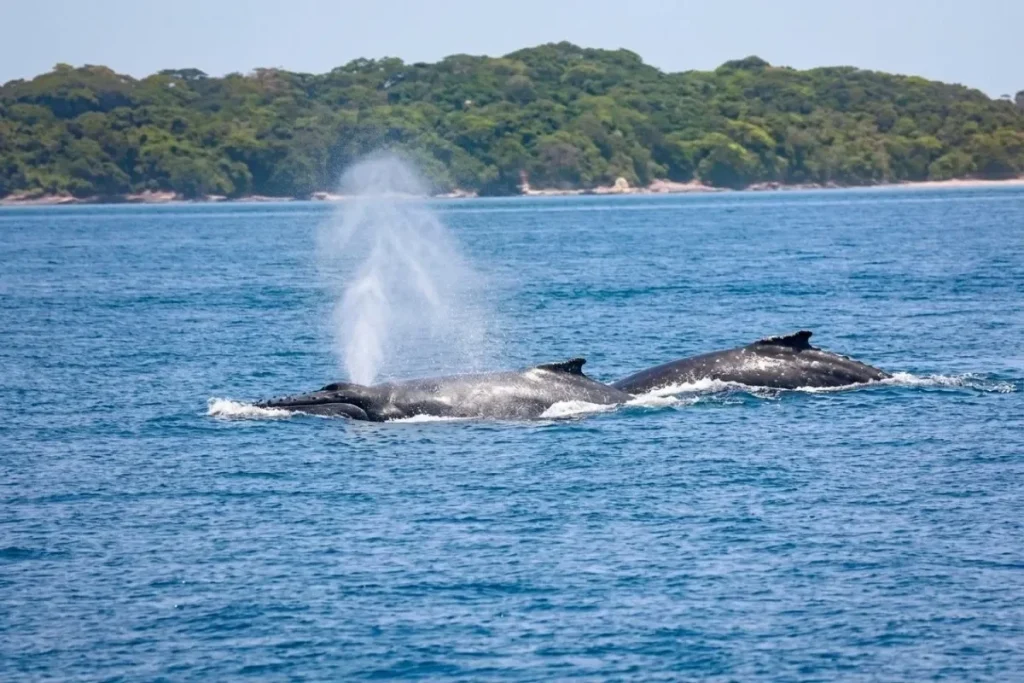
That decline has not reduced the number of boats seeking encounters. Instead, the remaining whales face a higher concentration of vessels vying for close views, Barsallo explained. The reduced population means each individual whale carries a heavier burden of human interaction, which can disrupt critical behaviors such as mating, calving, and nursing.
The situation has prompted MiAmbiente to reinforce its calls for compliance with established guidelines, particularly among private boaters who may be less familiar with the regulations than commercial tour operators.
Biological Impact and Human Safety Concerns
The rules are not arbitrary. Approaching whales too closely can interfere with essential biological processes, including reproduction, birth, and the feeding of young calves. Constant vessel traffic around a nursing mother can separate her from her offspring or force the pair to expend energy avoiding boats instead of resting and feeding.
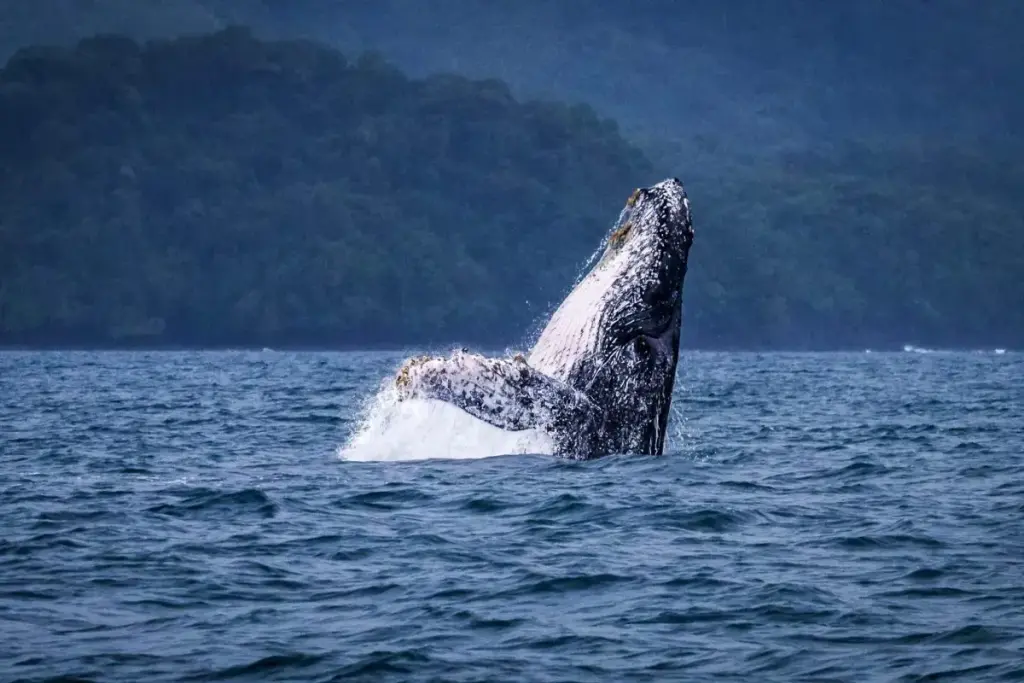
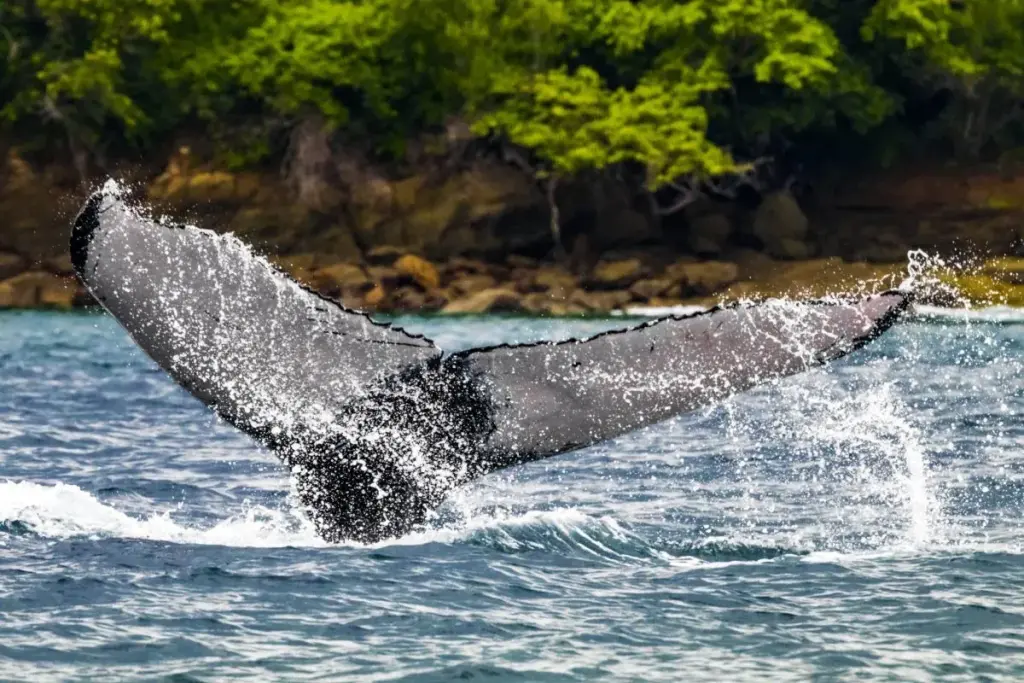
Human safety is equally at stake. During the mating season, male humpbacks compete aggressively for females, displaying behaviors that include breaching and powerful tail slaps. A boat lingering too near a whale engaged in these displays risks being struck. Given the size and weight of a humpback, which can exceed 30 tons, such an encounter could easily capsize a small vessel or seriously injure its occupants.
Barsallo noted that the restrictions protect people as much as the animals. The Las Perlas incident serves as a stark reminder of what can happen when private boaters disregard the boundaries meant to keep both species safe.
As the season continues through October, MiAmbiente is urging all vessels, whether commercial or private, to respect the distances and time limits. The agency maintains that enforcement will remain active, but the real solution lies in public awareness and voluntary compliance. With fewer whales in Panamanian waters this year, every individual animal matters more than ever, and the pressure from human activity could have lasting consequences for the population’s ability to successfully reproduce and nurture the next generation.