


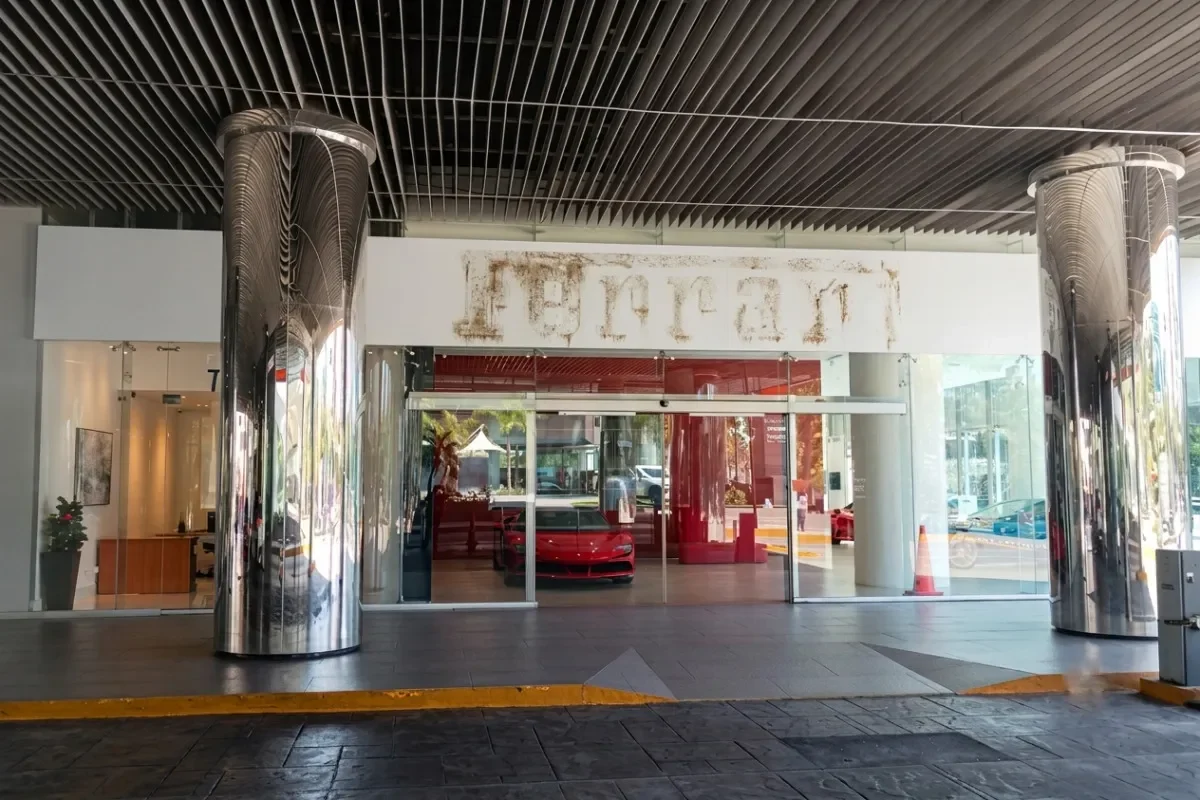
The iconic black and yellow shield disappeared from the Oceania Business Center this week, and for anyone watching Punta Pacífica’s skyline, the missing prancing horse said more than a thousand press releases. Workers quietly took down the Ferrari signage, and with it, Panama’s official link to the Italian marque came to an abrupt end. The Ferrari Panama exit is now complete, and behind the simple act of removing a logo lies a tangled story of cross-border loans, a contested share transfer and the unsettling shadow of a Salvadoran entrepreneur flagged by the United States.
How a Loan Default Led to the Ferrari Panama Exit
At the center of the rupture is a financing arrangement that started as a lifeline but ended as a tripwire. Documents from Colombian media, including Portafolio and Semana, show that Autos de Alta Gama Holdings Inc. extended a loan to Italian Motors Holdings S.A., the parent company of the firms that held Ferrari distribution rights in Panama and Colombia. The funds were meant strictly for working capital to keep the luxury car business afloat in both countries. As security, Italian Motors Holdings pledged 99 percent of the shares in the Panamanian and Colombian distributors.
Everything changed when the borrower failed to meet its payment obligations. In May 2026, the controlling stake passed to the creditor, a shift that fundamentally altered who sat at the helm of the Ferrari operation. That unauthorised change, Ferrari North America later determined, violated the strict control clauses that are standard in high-end automotive distribution contracts. On June 4, 2026, the subsidiary notified Automóviles Italianos de Panamá S.A. and Autos Italianos de Colombia S.A. that their import and distribution agreements were terminated immediately. The Ferrari Panama exit rippled out from that single decision. Neither company can now sell new vehicles, process purchase orders, provide after-sales service or handle official warranty claims.

The Shadow of a Salvadoran Businessman and Engel List Concerns
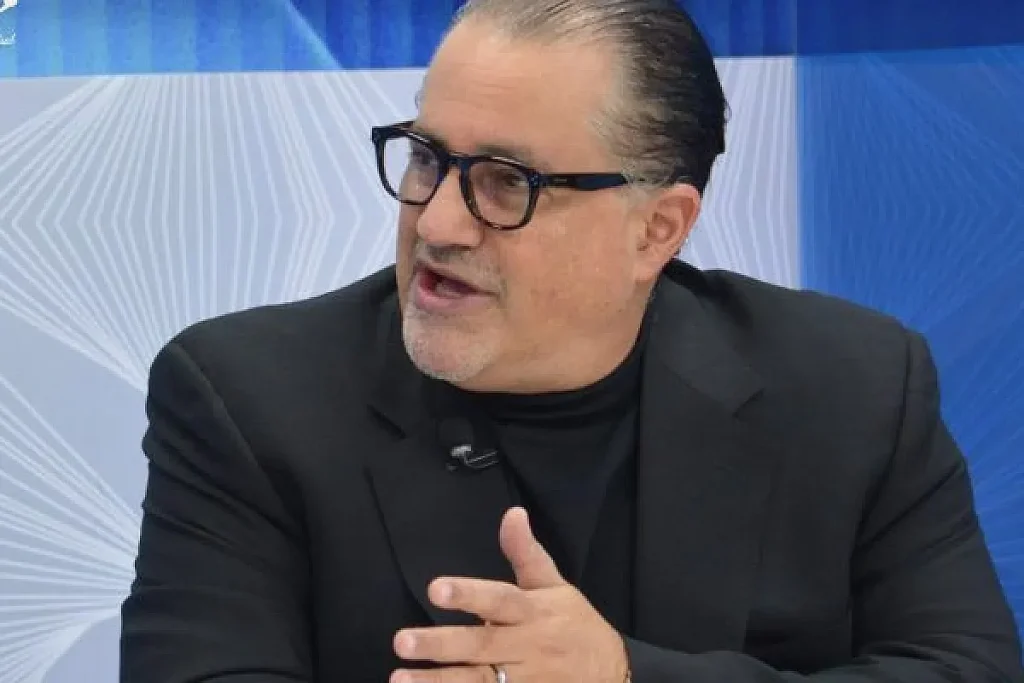
Almost as quickly as the termination became public, a different narrative surfaced in Bogotá and San Salvador. Caracol Radio reported that Salvadoran businessman Adolfo “Fito” Salume Artiñano had entered the operation as an investor after being approached by the then-administrators of the Italian auto group. They were scrambling for capital to resolve deepening financial trouble, and the agreement, signed in Panama, included Salume assuming certain liabilities in exchange for a stake.
According to Caracol Radio’s sources, Ferrari North America expressed repeated reservations about Salume’s involvement, and those discussions stretched for months before the final break. The brand never publicly confirmed a specific individual as the reason for cancellation, but the timeline suggests that the ownership restructuring, and who ended up with influence, created a compliance headache the luxury manufacturer would not ignore. Salume had been listed years earlier on the Engel List, a U.S. State Department roster of individuals accused of corruption or undermining democratic processes in Central America. That designation, reported widely in Colombian outlets, added a geopolitical dimension to what might otherwise have looked like a routine commercial dispute.
Customers, Down Payments and a Missing Fleet
While corporate lawyers parse contract clauses, car buyers are counting losses. In Colombia, multiple customers told local media they had handed over deposits worth hundreds of thousands of dollars for Ferrari vehicles that never arrived. The undelivered orders turned a corporate governance drama into a consumer protection emergency. Shuttered showrooms and silent phones left neither answers nor delivery dates, and the reputation damage spread faster than any recall.
Ferrari North America has said it expects to communicate directly with clients to arrange service or technical assistance while it designates a new representative for both countries. Industry insiders point out that appointing a replacement under these circumstances takes months, sometimes longer, and requires exhaustive vetting. Until then, owners of existing cars will depend on ad hoc arrangements, and would-be buyers remain in limbo. In Panama, where the Ferrari Panama exit leaves a conspicuous void in the luxury automotive segment, competitors are already circling to capture the high-net-worth clientele that used to gravitate toward the Italian marque.
What the Ferrari Panama Exit Reveals About Brand Control
Beyond the immediate aftermath, the episode illustrates how fiercely luxury carmakers police their distribution networks. Global brands like Ferrari treat their dealership agreements as extensions of the brand itself, and any unapproved shift in shareholding triggers automatic reviews. The moment Italian Motors Holdings ceded control without prior consent, the factory’s legal machinery began to turn. For multinational companies, that kind of vigilance is not optional; it protects pricing, customer experience and compliance with international sanctions and anti-corruption frameworks.
Some analysts see parallels with other exclusive franchises in Latin America where local partners, under financial strain, quietly brought in investors who did not pass the brand’s integrity screening. Panama’s strategic position as a regional hub often makes it a crossroads for such restructurings, but it also exposes local distributors to scrutiny from headquarters in North America and Europe. The Ferrari Panama exit serves as a stark reminder that in the universe of ultra-luxury goods, who owns the shares matters as much as who signs the cheques.
Ultimately, what began with a well-intentioned loan has reshaped the luxury car map in two countries. The removed sign in Punta Pacífica is more than a cosmetic change; it marks the end of an era for Panama’s Ferrari enthusiasts and the start of a careful, house-selected rebuild that will put brand integrity ahead of speed.