


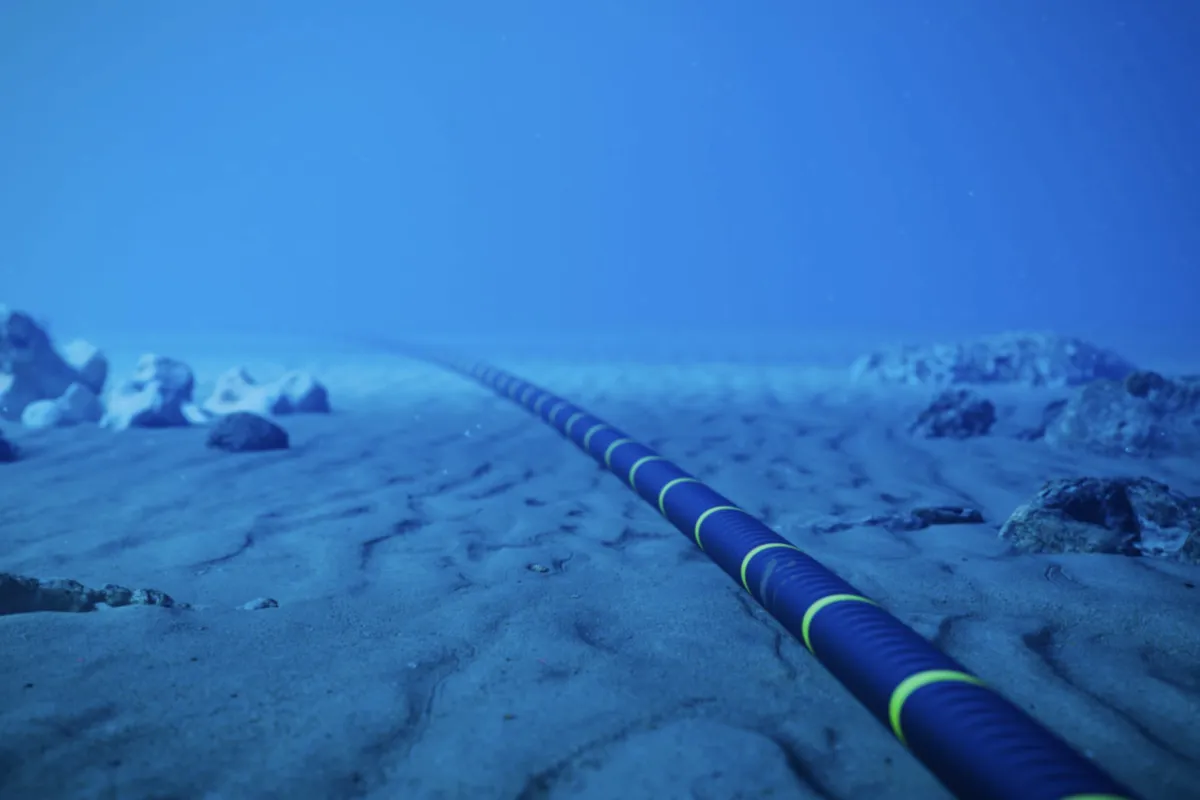
When a ship drops anchor in the wrong spot off Panama’s coast, it can do more than scratch the seabed. It can sever a fiber-optic thread no wider than a garden hose, instantly degrading internet speeds across entire countries. That vulnerability sits at the heart of a new push to attract and protect submarine cable investment in one of the world’s most strategic digital crossroads. With global spending on underwater cable systems projected to reach $16 billion between 2026 and 2029, Panama is racing to upgrade its safeguards while chasing a piece of that historic financial wave.
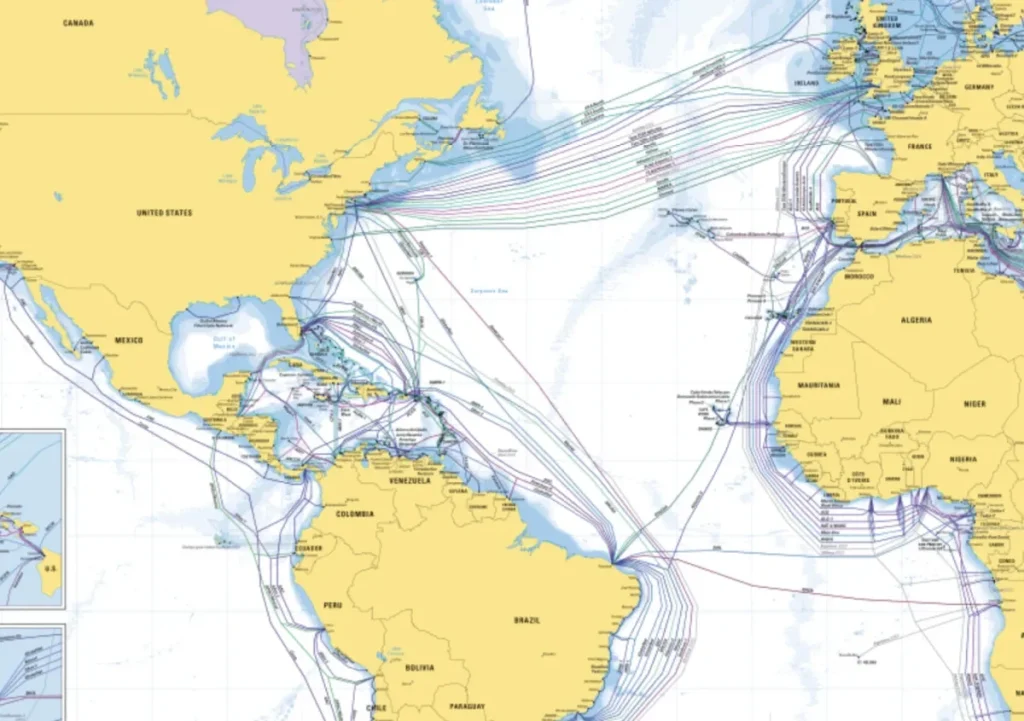
Few places on Earth carry as much digital weight in such a compact footprint. Seven submarine cable systems already pass through Panamanian waters, handling every scrap of regional internet traffic, 97 percent of international phone calls, and 90 percent of all data transmissions within Central America and the Caribbean, according to the investment promotion agency ProPanamá. That concentration makes the country an indispensable hub, but it also turns every cable cut into an economic event.

Driving Forces Behind Submarine Cable Investment in Panama
The numbers underpinning the current boom are staggering. TeleGeography, a specialized research firm, expects the $16 billion in global submarine cable investment over the next three years to be the largest wave of underwater infrastructure spending in decades. Cloud computing, artificial intelligence, and the relentless growth of video streaming are all pushing bandwidth demands beyond what existing cables can comfortably handle. Panama, wedged between two oceans and already a logistics giant, sees the trend as a natural extension of its canal-driven identity.
Yet money alone doesn’t guarantee success. The country’s Maritime Authority, known as the AMP, must juggle the needs of shipping lanes, fishing grounds, and fiber optics. Every new cable route requires technical evaluations to avoid conflicts with anchors, trawling nets, and future port expansions. The Ministry of Economy and Finance may issue the administrative concessions, but without the AMP’s sign-off on navigational safety and maritime spatial planning, no project can move forward.
New Cable Systems Expanding Connectivity
Two fresh systems illustrate how submarine cable investment is reshaping Panama’s digital map. The TAM‑1 cable landed this year, stretching roughly 7,000 kilometers and boasting a design capacity of 650 terabits per second. It links Panama directly to the United States, Central America, and the Caribbean, offering a massive new pipe for traffic that previously had to take longer paths. Hot on its heels is the planned Manta system, which will add another transoceanic route touching the United States, Mexico, and Colombia, reinforcing Panama’s role as a regional interconnect.
Neither project is happening in a vacuum. Across Latin America, countries from Chile to Mexico are racing to plug into the global cable grid, and Panama’s value proposition depends on more than just geography. The country’s stable dollar-based economy, established free-trade zones, and reliable power grid make it an attractive landing point. Still, the real prize for Panama is what those cables enable on land: the data centers, cloud nodes, and tech service clusters that follow the fiber.
Protecting Critical Infrastructure from Anchor Damage
Physical threats remain the Achilles’ heel of all that connectivity. The AMP disclosed that between 2008 and 2019, incidents in Panamanian waters caused more than $11 million in losses, most of it from vessels dropping anchor directly onto submarine cables. A single errant anchor can black out a swath of international traffic and trigger repair costs that run into the millions per incident.
“Protecting this infrastructure is a permanent challenge. To reduce these risks, the AMP maintains technical evaluation mechanisms, inter-institutional coordination, and protection of the routes where this critical infrastructure operates” [Translated from Spanish]
Authority teams now update nautical charts with precise cable corridors and coordinate with port captains to warn vessels before they enter sensitive zones. The goal isn’t simply to avoid another $11 million in repair bills, but to send a signal to cable operators that Panama takes their investment seriously. In a competitive market where a single route can tip a carrier’s decision to land in Costa Rica or Panama, that reputation matters.
Economic Ripple Effects and Data Center Growth
Cables themselves are often built by consortiums, but the economic spillover they trigger can be transformative. Proximity to high-capacity fiber lowers latency and operational costs for data centers, which in turn attract multinationals looking to serve Latin American markets from a politically neutral location. Panama has already seen a mini-boom in carrier-neutral colocation facilities, and industry analysts expect more if the country can maintain its edge in submarine cable investment.
Every new system also creates work for local marine surveyors, installation crews, and port-side maintenance teams. More subtly, abundant bandwidth helps Panama’s own digital economy mature, making it easier for startups to host applications locally instead of renting capacity in Miami or São Paulo. That virtuous circle, cables attracting cloud investment, cloud investment demanding more cables, is precisely what places like Singapore rode to become Asian tech hubs.
Ultimately, Panama’s challenge is less about building the cables and more about building the environment that keeps them safe and commercially viable. A $16 billion global pie is on the table, and the country’s slice will be proportional to how well it can guard the slender threads that now carry the hemisphere’s conversations, transactions, and ideas. The AMP’s quiet work of updating charts and warning ships may never grab headlines, but in a world hungry for data, it’s a form of economic diplomacy that could pay dividends for decades.